The Big Mango

"Bangkok, though, is a rejuvenating tonic; the people seem to have found the magic elixir. Life, a visitor feels, has not been wasted on the Thais.”
Bernard Kalb
“Bangkok is also safe. If you see anybody wearing camouflage holding a machete, don’t be scared. They sell coconuts.”
Bobby Lee
Bangkok, officially known as Krung Thep Maha Nakhon and colloquially as Krung Thep.
In fact the full name of Bangkok, recognised in the Guinness Book of Records as the worlds longest place name, is Krung Thep Maha Nakhon Amon Rattanakosin Mahinthara Yuthaya Mahadilok Phop Noppharat Ratchathani Buriram Udomratchaniwetmahasathan Amon Piman Awatan Sathit Sakkathattiya Witsanukam Prasit, which translates as "City of Angels, Great City of Immortals, Magnificent City of the Nine Gems, Seat of the King, City of Royal Palaces, Home of Gods Incarnate, Erected by Visvakarman at Indra's Behest," Essentially a poetic description of the grandeur, divinity, and royal importance. The blending of Pali, Sanskrit, and Khmer words pays tribute to the historical and multiracial heritage.
The mind boggles but it is impressive. Nicknames include City of Angels and The Big Mango. (my favourite!)
Bangkok is a megacity with roughly 11 million inhabitants. 25% of the Thai population live in the greater metropolitan area. The sheer size Bangkok, not to mention its multifaceted reputation for colour, culture, corruption, chaos, congestion and the sex trade left us feeling ill equipped, but we need not have worried. The Thai welcome shone through, undimmed by scale or risqué reputation.




Bangkok


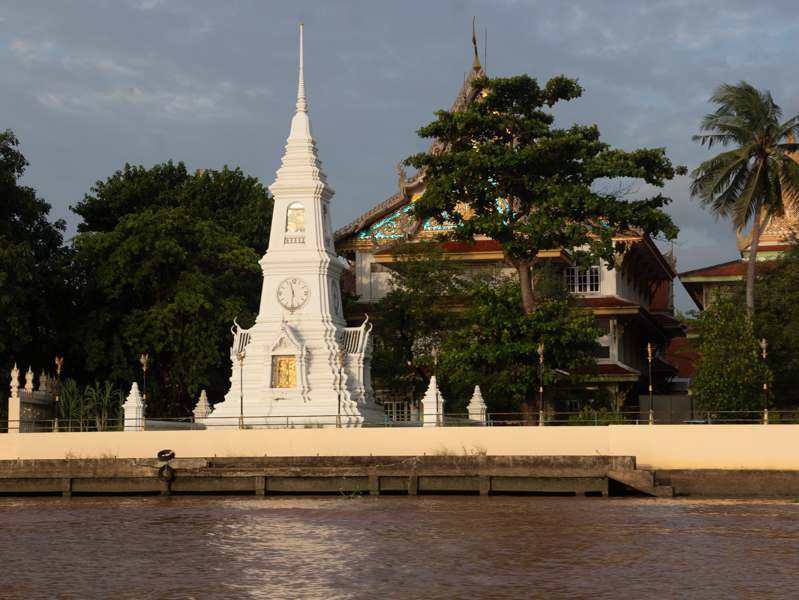
Bangkok sits in the delta of the Chao Phraya River and started life in the 15th century as a small trading post during the Ayutthaya era.
After the fall of Ayutthaya to the Burmese in 1767, the newly crowned King Taksin established his capital, Thonburi, on the West Bank of the Chao Phraya river.
In 1782, King Rama I succeeded Taksin and moved the capital to the eastern bank's Rattanakosin Island and established the beginning of Bangkok.
The City Pillar was erected on 21 April 1782, which is regarded as the date of the foundation of Bangkok as the capital. Thonburi now forms a colourful district of modern Bangkok, known for its traditional riverside communities, canals, and temples.
From the country's political struggles against colonialism during the 19th century, to the internal reframing of the 20th century, as it changed its name to Thailand, abolished absolute monarchy, adopted constitutional rule, and underwent numerous coups and several uprisings, Bangkok has provided a point of national reference.
Bangkok's rapid growth, coupled with little urban planning, has resulted in a haphazard cityscape and inadequate infrastructure. Crippling traffic is notorious, The city has since turned to public transport to solve the problem, but congestion remains a prevalent issue.
Choosing life on the river felt like a rather nifty way to avoid the city traffic. We were smug!

Sabai Sabai

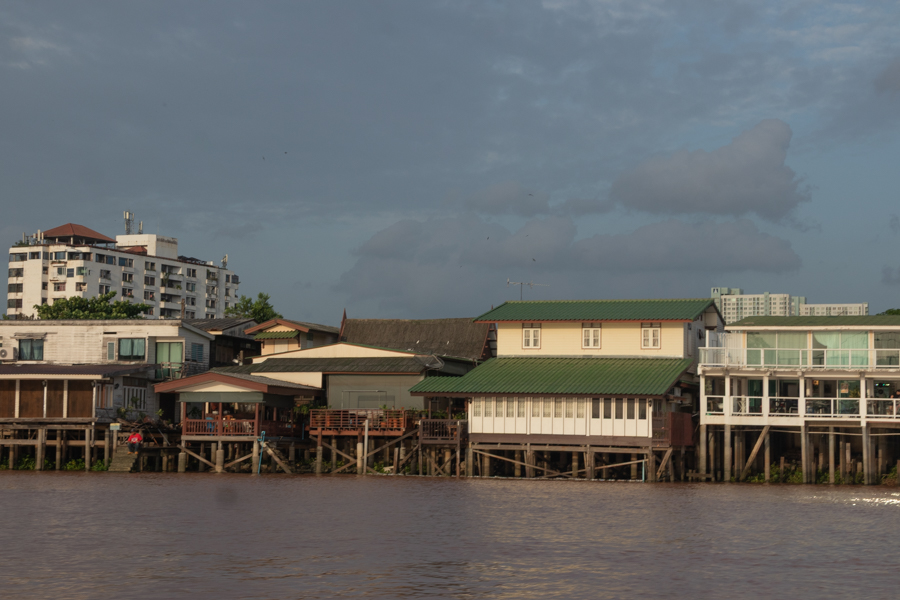
Our home for the next 5 nights was a small birth on the good boat Sabai Sabai. "Sabai sabai" is a common Thai phrase meaning "take it easy," "relax," "comfortable," or "feeling good," reflecting a laid-back, stress-free, and content attitude towards life.
Well our "stress free " environment was moored at the Maharaj pier on Rattanakosin Island, a stones throw from the Grand Palace, right in the centre of the city.
We could not have made a better choice if we had tried. Okay the boat cabin was a minute cupboard but we are used to shoe horning into impossibly small spaces on safari. A bed is a bed after all.
We had about 1 m of floor space to stash our bags and a tiny bathroom next door where you could just about shower if you sat on the toilet but there was an air conditioner so we were happy.

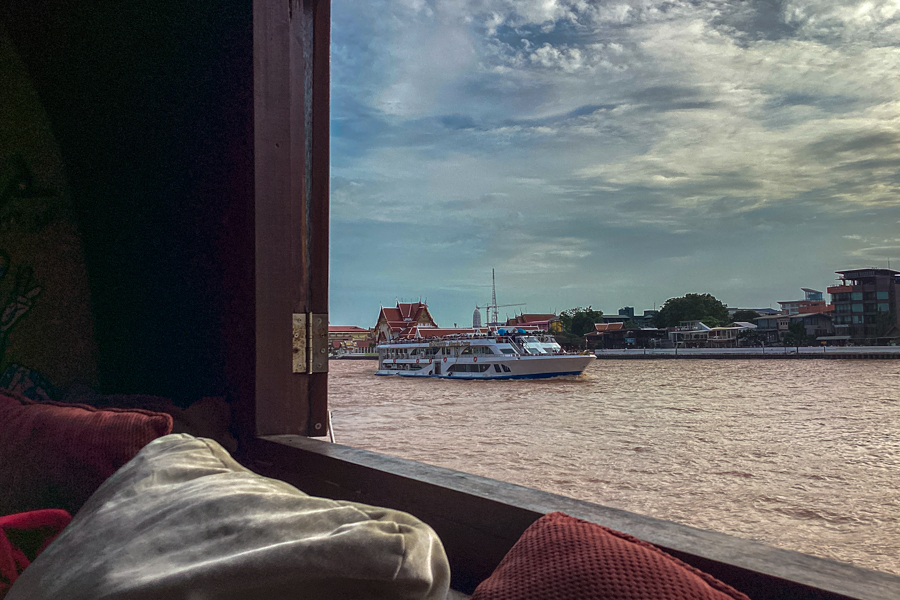
After a leisurely 3-4 hour cruise from Ayutthaya we arrived at the boat as the sun set. Stopping at the Sabai Sabai only to pick up a couple of other guests, we carried on up the Chao Phraya River for a sunset cruise, past the temples and palaces and ending in a vibrant retail area with the biggest baddest shopping centre you have ever seen, the luxury Iconsiam.
Multiple stories of high end brands, gilded and illuminated.
From there we turned for home, across the inky black water, past the floating restaurants, ferries and dinner cruises.
On the banks of the river the night life of Bangkok was just getting started and we cruised past temples festooned with lights, restaurants and clubs, and the turrets of the Royal Palace.
It was an exciting start to our visit.
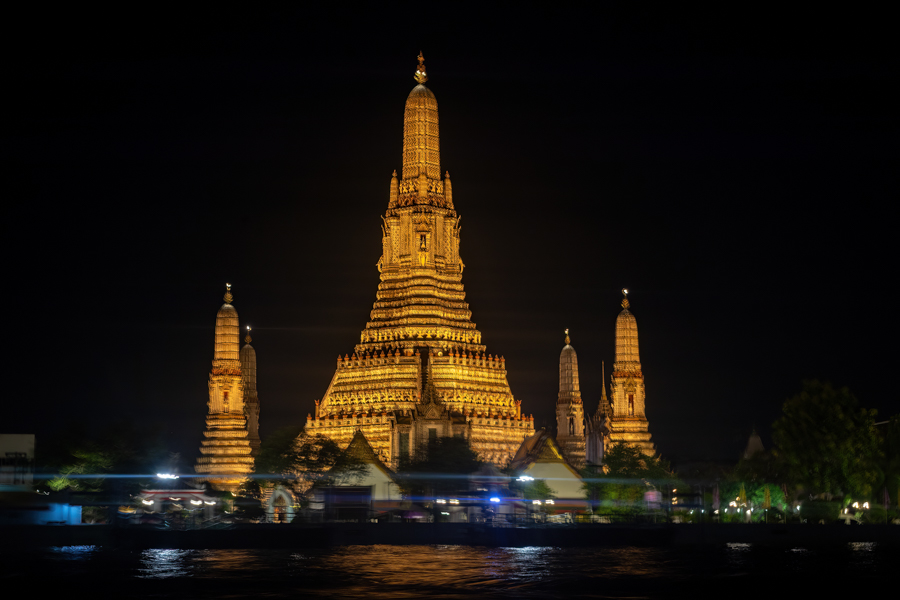
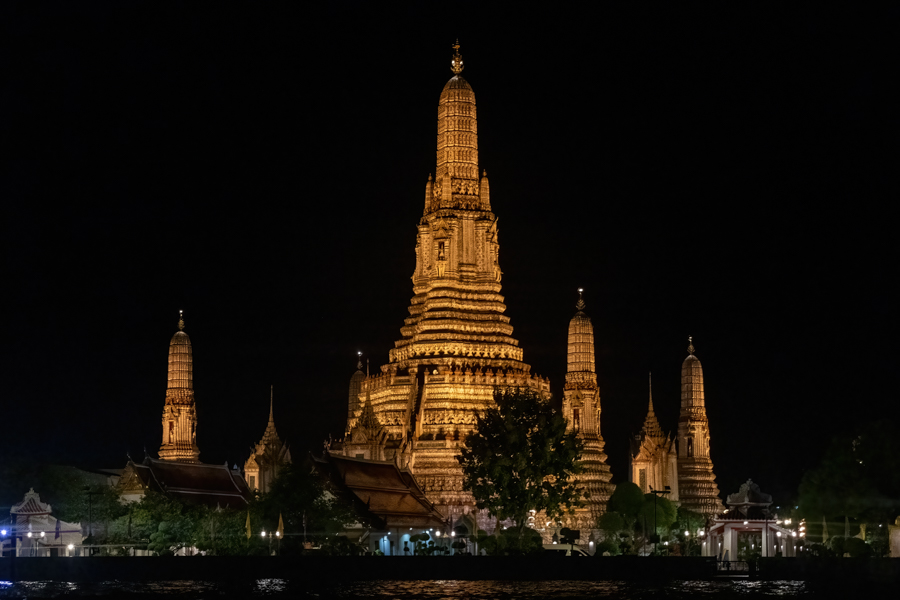
Wat Arun lit up at night.
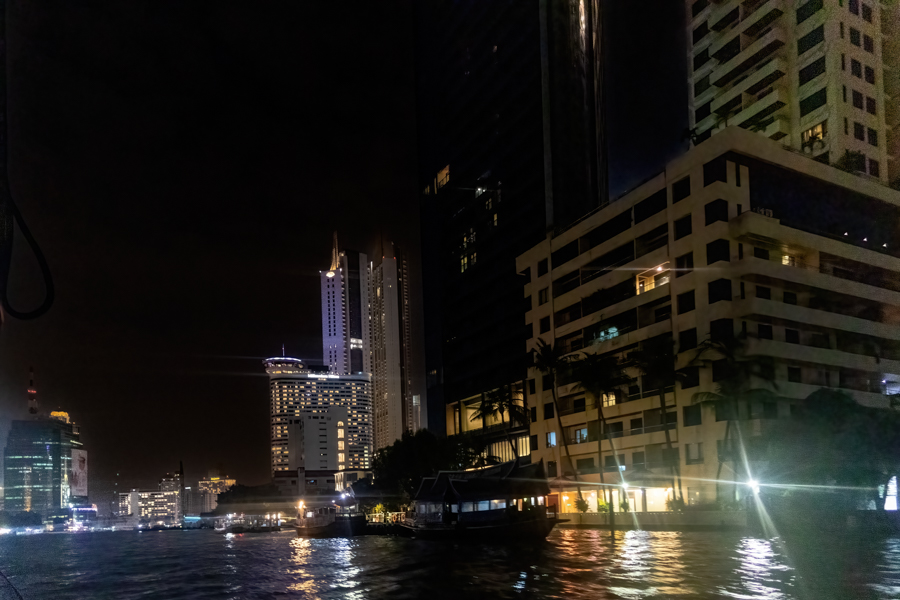

Iconsiam with a floating restaurant infront

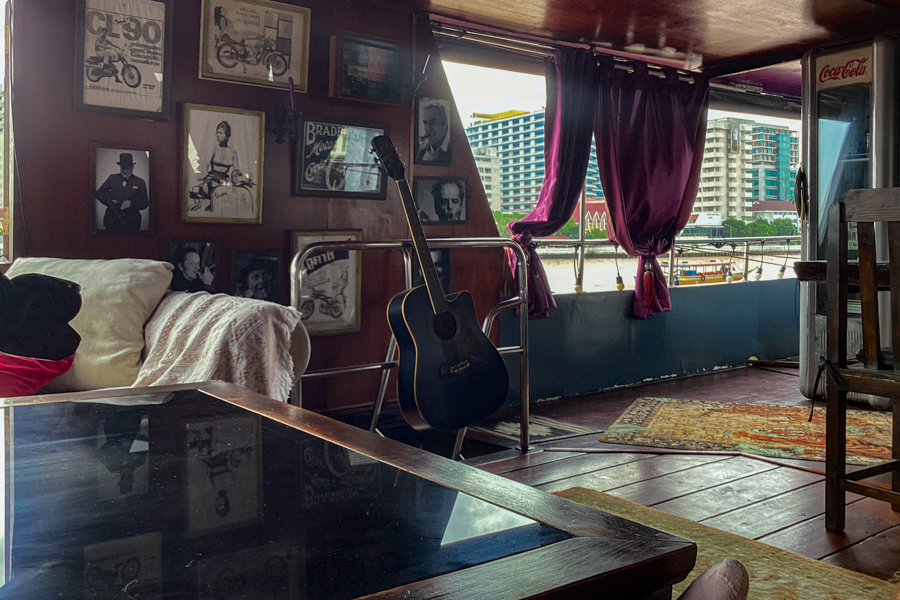
We turned to home and boarded our boat for the first time. A wood panelled cruiser hung with hammocks, guitars and rock posters. It looked just right for us.
Although Bangkok still felt intimidating we had found our own little bolt hole away from the chaos.
Sabai Sabai is owned and run by Roger, a German expat. Colourful, opinionated and larger than life , he entertained us with storys of life in Thailand, his health, his fitness routine, his life philosophy and his take on Naziism. Life was never going to be dull on board this Good Ship Lollipop.
The Grand Palace


We had finally arrived at the home of the Emerald Buddha so it was no surprise that our first port of call in Bangkok was to pay our respects to this peripatetic icon.

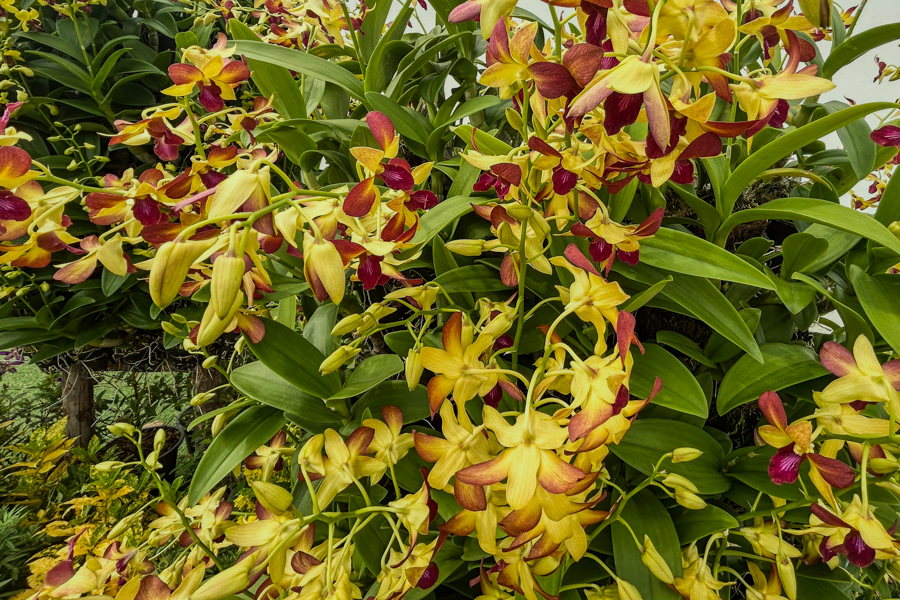
Outside the palace, festooned with orchids
Sabai Sabai was moored on a small jetty which led into a covered market for religious amulets. A fascinating area full of stalls selling various small buddha images cast as coins and small statues. In metal and stone and clay, polished and rough. This is a trade like stamp collecting. There are cheap and expensive ones, although to the untrained eye they all look much the same.
Many collect these tokens and almost every Thai will buy them for their cars, bags and homes to bring prosperity and luck. We bought a selection as souvenirs
The market opens into a small collection of shops, restaurants and cafes before the main road running parallel to the river. We even had our first Starbucks. Very expensive but this is Bangkok after all.
The palace lay an easy 20 minute stroll down a wide boulevard. As we drew near the crowds appeared. The palace is surrounded in a high wall with ribbons and guards and huge bowls of beautiful flowering orchids. I think they must swap them out as they finish blooming. I cannot imagine dead flowers at the royal palace. It is very well curated.
At the gate we paid entry of 500 Bht. Expensive but this is, after all, the Buckingham palace and Westminster Abbey of Thailand rolled into one. I wanted an audioguide but you have to leave your credit card as collateral. South African paranoia kicked in. We would have to wing it. We followed the crowds into the security check. For the first time they were X raying our bags and checking us out for suspicious activity. The royal guard were prominent.
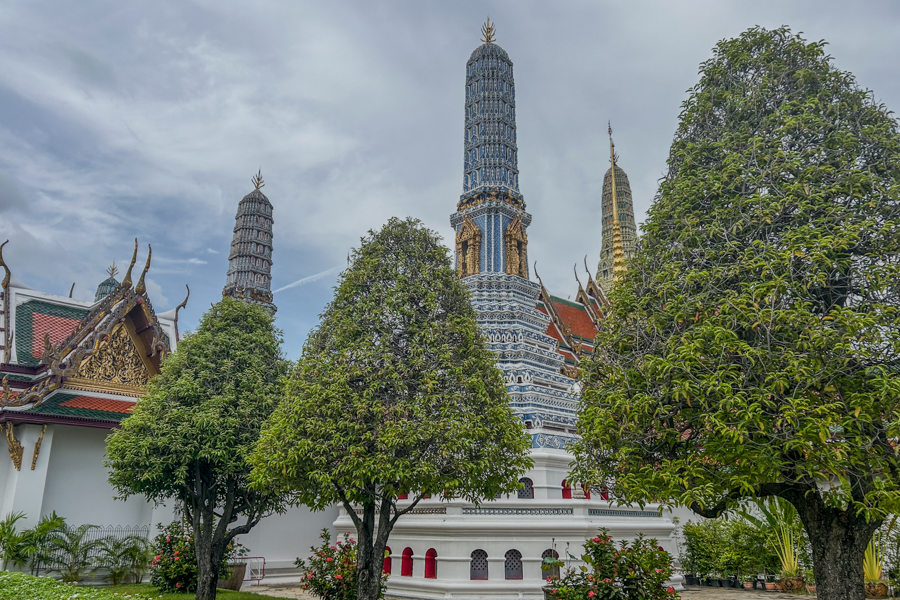


We were wandering around the cloisters when I saw a sign for a free guided tour in English starting in 5 minutes. I signed us up.
As it turned out this was delightful. We were a group of about 12 and had our own palace guard as guide.
Dressed in official uniform and steel tipped shoes he was the most disarming gentleman. He spoke with drama and enthusiasm, a real star of the stage, although his accent was sometimes difficult to catch.
He took us around a dizzying array of temples, chedis and pavilions.
You are not allowed inside the majority of them but there is a lot of history in terms of the various Rama's, what they added and changed and what is housed where and why.
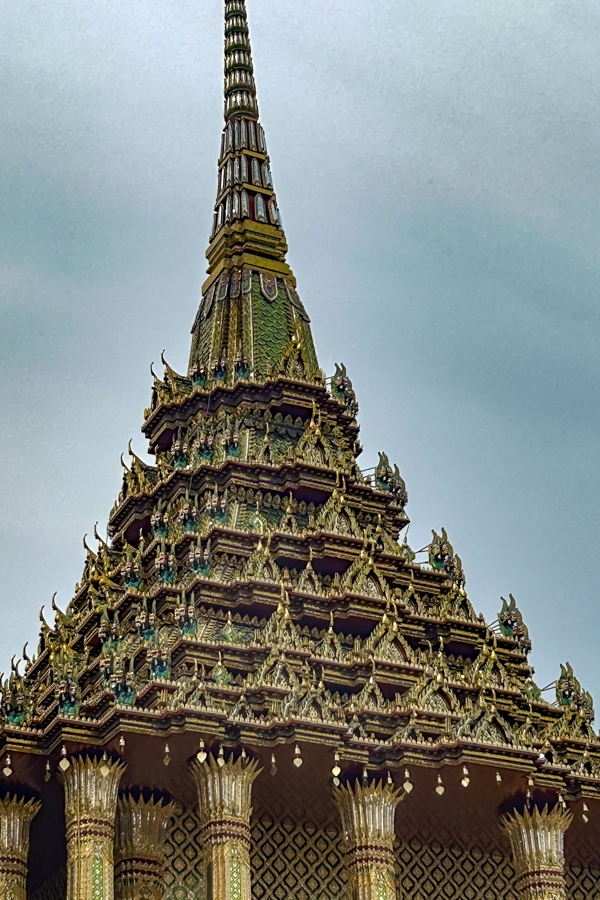
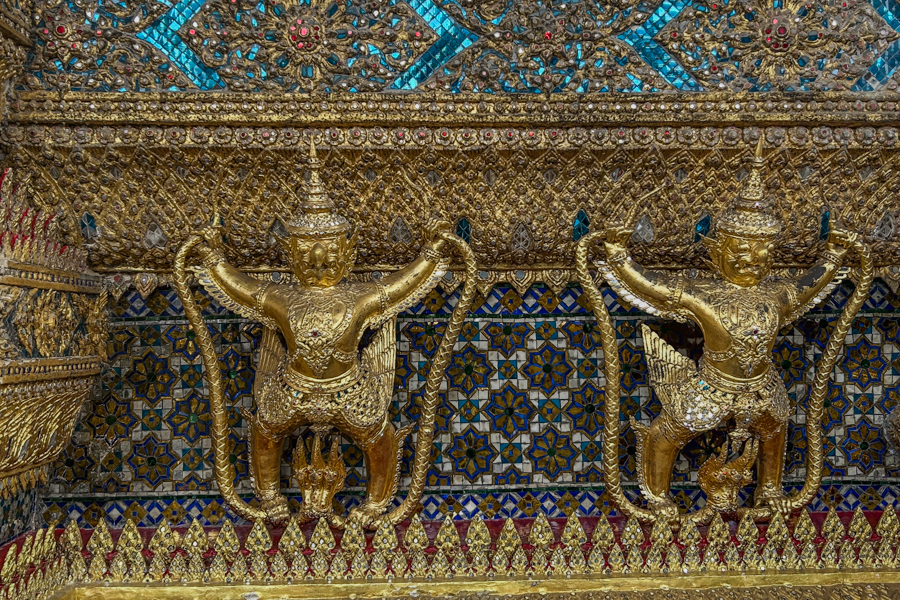
Each building is uniquely beautiful. One chedi is a replica from Wat Phra Si Sanphet in Ayutthaya, covered in gold mosaic and containing Buddha relics. The Royal Pantheon contains life sized statues of all the Rama's but is only open 8 days a year.
Everything is exquisite and the buildings and paintings are kept pristine. Our guide says they are hand washed every night. I believe him.


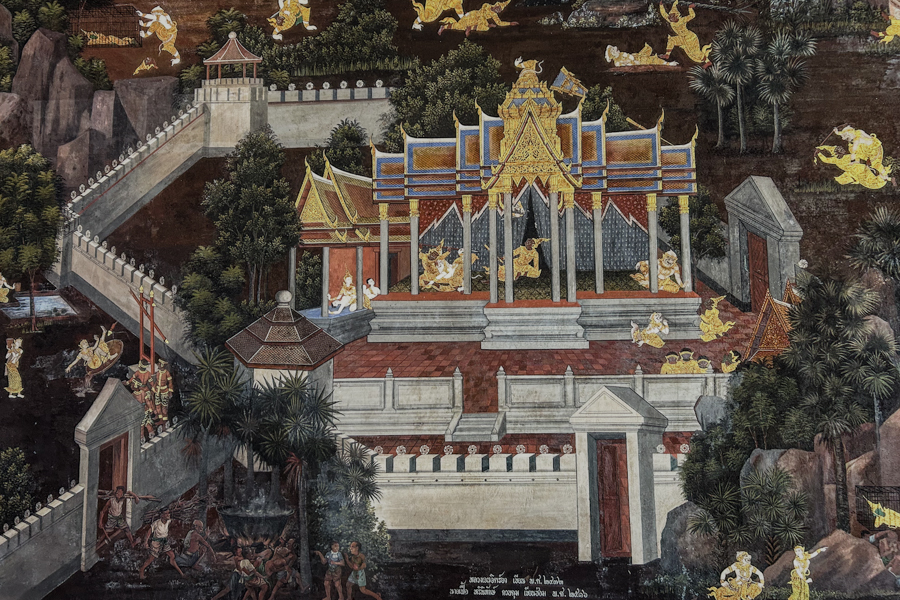
All around the temple area is a covered cloister which features a long painted fresco. The fresco, from beginning to end, is the story of the Ramakien presented as a series of painted wooden panels. They are highlighted with areas of gold leaf so they gleam in the dark recesses. Apparently they are restored and repainted regularly and so remain pristine. If you walk the story from one end to the other it stretches more than 1 km. Small vignettes of daily life are interspersed in the narrative.
Essentially it is the story of King Rama and his beautiful wife Queen Sita, billed as the age old story of good triumphing over evil with a few twists.
Rama I wrote a fair amount of the currently accepted version. The story makes its appearance in various aspects of Thai culture and Rama II rewrote some as Khon drama, a type of classical Thai dance-drama, depicting tales from the Ramakien through elaborate masks, graceful dance, music, and narration.

The story is central to Thai identity but is drawn from the Indian story of the Ramakaya.
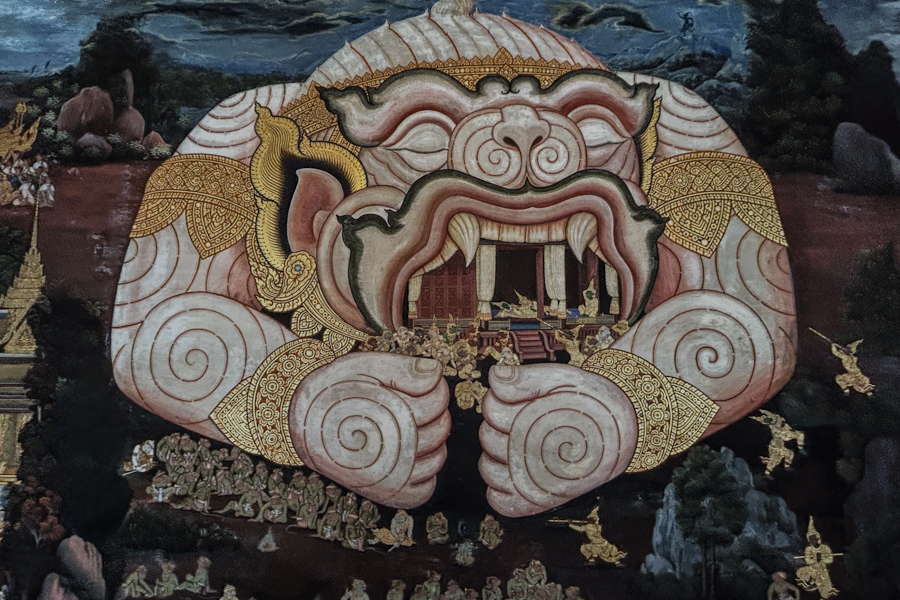
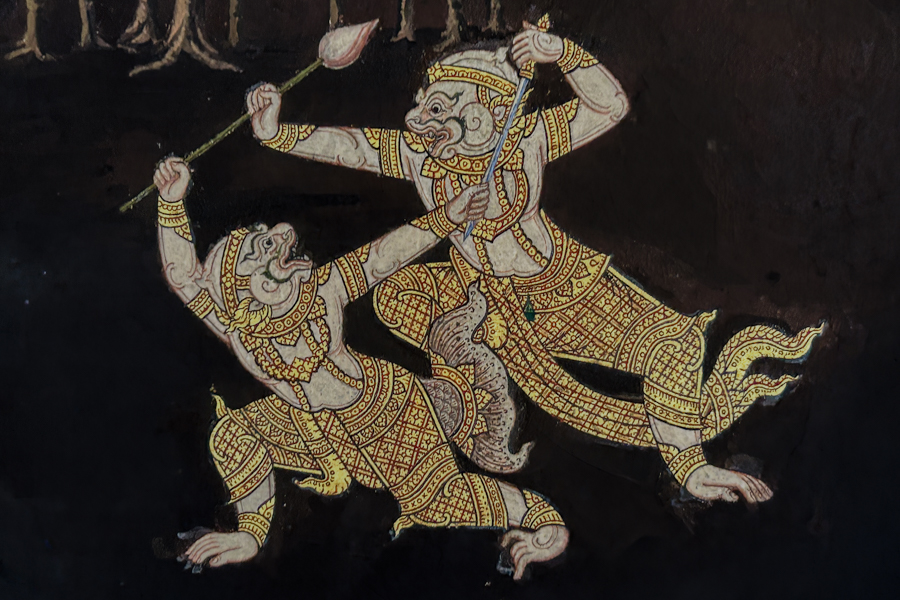
Essentially the story goes like this. Rama and Sita meet and marry for love. The Demon King, Tosakanth, saw Sita and fell in love with her beauty and then kidnapped her. Rama and his brother set out to rescue her and there are various adventures and battles along the way. He has an ally in the Monkey king, Hanuman, and his troupe.
Eventually they find and free her but when she comes home the "people" doubt her chastity and she agrees to a trial by fire where she walks into a bonfire. She survives unscathed but even this does not quell the rumours and eventually she is banished by Rama to the forest.
She gives birth to twins and they eventually reconcile her with Rama. There are different endings. In one, still feeling judged, she choses to return to mother earth, which may be a code for suicide. She is , however, the daughter of Mother Earth so it also may mean she choses to return home. In another version they remarry and live happily ever after.
There are uncomfortable elements of guilt blaming the victims of sexual slavery and abuse here, but other interpretations state she is an empowering figure, always choosing her own destiny. I think perhaps we should go with that.

Eventually we joined the hordes entering the Wat Phra Kaeo, excited to finally meet the Emerald Buddha in the flesh as it were.
Leaving our shoes on the steps we queued to enter through huge gilded doors. The Emerald Buddha sits on top of high golden plinths above the alter. It is one place in the Royal Palace where no photos are allowed so I cannot show it to you. He looked rather dwarfed by the splendour around him. Scenes from Buddhas life adorn the walls.
The Buddha is dressed in gold and diamond encrusted clothing. There are 3 sets of clothes for the Emerald Buddha, each costume represents a different season, summer and winter and wet season clothes. Only the King may touch and change the robes of the Emerald Buddha, which he does on specific ceremonial dates throughout the year. For now he was in his Wet Season outfit. Each outfit is valued at approximately 3.8 million US dollars. We spent a moment making a private greeting and moved on.


These are copies of the Emerald buddha. On the left in wet season clothes and on the right in winter clothes. In real life he is small, standing just 66 cm tall and 48 cm wide. He is made of jasper and not emerald.

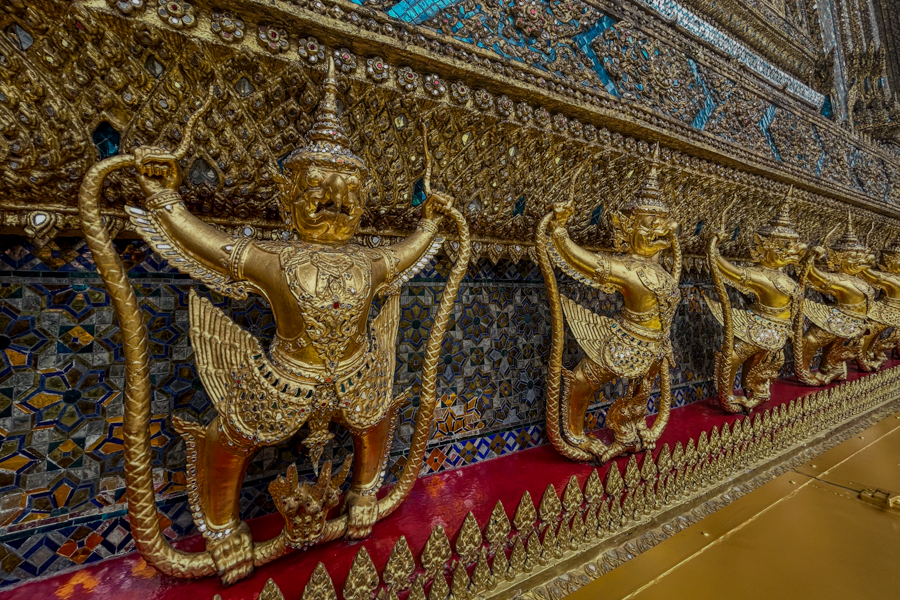
Leaving the Temple area we moved into the area of royal residences, throne rooms, robing rooms and a building used for lying in state of deceased kings. We met a bunch of medical students from the UK fresh from work experience in Sri Lanka! Echos of our lives 45 years ago. The circle turns.
The Grand Palace was used as a residence for Rama I-V but is now a ceremonial area.
The current members of the Royal family prefer to reside in other palaces such as the Chitralada Palace.
Most of the buildings on this side were built by Rama IV and V with influence from British architects.
It is pretty but we were tired and footsore, and, for better or worse, we skipped the museum and headed out for some lunch.


Chinatown

The Chao Phraya Express


The Chao Phraya Express is a sort of high speed tourist boat which runs between the main attractions up and down the river. It is fast, clean, frequent and well run. Guides on the jetty herd and direct you onto the right boat at the right time. Words are unnecessary, they take one look at you and know immediately where to put you! Like being on a school tour. It made our ability to navigate the city very easy, especially as home was on one of the drop off piers.
Chinatown is a very famous area of Bangkok renowned for the Chinese culture, traditions, colour, food, jewellery. It is said to be the biggest Chinatown in the world.
There are so many Chinese temples, some old and dark, others brightly decorated, brimming with statues, ribbons, flowers and painted reliefs. Our old friend The Tiger God was well represented, as were the Naga statues. Luck and prosperity as we had already found out.

Chinese temples on every corner.
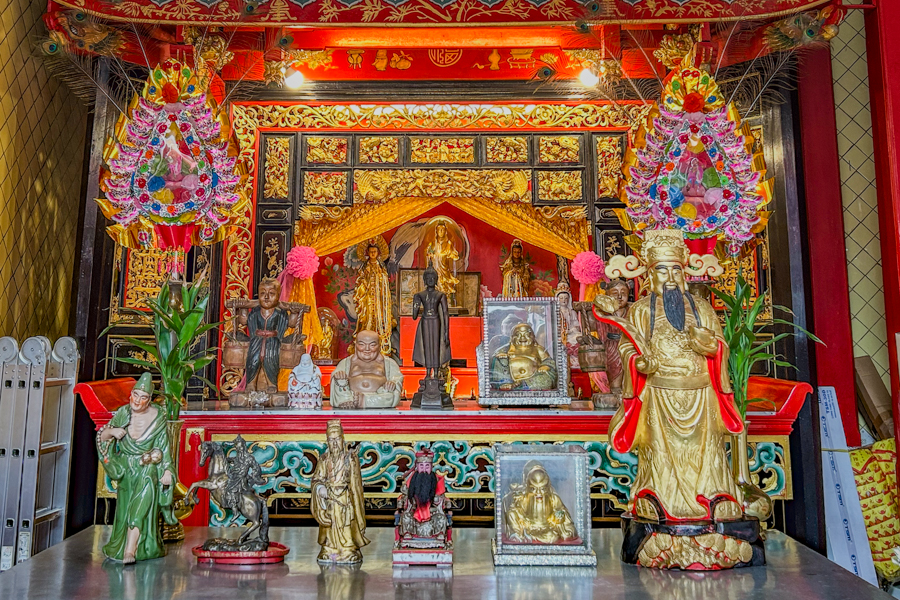
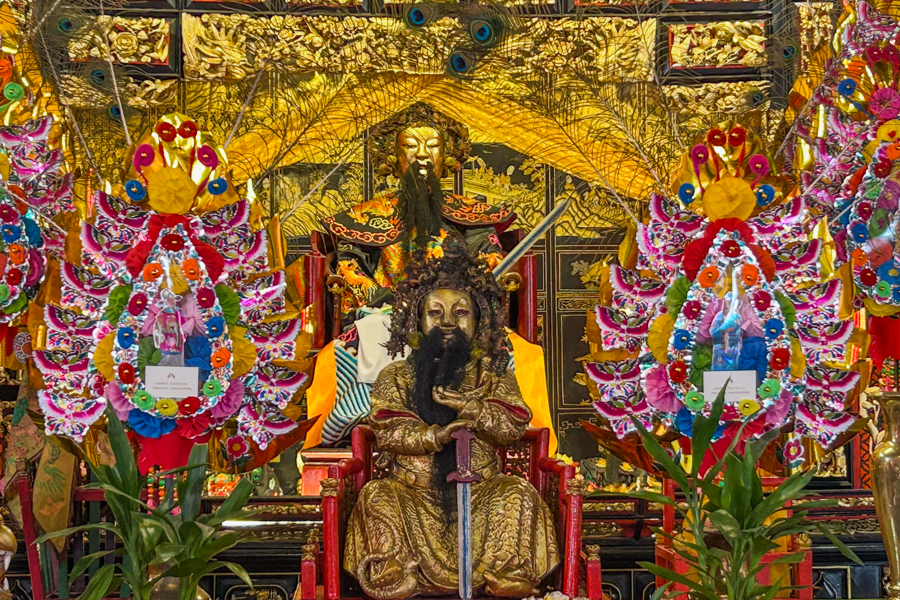
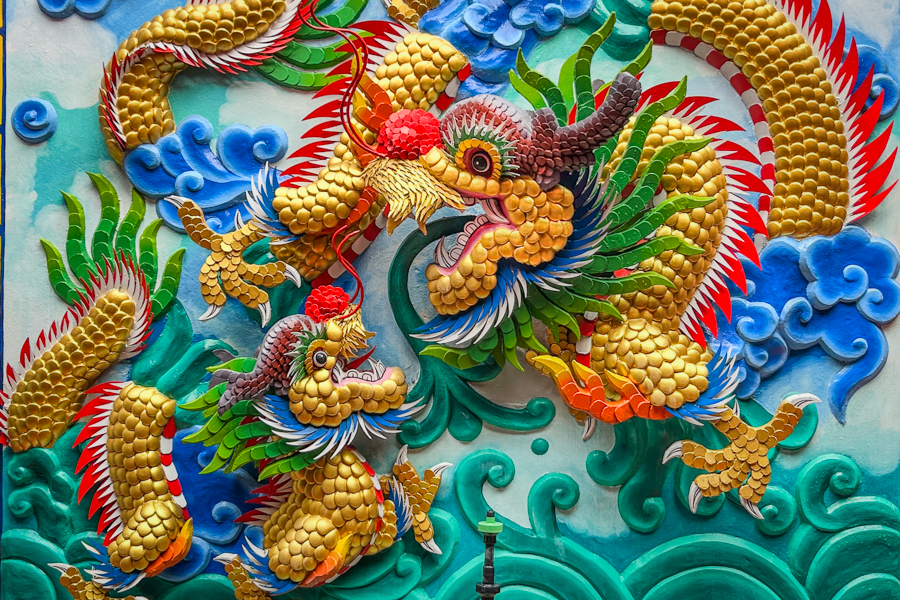

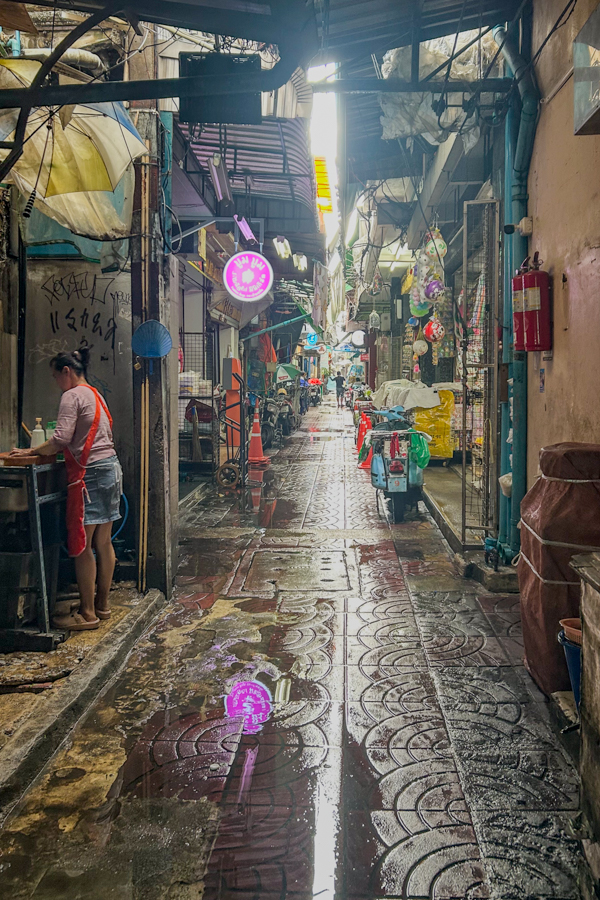
Narrow alleyways and covered markets


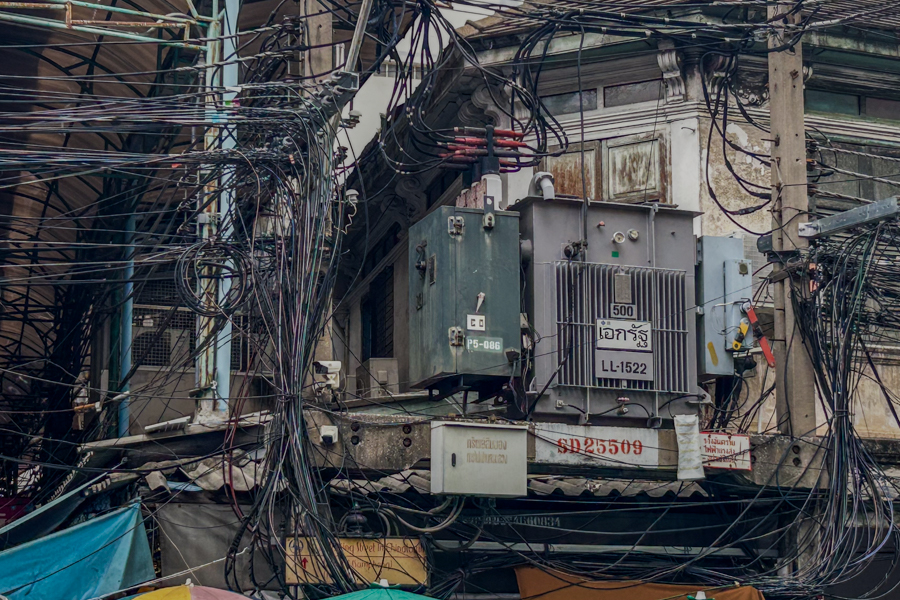
We thought we had seen the worst of Thai electrics until we met the Chinatown version. Wires everywhere and an electricians nightmare. The photo below was from inside a restaurant where we stopped for lunch. Soon you will not be able to see out of the windows at all!

When Taksin established his capital at Thonburi he used the Chinese traders to supply provisions and food. He gave them land on the east bank of the river opposite his capital.
When Rama I took over and established the Chakri dynasty he moved the capital to the East bank.
He wanted the area where the Chinese had settled for his walled city, and he moved the Chinese south east into a rather inhospitable swampy area linked to the city by a small road.
Despite this the Chinese immigrants thrived and grew in prosperity and the area remains a cultural enclave.
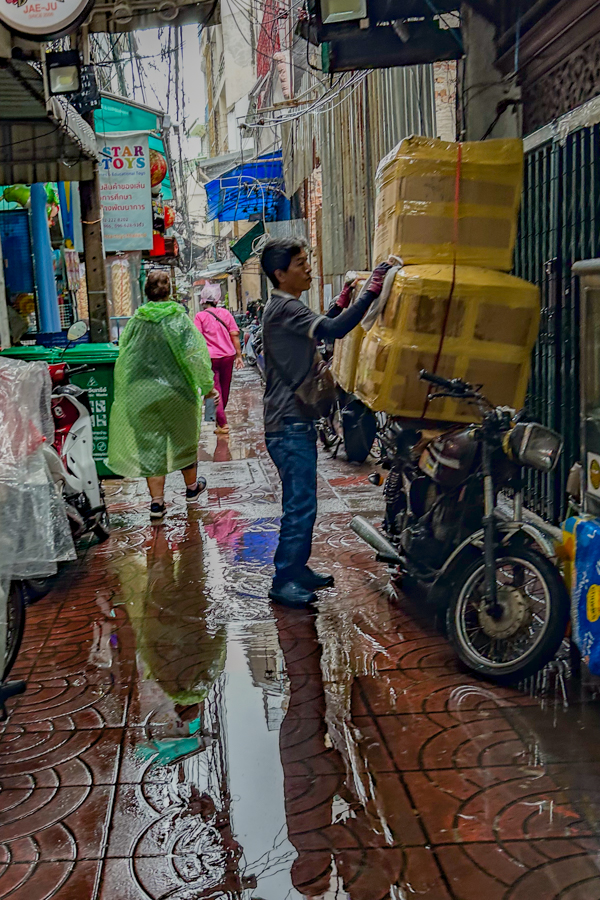
Yaowarat Road is the main artery running through Chinatown and lined with gold jewellery shops. In the twisting alleyways on either side are markets and temples and crowded stalls. Chinese lanterns, flags and banners run across the streets in colourful chaos.
The rain made an appearance but no one bothered.

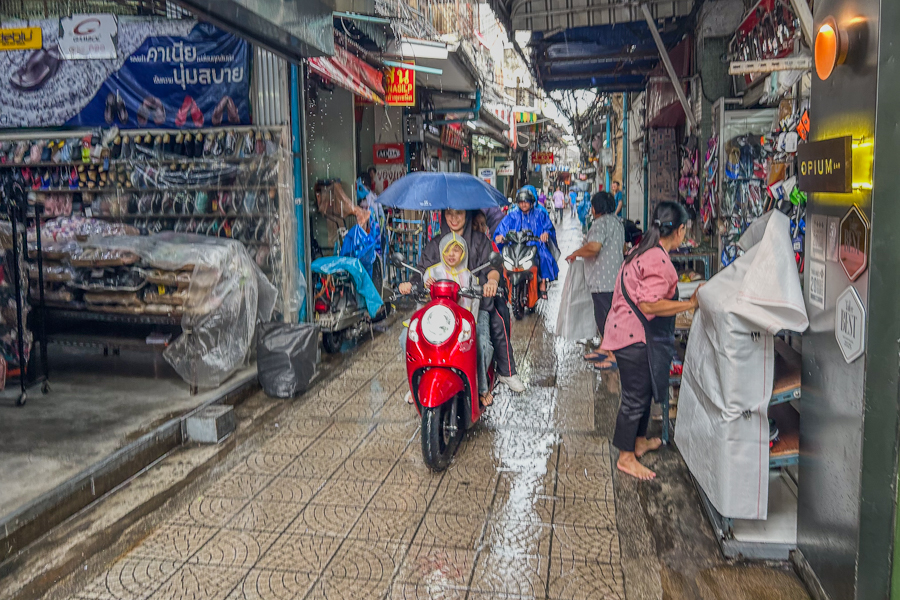
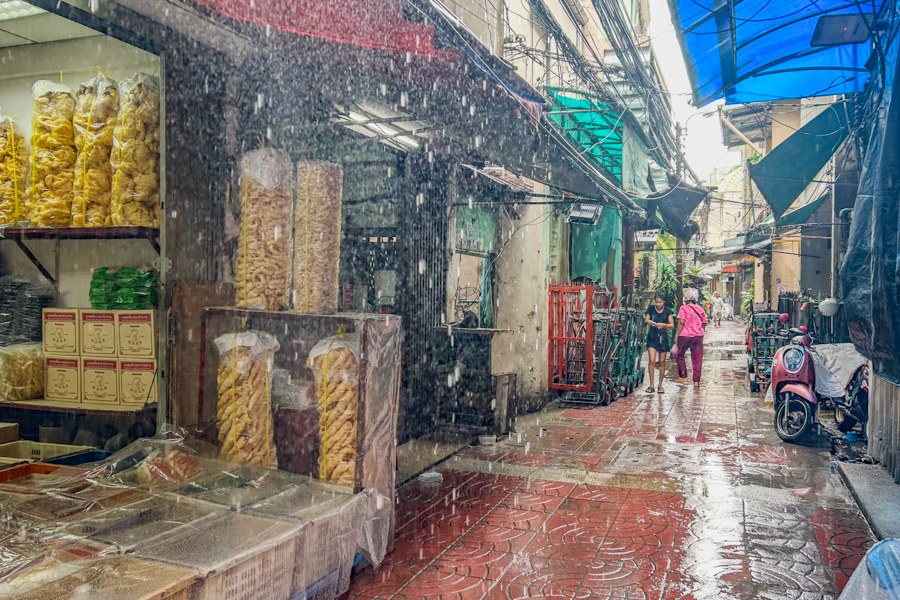


Every type of goods were on sale, crammed into cupboard sized shops. No room to swing a cat. I think the cat was quite relieved!

We visited Chinatown on a couple of occasions. The sheer volume of goods on offer, streets crowded with people, carts, bikes and motorbikes was overwhelming.
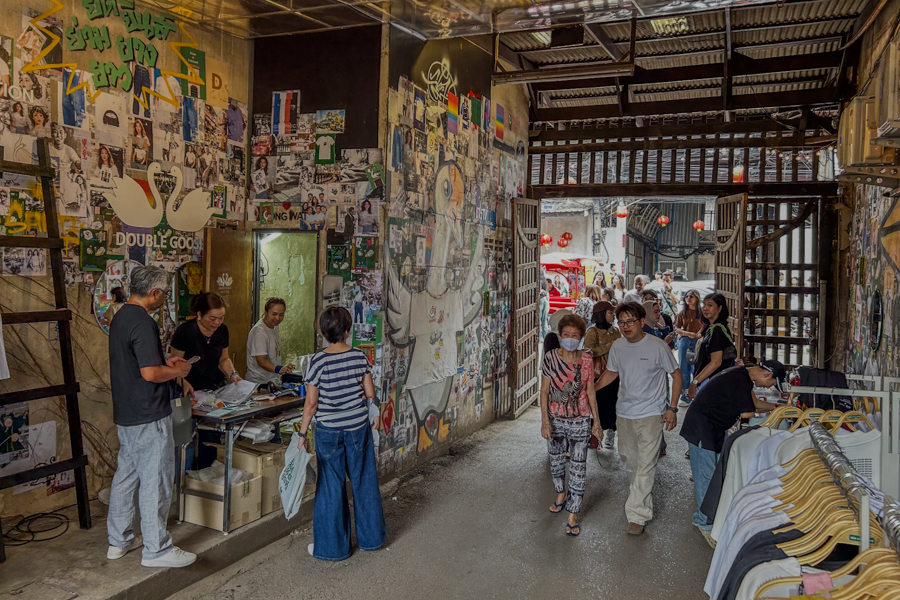
On one occasion we were in a covered market with stalls crammed into the space and narrow walkways but still people would cycle up behind you, or bring in motorised scooters and food carts complete with lit coal braziers and sizzling food. It was an episode of the quick or the dead. Blink and you will have a hot kebab stuck somewhere uncomfortable!
On another occasion we wandered, pensioner style, into some sort of mango festival with wine tasting and people dressed up to the nines with photographers and film crew. People posing in the latest gear, selfies and photoshoots on every surface, immaculate makeup.
We nearly made it, Dudley had infiltrated the wine tasting, but I clearly lowered the tone and we both got thrown out on our ears. Well you win some and you lose some. There is a huge thirst in Bangkok to document your beauty!
Chatuchuk Market


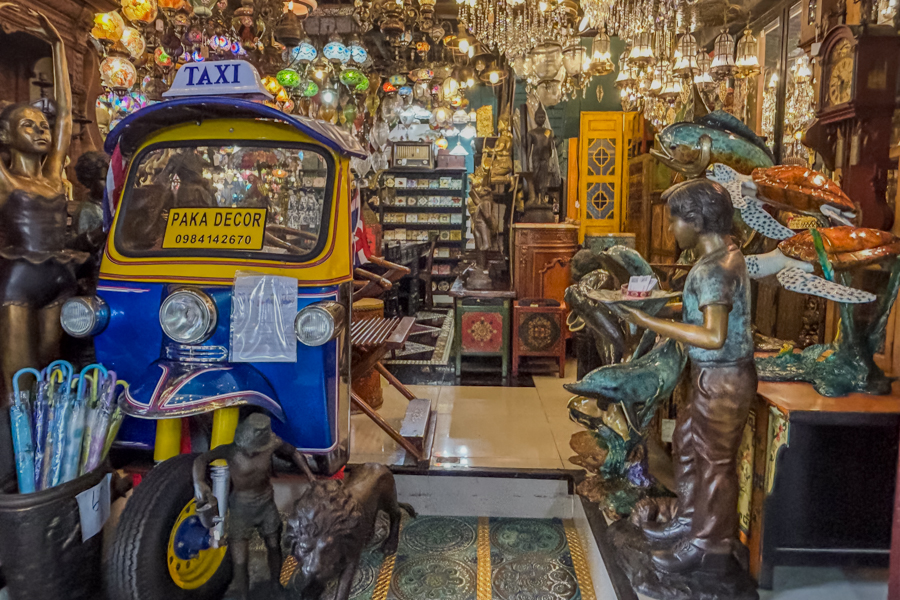
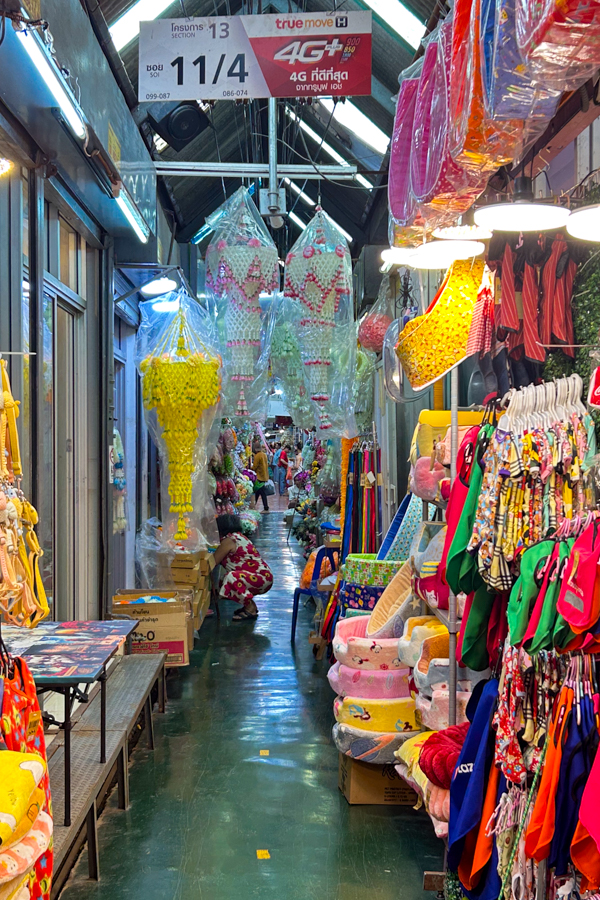

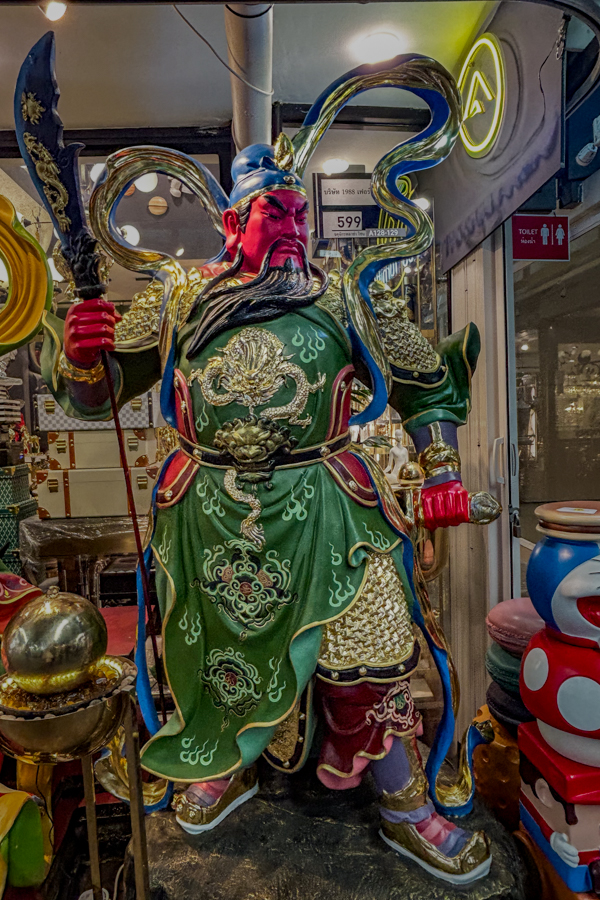
Our next goal was to visit one of Bangkoks most renown and biggest weekend markets, Chatuchuk.
We took a taxi and encountered the notorious traffic congestion. It took half an hour to go 11 km.
This market is the biggest market in Thailand, it receives over 200,000 visitors a weekend, and spans more than 35 acres and 15000 stalls. You can buy anything here from exotic pets to food, plants, electronics, furniture, vintage clothing, thai art.
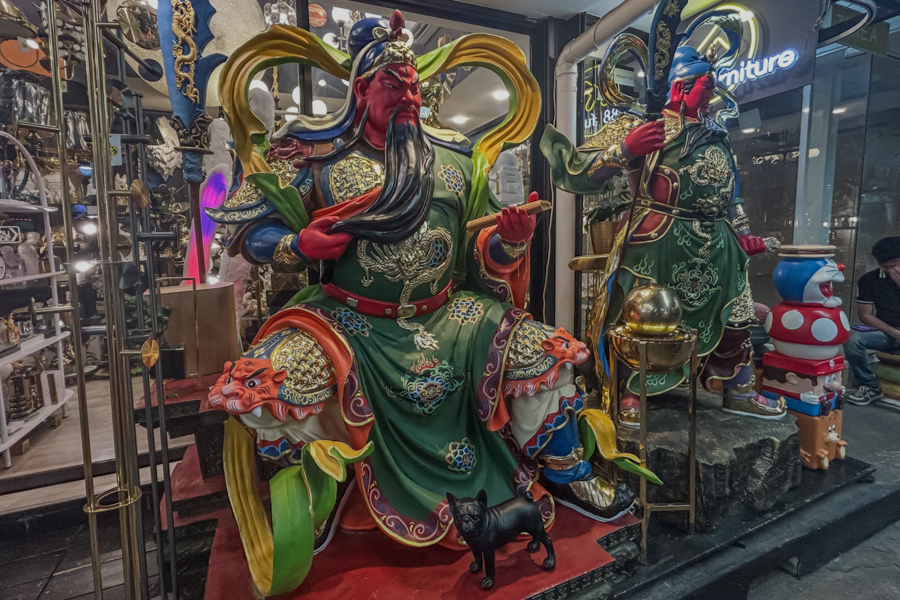
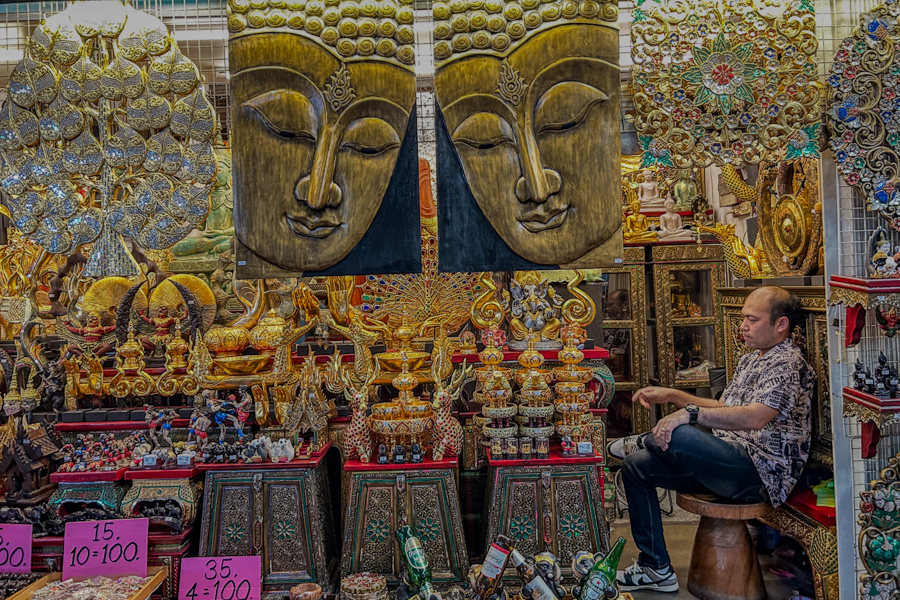
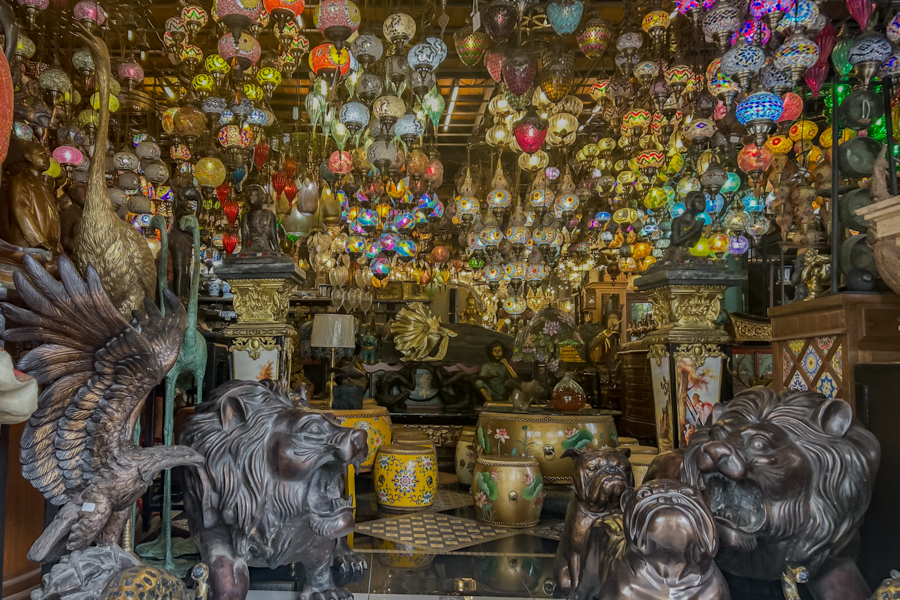
We wandered between the stalls in a bewildering array of goods. They do seem to have grouped the areas which makes navigation fractionally easier but it is still mind spinning. We saw so many beautiful things but most of them not suitable for us to try and bring home.
Dudley is always attracted to the life sized elephant, not the pocket sized stuff.
We bought dried fruits, scarves and Thai pants like proper tourists and then, after the best coconut ice ever, we bowed out.
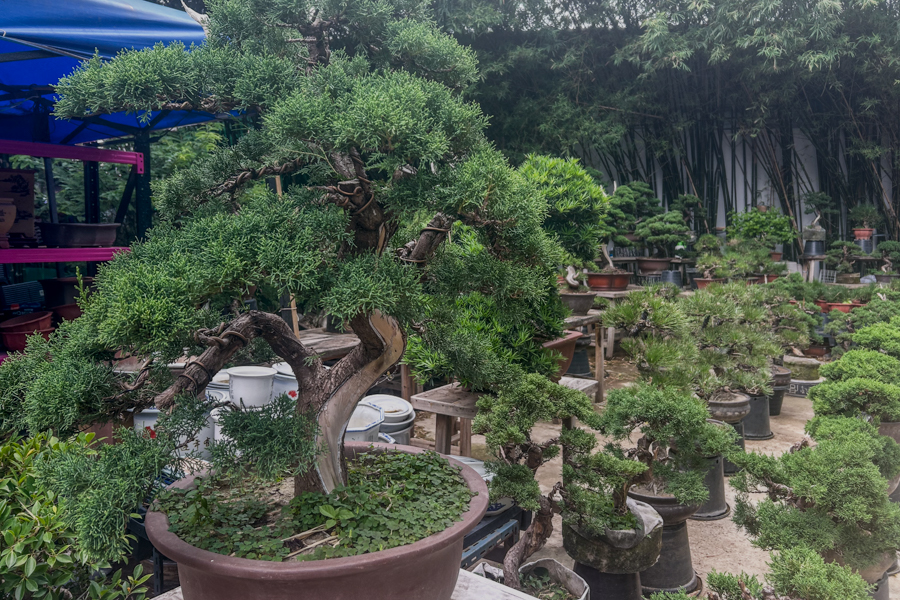
An array of bonsai for sale. As far as I could see these were Japanese Juniper trees, a species I managed to kill at home. Moral of the story, best stick with indigenous trees.
Thai Silks
Our next stop, after more road chaos, was the Jim Morrison House. Another little gem in the middle of town.

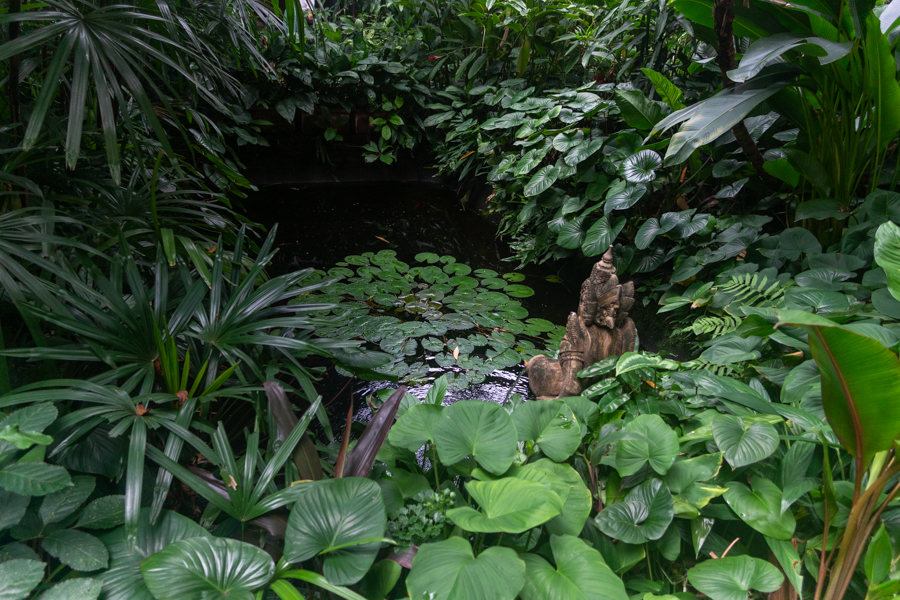

Jim Morrison was an American adventurer and entrepreneur. He came to Thailand with the allied army at the end of WW2 and fell in love with the country and stayed.
Thailand joined Japan in the war so was not part of the Western alliance. However their alliance with Japan was under duress, and so at the same time they secretly told the allies that they supported them as well, and fed them information. More Thai diplomacy and survival in action.
As a result they received a lot less penalties than most other countries for supporting the losing side, and Thailand received support from the West post war.
Jim Morrison was an architect and became fascinating by Thai customs and art. He salvaged several old teak houses and then rebuilt them on his property in the city close to the river, and furnished them with Thai arts and sculptures, to the extent he amassed one of the largest collections of Thai art.
Around the houses he curated a garden, also in traditional style with many sculptures.
He revived the silk industry in Thailand, founding the Thai Silk Company and finding and preserving the traditional methods of weaving and dying. He hosted everybody at his house, the who's who of art, literature and politics.

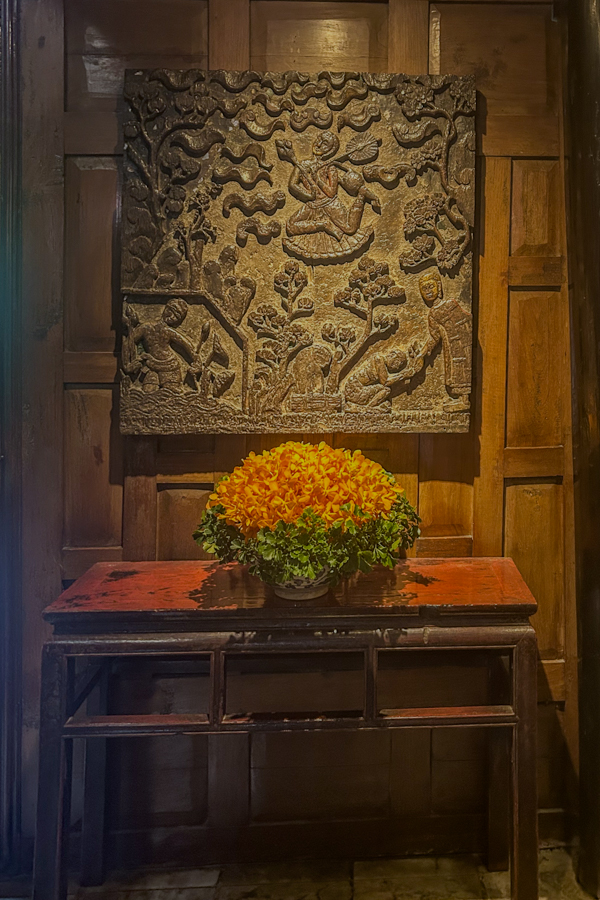
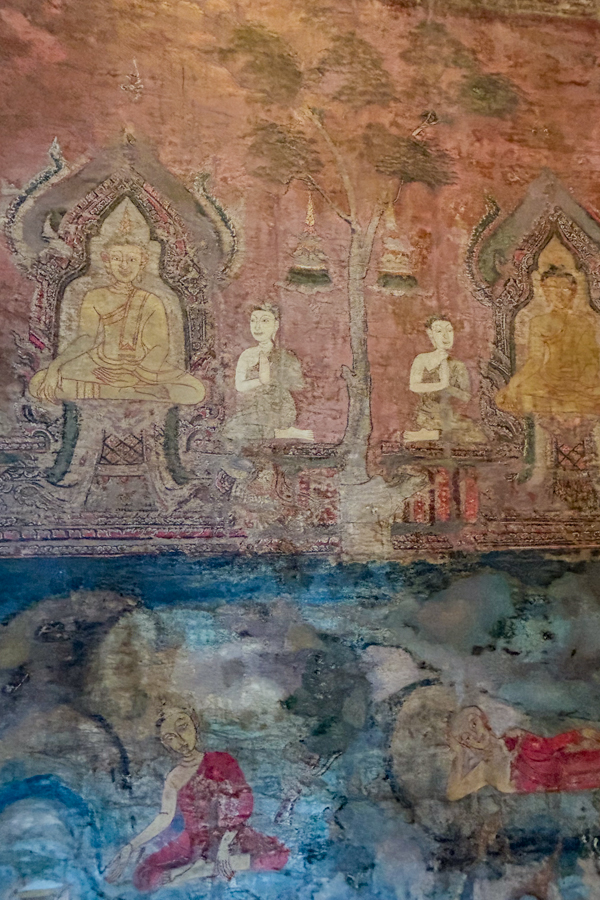


He would sell the silks in America, and they became very sought after, featured in Vogue, used by couture houses, and worn by celebrities and film stars. His silks were used on the set of the epic films, Ben Hur and the King and I.
Just to add to the mystique, in the late 1960s he disappeared without a trace, while on holiday in Malaysia. To this day no one knows what happened. He was always an intrepid and keen traveller. Maybe he met with an accident or fell foul of drug smuggling gangs. Anyway the house and its contents were eventually set up as a non profit trust by his heirs and remains a testament to his life and the Thai culture.
There is a shop still selling the Jim Morrison silks which are a glorious riot of colour and design but a bit rich in price for us.


Wat Pho
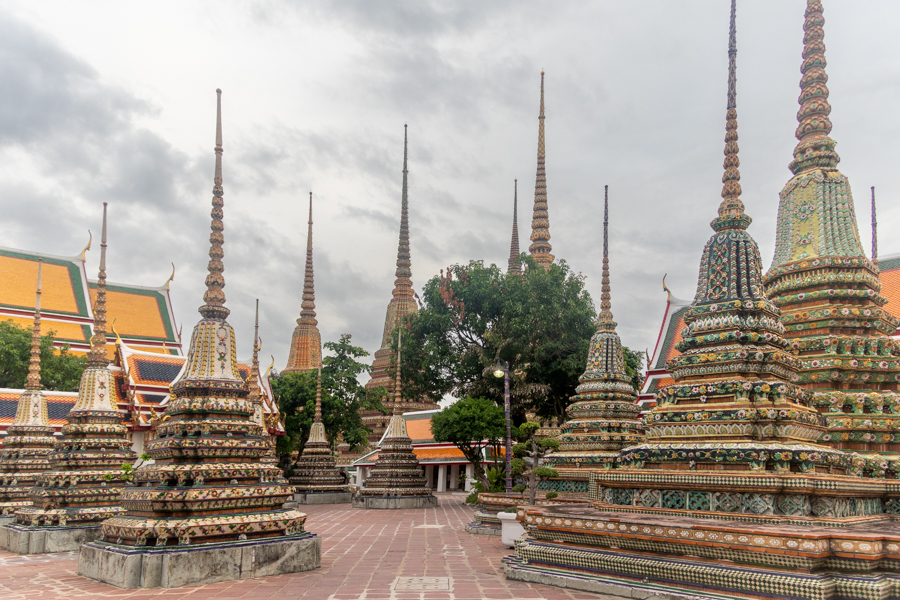
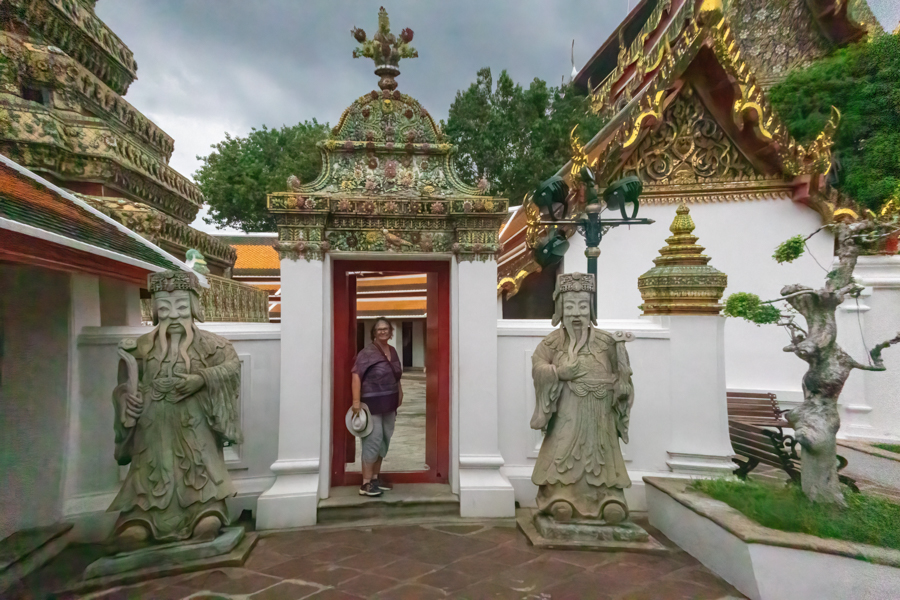
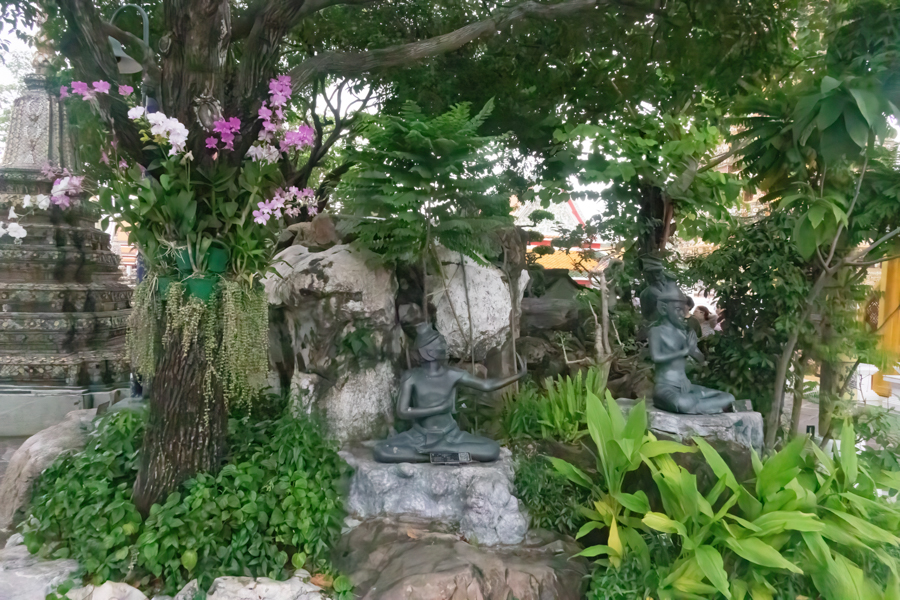

Beautiful ceramic mosaic

On our way home we decided to stop at another famous temple, adjacent to the Grand Palace, Wat Pho. Also known as the Temple of the Reclining Buddha. Roger told us if we went late in the afternoon the crowds would have dispersed.
Wat Pho is one of the oldest temples in Bangkok, built in the 17th century and preceding the establishment of Bangkok itself.
It was the main temple of Rama I, some of his ashes are interred there. He built the Grand Palace right next door. It houses the largest Buddha collection in Thailand, over 1000, including a 46 m reclining Buddha statue, which for many is the main attraction
It was, however, more than that. Another of the most beautiful temples we visited. In the compound are more than 99 chedis of different sizes covered in porcelain mosaic. The 4 main chedi are dedicated to the first 4 Rama kings, and have various artefacts from Ayutthaya as well as Buddha relics entombed in them.
The temple is considered the earliest centre for public education in Thailand, the first Thai university if you like. It is recognised by UNESCO. It houses a school of Thai medicine, and is known as the birthplace of traditional Thai massage which is still taught and practiced at the temple. There are 2 pavilions in the temple grounds where you can go for traditional massage.


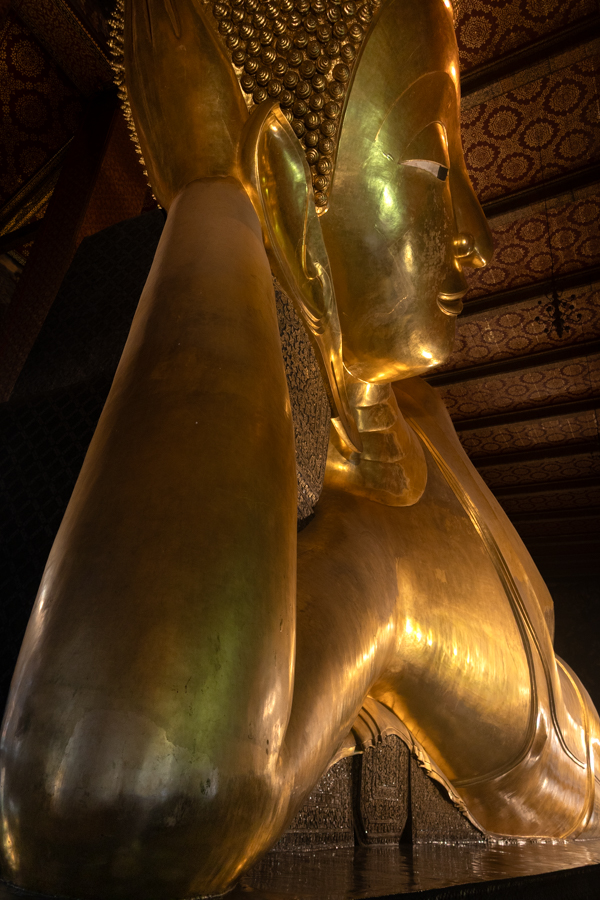
By arriving quite late in the day we definitely benefitted from less crowds but it was hardly empty. After exploring the compound we ended up in the temple of the Reclining Buddha. 46 m long with a 5m wide smile. This temple was added by Rama III. It has the most exquisite mother of pearl panels covering the soles of his feet with 108 images or lakshanas which represent auspicious signs and distinguish the true Buddha.
Along the wall of the temple is a row of 108 brass bowls. The tradition is to put a small coin into each bowl to bring luck. You can buy a bowl of small coins for 20 Bht. We shared a bowl between us before strolling the short distance home as the sun set. Our camera and human batteries were flat! Bangkok is hard work.


Iconosiam


We had sailed past Iconsiam, one of the really high end shopping malls, on our first evening in Bangkok. Roger told us it was a great place to see the city panorama as there was a viewing deck on the 8th floor so when we set out next day we decided to take the ferry over and take a look.
In the daylight it was no less impressive. On the ground floor was a huge display with food, jewellery and luxury goods. On the upper floors every prestigious brand known seemed to be represented. There was even an indoor Rolls Royce shop. I am not sure how they got the cars up there.
The lift was bigger than our entire cabin on board the Sabai Sabai. You could have a party in it. I guess that solves the Rolls Royce problem!
We took the lift up to the top and found a broad viewing deck overlooking the river and the skyline of Bangkok laid out before us. Many of the buildings were decorated with portraits of the king for his upcoming birthday.
We watched the world go by and surveyed the scurrying crowds like tiny ants below before indulging in the most expensive coffee and cake ever. We really were in retail central!
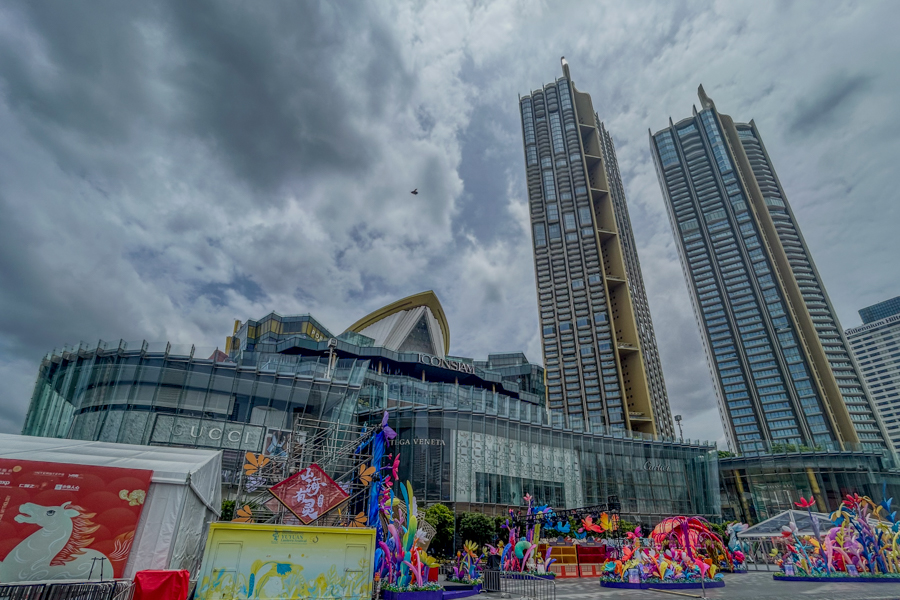
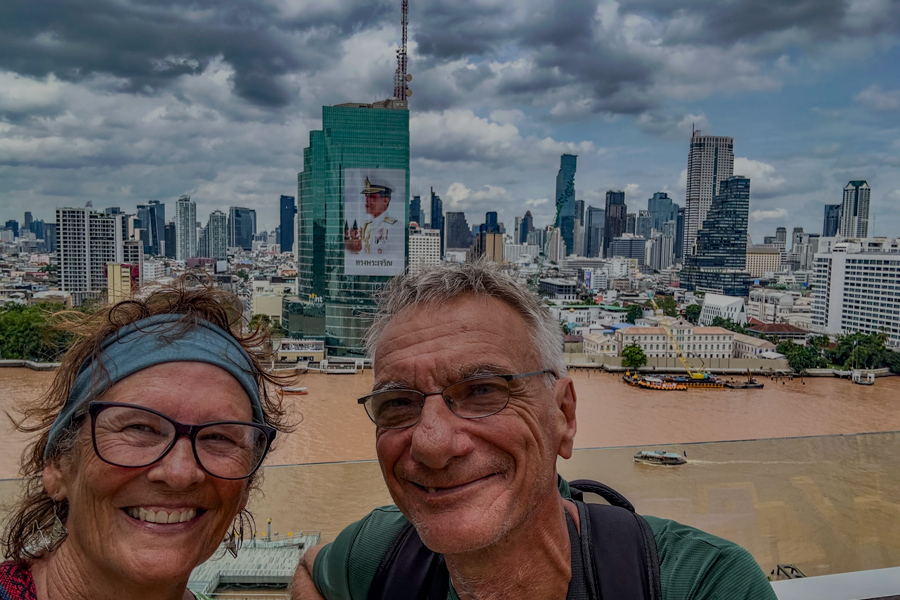
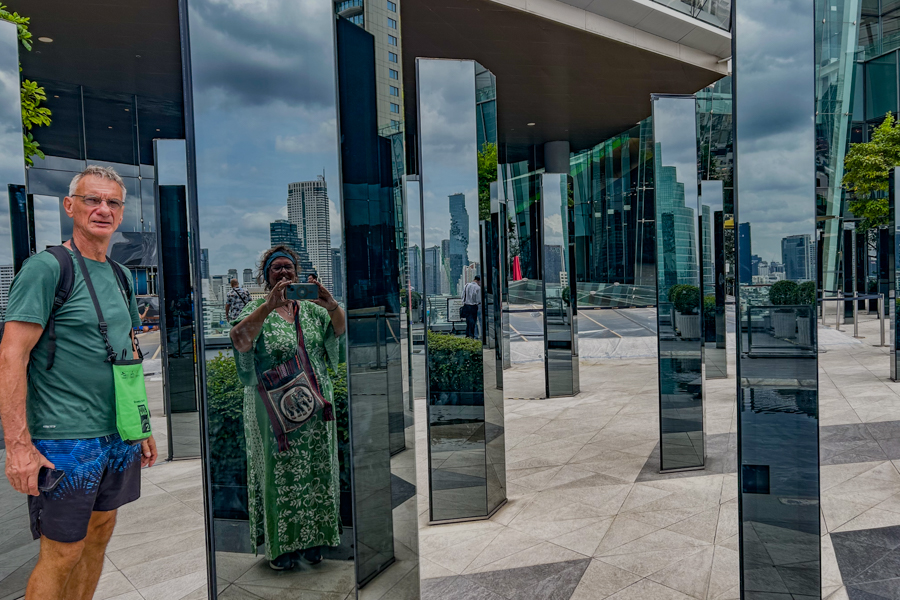


The whole complex was decorated with huge bouquets of orchids
Tollywood
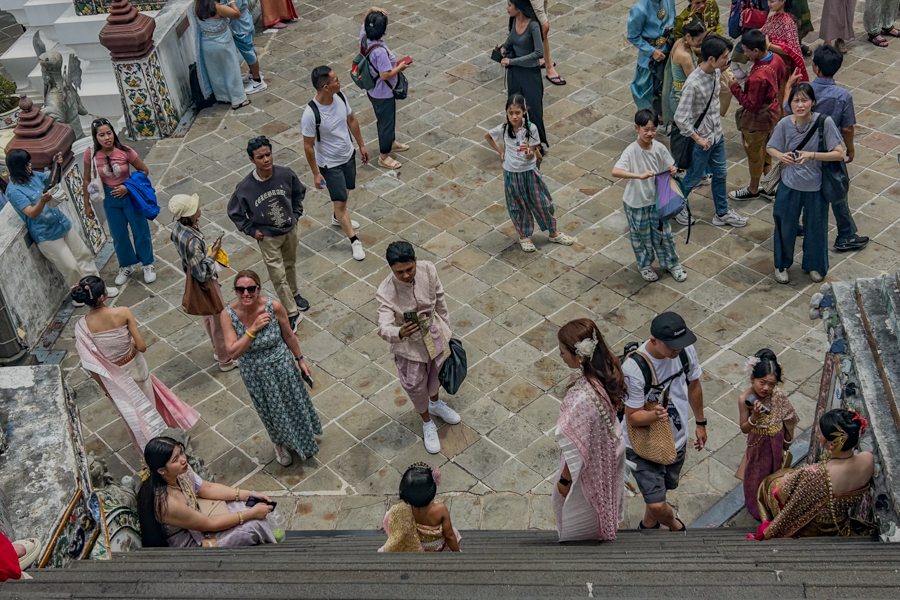
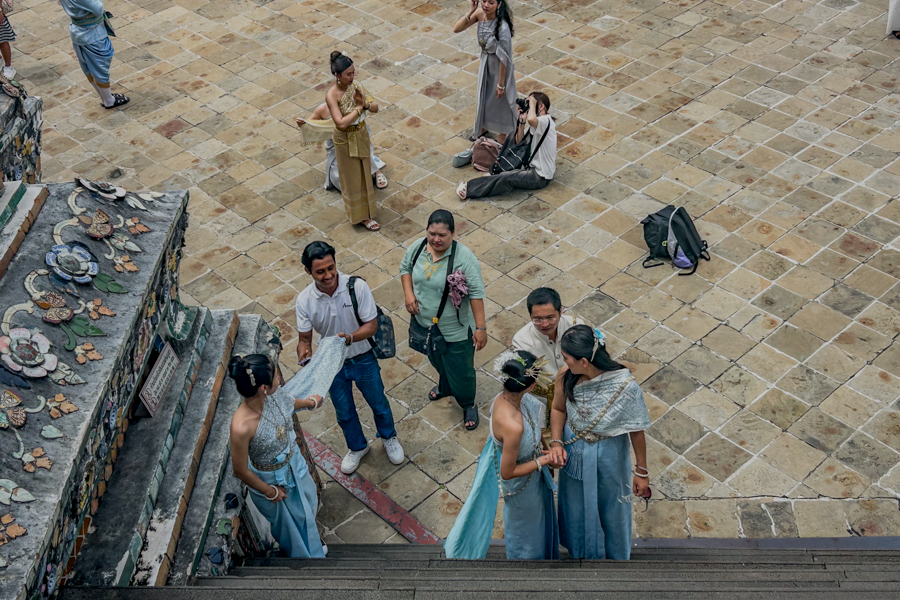
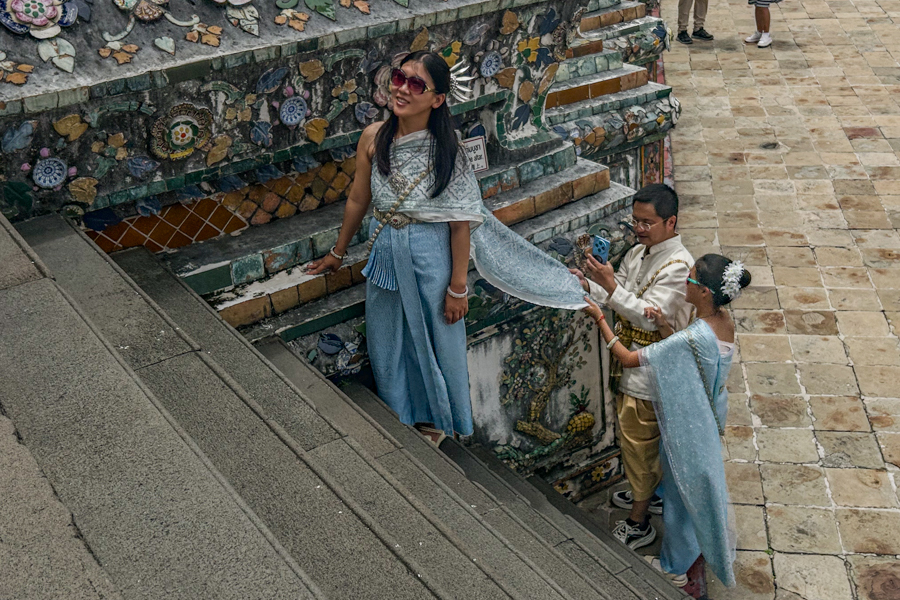
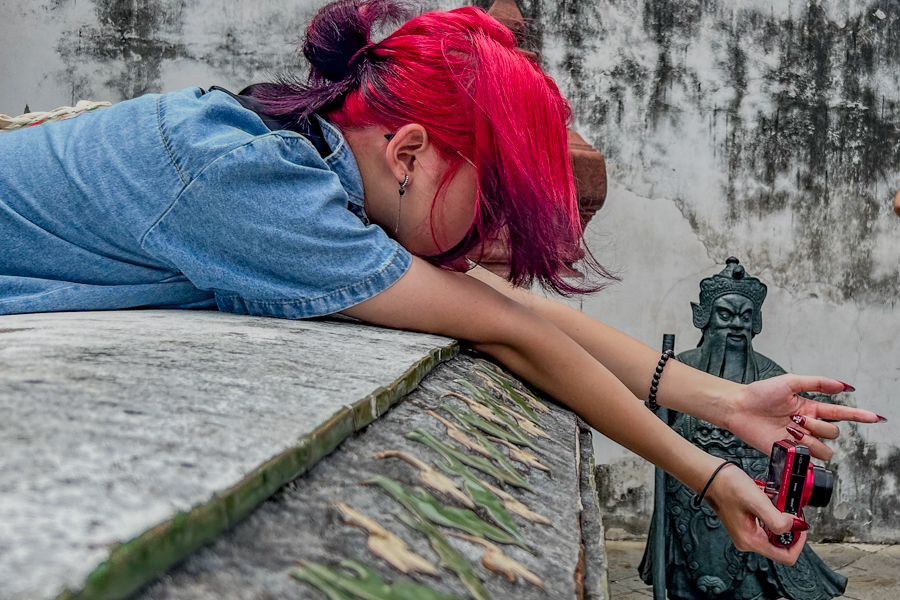
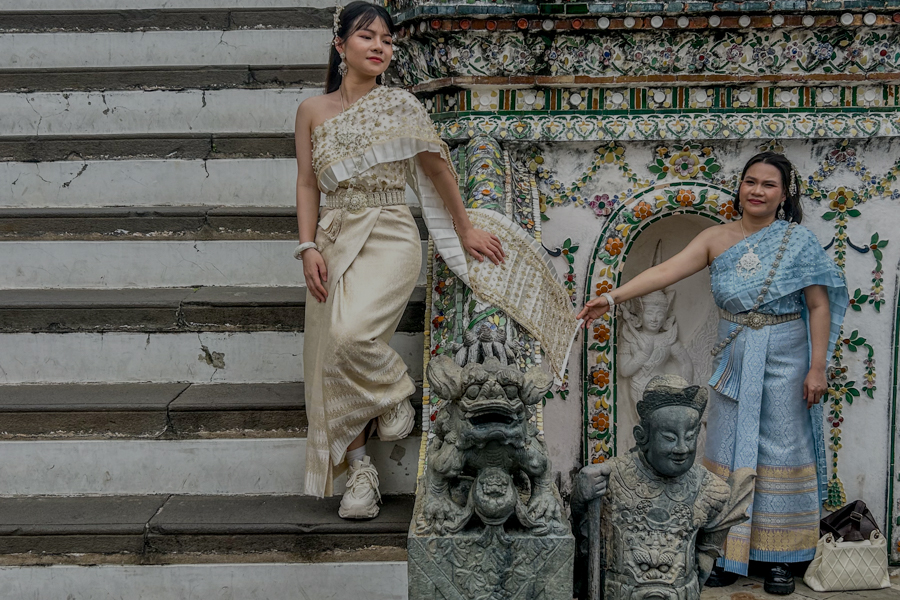
You have heard of Hollywood, Bollywood and Nollywood but we reckon in Bangkok we found Tollywood. The Thais are very fond of having their pictures taken. Walking is congested in the city because every second person is posing on a street corner taking selfies or TikTok videos. Often dressed up to the nines and full make up on.
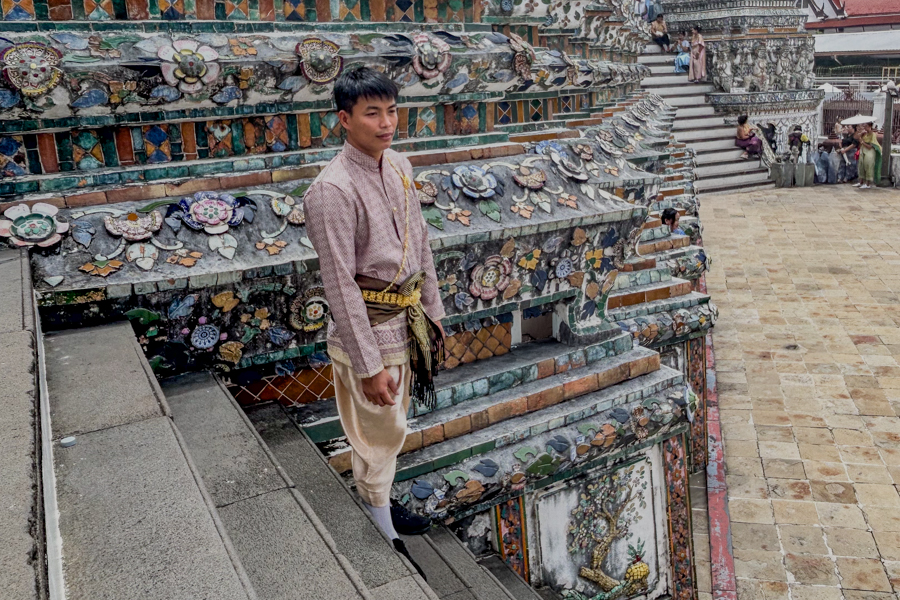
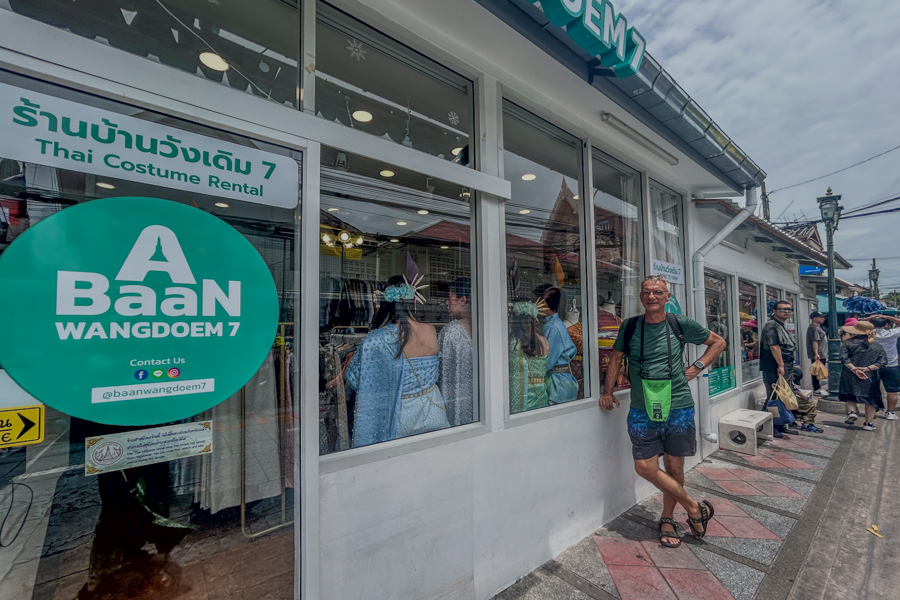
They also have a thriving trade in the hire of traditional costumes which they then wear to take photos at various ancient sites. This was apparently driven by some or other historical soap opera on Thai TV. A sort of Thai Game of Thrones.
So it is common at most temples and historic sites to find people in full costume. They are not all Thai, tourists from SE Asia do it too. We met people from Singapore and Malaysia all in full dress.
On the day we headed to the West Bank of the river it was the Kings birthday and we were surrounded by people in traditional dress. Whole families including little toddlers were in matching costumes crowding the ferry. Beautiful silks, perfect makeup, diamond studded belts and sashes, complicated hairpieces.
We assumed it was part of the traditional celebrations or some religious festival as we followed them to our destination for that day at Wat Arun. Well there was nothing religious that we saw, they trailed about the temple complex with photographers and props taking photos at every conceivable viewpoint. No worshiping in sight. Lining the streets at the back of the wat were rows of costume shops where, for 500 Bht , you could hire the full caboodle. Fancy!


Our second brush with the film industry occurred on our second night on the ship. We returned late from our explorations and so stopped off at a restaurant on our pier to eat before going home.
We ate noodles and listened to live music with a refreshing soda on a balcony overlooking our boat.
It was a glorious sunset and we noticed there were rather a lot of people milling around our jetty. They were dressed mostly in black and shifting heavy boxes and snaking wires. Young girls brought in drinks and snacks and they all settled on board our boat.
Eventually we realised this was a film crew and watched the drama unfold below us
We thought Roger was maybe doing a promotional shoot so we stayed away to give them space. I certainly hoped they were not staying over.
As it got late we paid our bill and strolled down to the boat. There were lights and cameras all over. The hero was posed in a tuxedo brandishing a gun with a beautiful scantily dressed girl on his arm facing 2 villainous characters. Very James Bond. They looked surprised to see us and we were shooed up to the upper deck out of the way.
Just as we were wondering if we would get to bed anytime soon, Roger came rolling home from the gym. They told him to leave and he exploded in a rage and threw them off the boat with curses and crashes.

He came and shared a beer with us after. Apparently a guy had rented a cabin on his boat, as a guest, and asked Roger if he could shoot a video. Roger said of course, assuming he was shooting a holiday TikTok or something. He had no idea that he was planning a feature length thriller with cast and crew. When they tried to throw him off his own boat they may as well have thrown a lit match into a bag of fireworks.
What did I tell you? Never a dull moment on the Good Ship Lollipop!
Thonburi


We were very keen to explore the area of the old capital Thonburi, well known for its canal systems, floating markets and houses, and traditional lifestyle.
We chose the Kings birthday to head to the west bank.
This is traditionally a public holiday so maybe it was not the best day to experience normal life there. Because of the war in Cambodia a lot of the days celebrations had been cancelled, including the fireworks, which made me sad. We were treated to a 21 gun salute however.
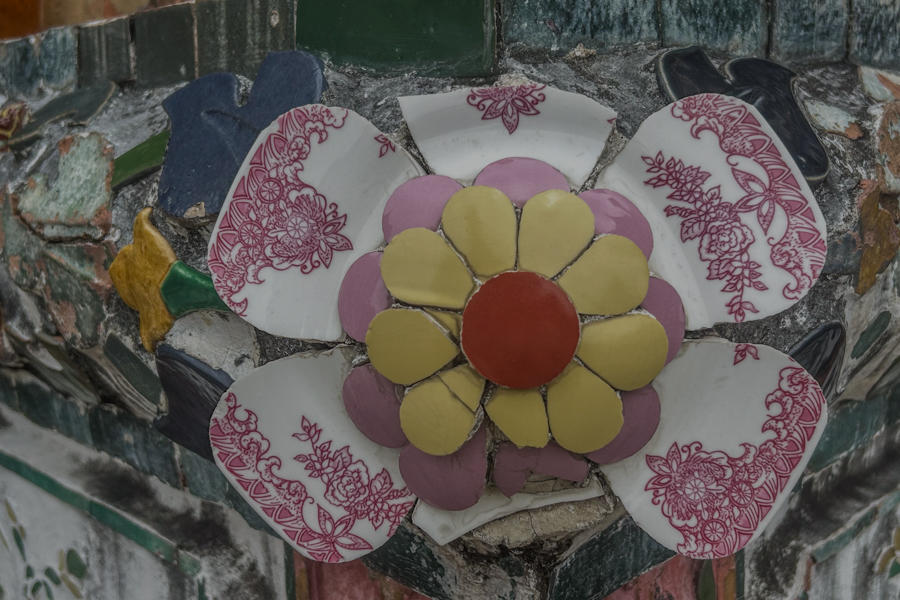


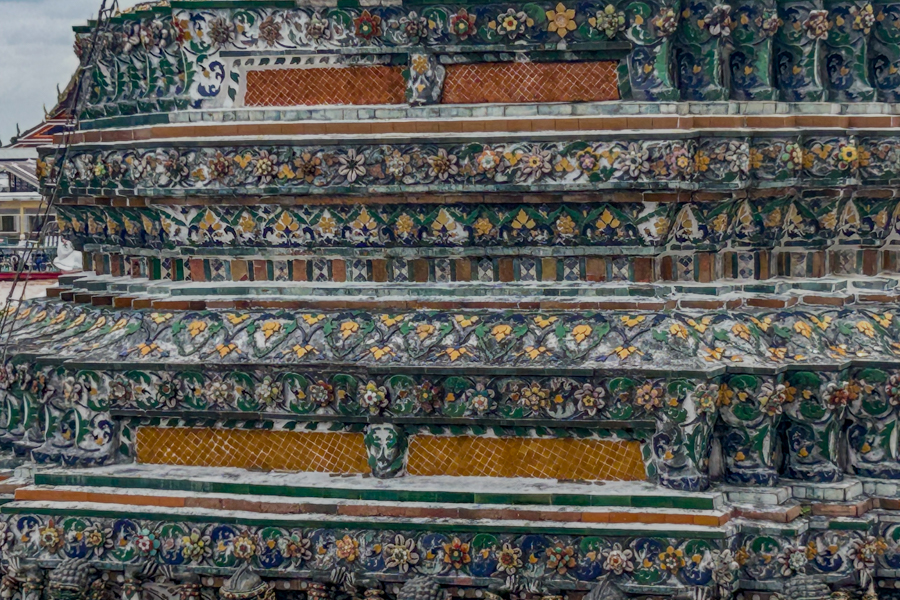
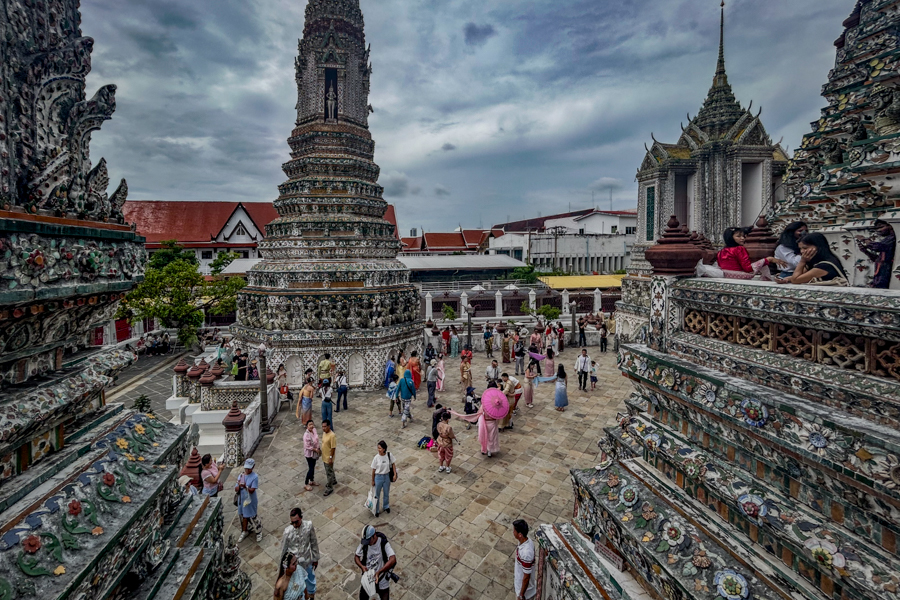
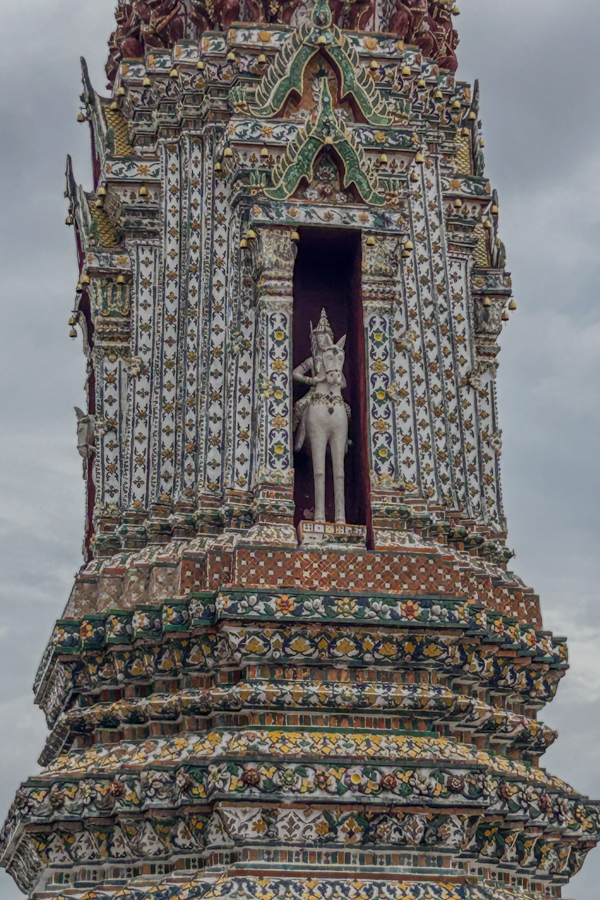
First stop was at the magnificent Wat Arun, an iconic feature of the landscape on the west bank of the river, and the gateway to Thonburi.
It is also known as "Temple of Dawn" because when Taksin arrived at the site of his new capital city he passed the ruined temple at dawn and then vowed to restore it. He renamed it Wat Chaeng but it later became Wat Arun. The name derives from the the Hindu god Aruna who was charioteer of the sun god Surya
The temple held the Emerald Buddha before it was transferred by Rama I to Wat Phra Kaew, so we definitely had to visit for our EB pilgrimage, but it was much more than that.
The temple is a central prang with 4 chedis at the points of the compass. You can climb the prang and walk around a walkway which overlooks the courtyard.
The central prang is topped with a seven-pronged trident, referred to as the "Trident of Shiva". Around the base of the prang are various figures of ancient Chinese soldiers and animals so there is Chinese, Hindu and Buddhist influences in the temple
The prang and surrounding buildings are covered in shards of porcelain and shell arranged like flowers and really beautifully decorated. The porcelain and shell were taken from ballast previously used in boats sailing from China to Bangkok.


Next stop was to penetrate the canals of Thonburi. We booked a boat to take us around and met it on a small canal at a temple jetty. Rather surprisingly we were the only customers.
Thonburi has a very different atmosphere than the other areas we visited in Bangkok. It felt older.
Crisscrossed with narrow waterways and canals the houses are crowded on the edge, either floating or on stilts. The water pipes and electrics looked precarious to say the least.
The canals are crowded with colourful boats, taxis, tourist vessels, as well as working vessels.
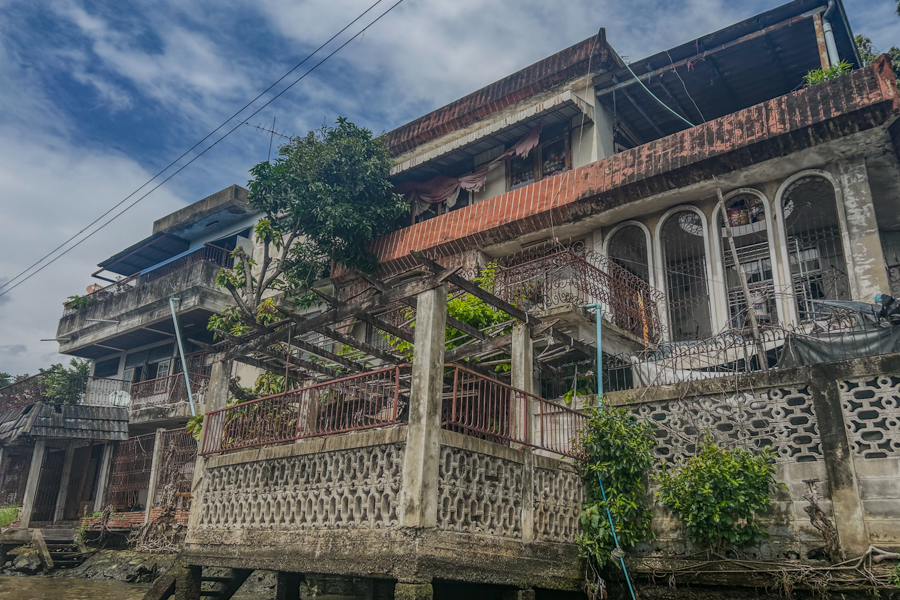
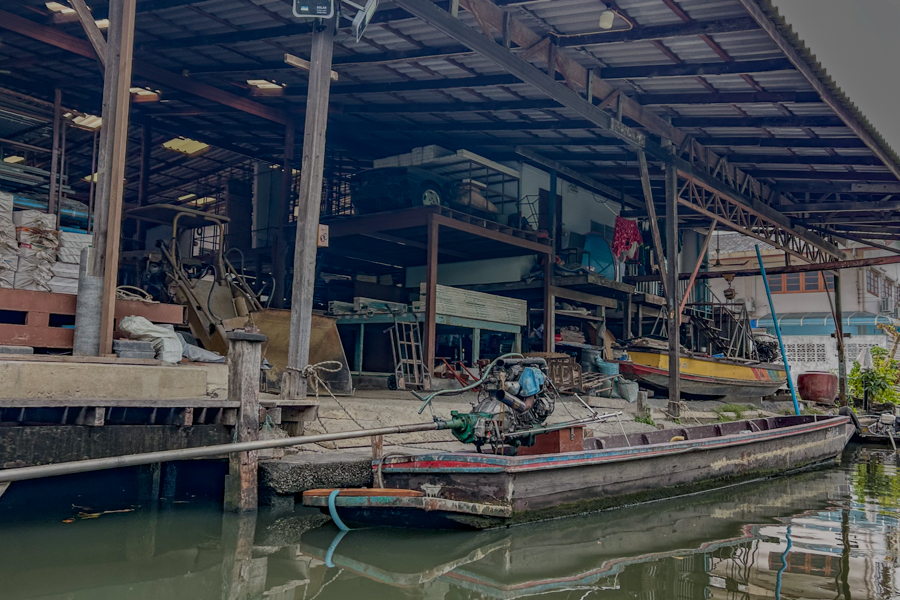
Some of the houses and businesses on the Thonburi canals looked very precarious but often really scenic
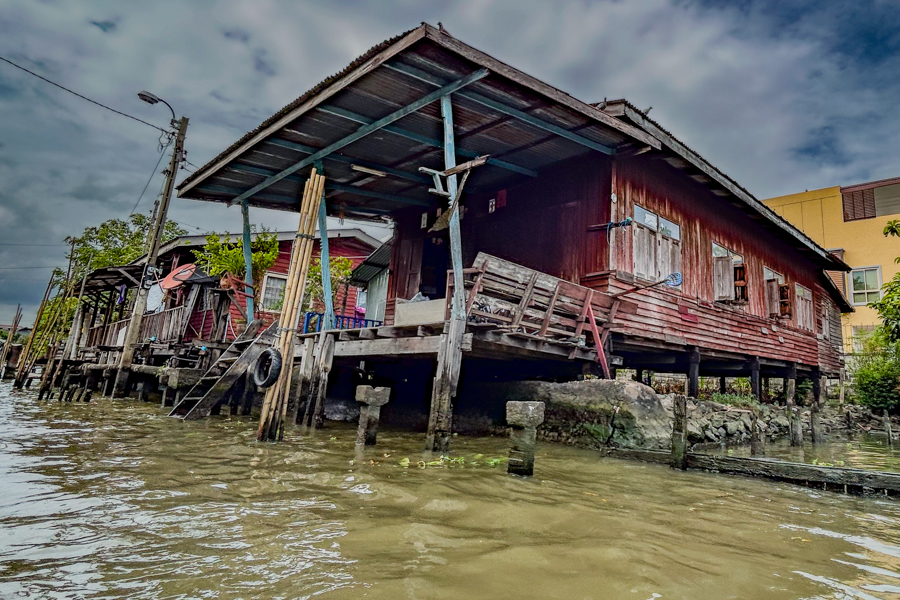


There is a slightly unpleasant smell from the water and I would not like to investigate the sewage systems.
Some of the houses are mansion like and others are tumbled down shacks. Some have balconies overhanging the water. Many are balanced on ricketty stilts.
They all have a little gate onto the water and usually a gazebo with seats on the waters edge. Maybe to fish or just to relax in the evening. The walkways, when present, are narrow and precarious. Everyone has masses of plant pots and flowers, so some areas are really pretty but there are a lot of areas that look about 1 step from falling into the water.

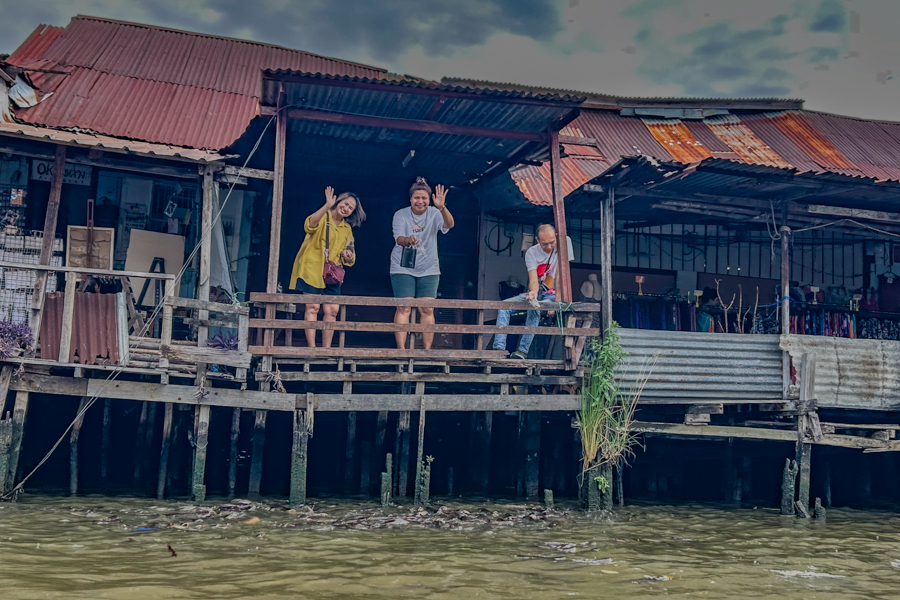
One of the floating markets
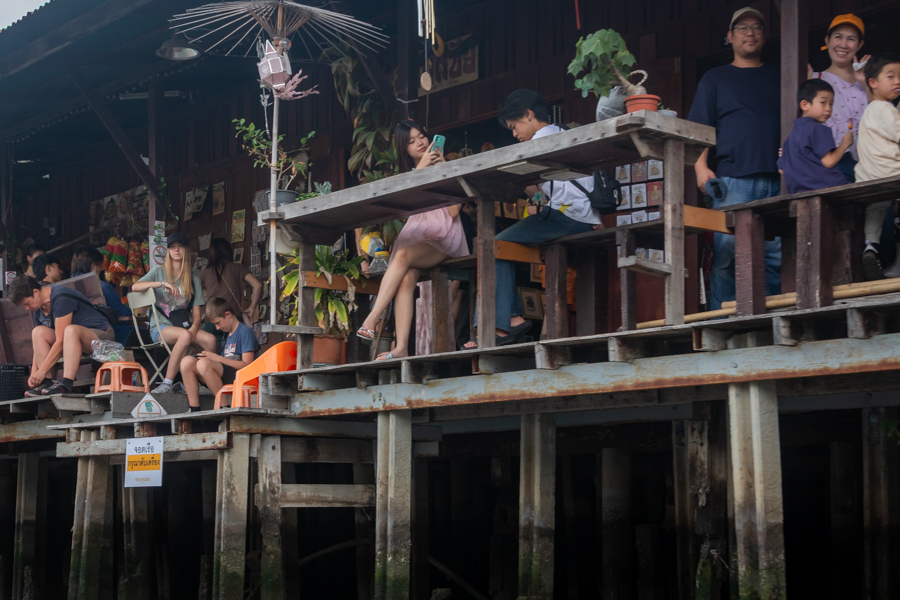


Tourist boats and working boats

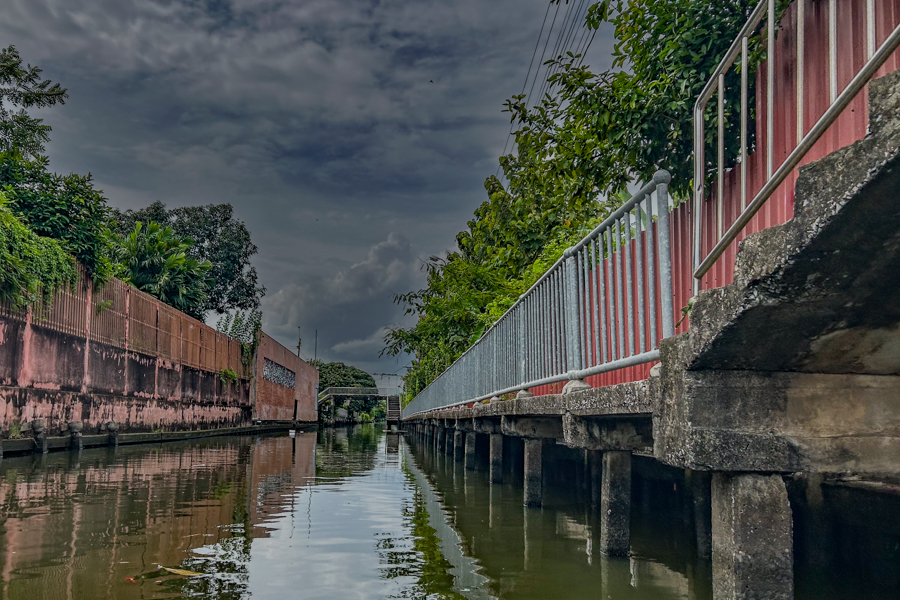
Precarious walkways

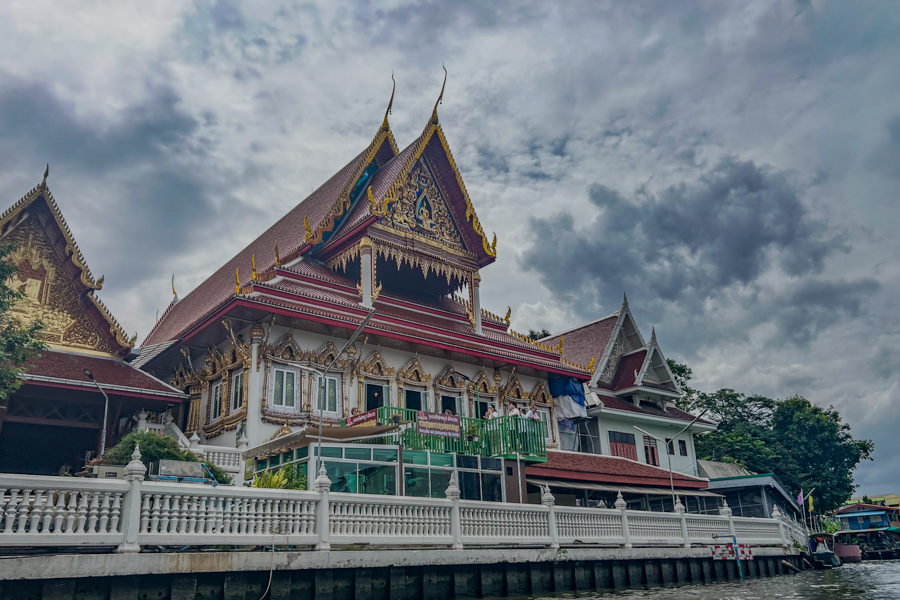

Temples and Buddhas
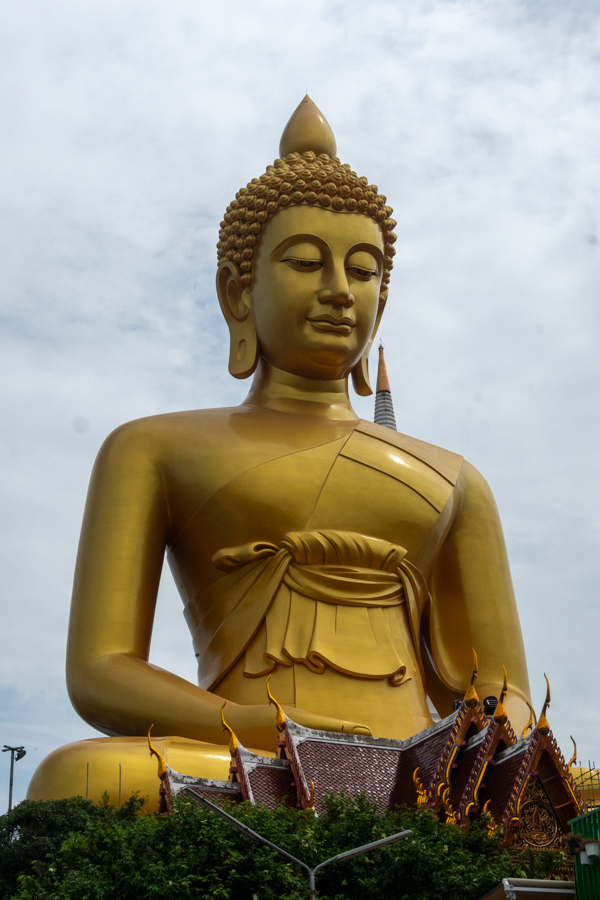
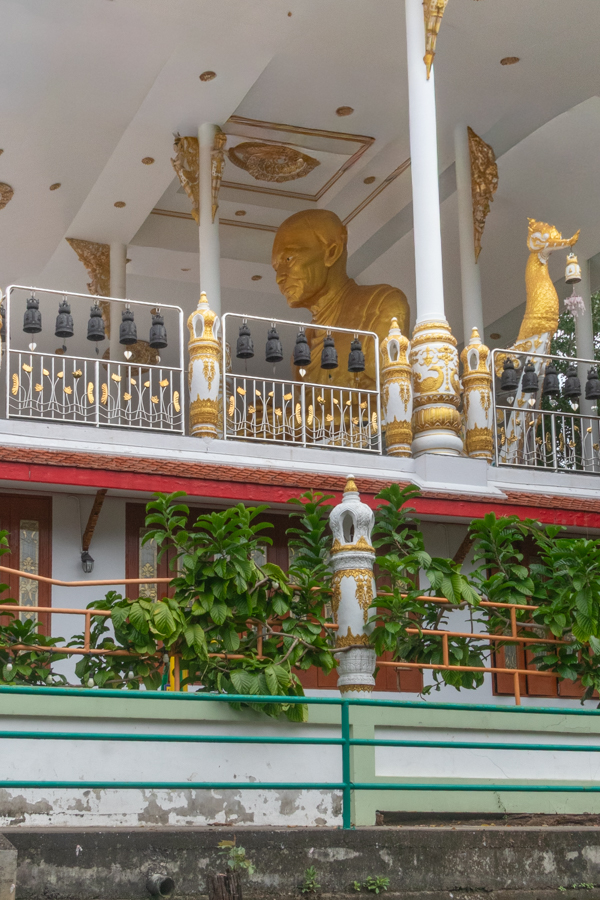

There are a lot of temples on the canals, a famous one has a huge sitting golden buddha. We travelled gently down the canals, under bridges and pipes and electricity lines. We saw a little old lady peddling some food from a small boat and then travelled past a large floating market. There were a lot of tourists there. Egrets and open billed storks perched on the pipes and we saw a couple of huge monitor lizards.
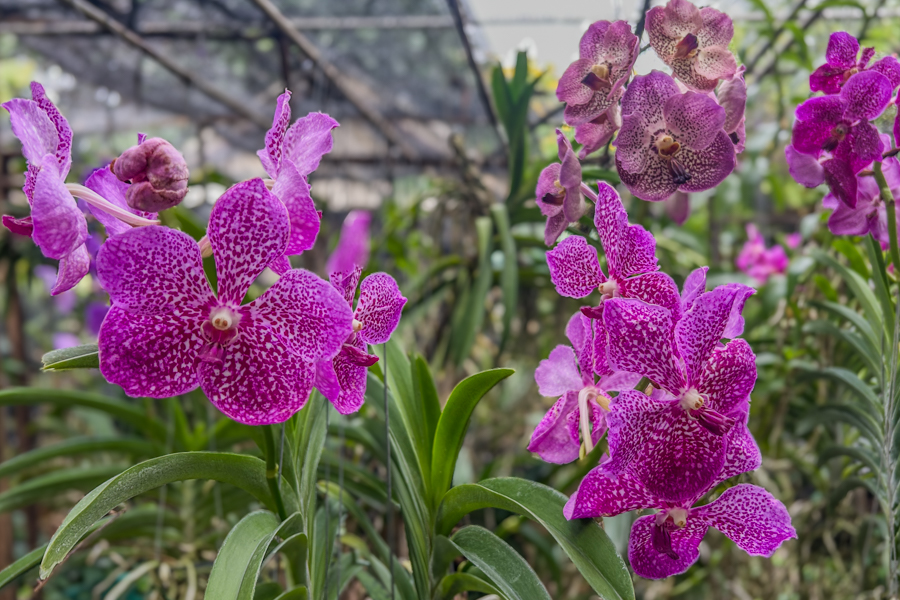
Eventually we reached an orchid farm and were able to get out and explore and catch a cold drink.
The orchids are being grown suspended on nets over tanks of water
After a couple of hours we turned back the way we had come. We stopped at a temple pier and they gave us a big bag of cheese curls to throw to the fish. Those cheese curls must have a hidden nutritional value as the catfish that boiled to the surface were huge. A lady on the jetty threw in a crust of bread and the fish surge created a tidal wave which nearly capsized our boat. I am not usually squeamish but I did not want to end up in that water!


The Last Dance


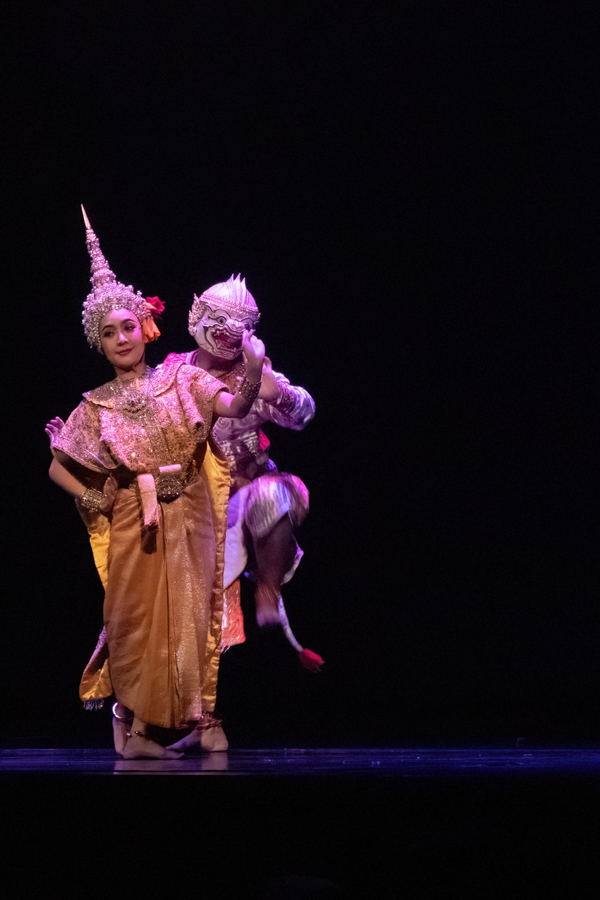

Included in our ticket to the Grand Palace were free tickets for a Khon drama performance at the Theatre Royal.
Khon drama-dance is a traditional stylised form of Thai storytelling using dance, costume, narration and music.
On our last day we decided we would activate our ticket. It was raining and so a bit of indoor entertainment seemed appropriate. We found our way on the sky train to the centre of town where the Royal Theatre stands.
It was a short show but incredibly impressive.
They danced to scenes from the, increasingly familiar, Ramakien. It helped that there were some subtitles which explained the scenes. There was a small orchestra playing traditional instruments. The costumes were beautiful. The dance was graceful and stylised.
I remain in awe of the flexibility, indeed hyper mobility, the artists exhibited. To be honest you see flashes of this in many Thai people just in day to day life and gestures. The way they issue tickets or serve you. I get the impression that Thai dance lessons from an early age are common to develop this particular type of grace.

Jer gan mai
"Khàawp khun thîi dtâawn rá, jer gan mai.
"Khàawp khun" (Thankyou) "thîi" (for) "duu-lae rao" (welcoming us)
"Jer" (meet) + "gan" (each other) + "mai" (again) = See you again.


It was our last night in Bangkok and we swung quietly in a hammock on the deck of our little boat and shared a last bottle of Chung beer.
Reflecting on our epic adventure we were so happy to have had such an intimate experience of the places, the people and the culture. A lot of that was achieved by staying in the hostels, organising our own tours and using the frankly mind blowing public transport system. I really wish I could take that home. You get to meet the real Thai people and experience their kindness and community.
It may feel rather daunting to arrive without plans but it was a philosophy which never let us down. It will leave a lasting mark on us.
Increasingly I see people who’s idea of a good hotel is a soulless cream coloured room with big bed, white sheets and European food. Or a stereotyped beach resort. Then why come to Thailand? Those hotels look the same the world over.
The places to stay are with the people who really make Thailand the Land of Smiles. Eccentric, eclectic and welcoming. A bed is just a horizontal cushion to sleep on. You don’t need a palace to make you feel important.
Anyway enough of the lecture, everyone has a place in Thailand, which ever way you decide to do it. Beautiful people with amazing lives, ancient agriculture, chaotic towns and cities which seem to have space for everyone.
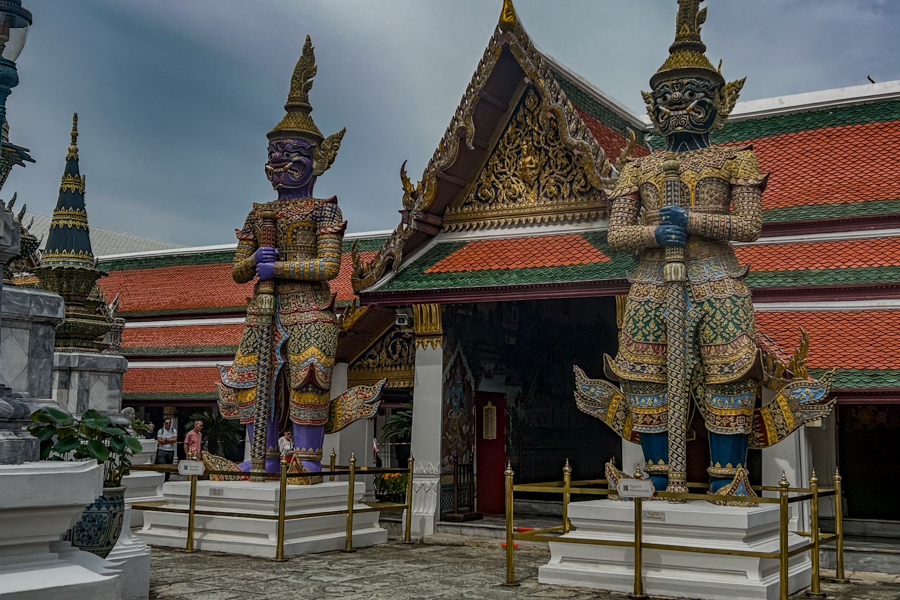
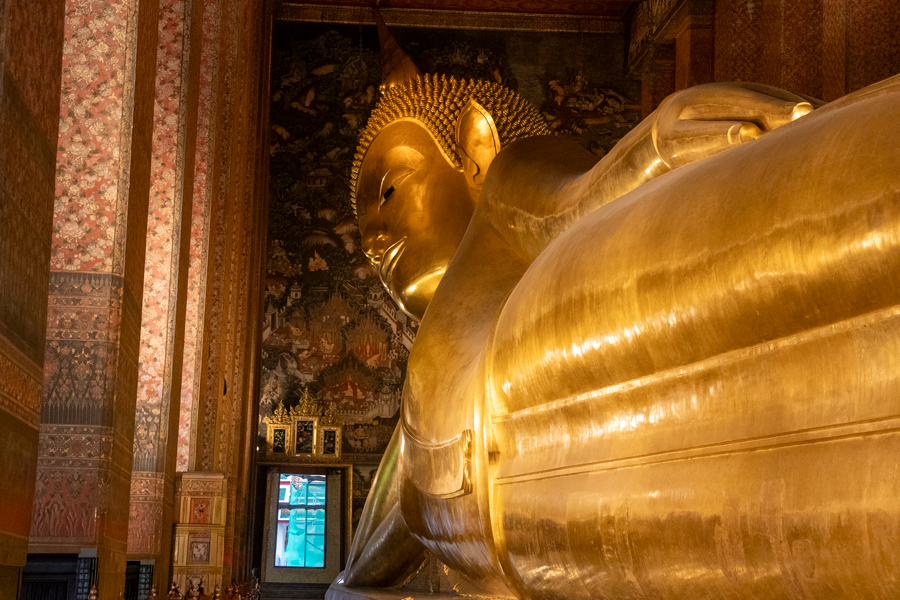
And then there is the most incredible living history which everyone in Thailand seems to hold front and centre to their national identity and national pride.
“To be ignorant of what occurred before you were born is to remain always a child. For what is the worth of human life, unless it is woven into the life of our ancestors by the records of history?”
Marcus Tullius Cicero
I think the ceasefire with Cambodia was signed yesterday. At least they are prepared to prioritise peace over ego. In this time of our history that feels like a rare commodity. I am sure there are many complex problems in this beautiful country but we chose to see the positives.
We feel incredibly privileged but it is time to go home. Jer gan mai.