Sodwana 2026
"The real voyage of discovery consists not in seeking new landscapes, but in having new eyes."
Marcel Proust
Join us in our latest voyage of discovery into Sodwana reefs 2026
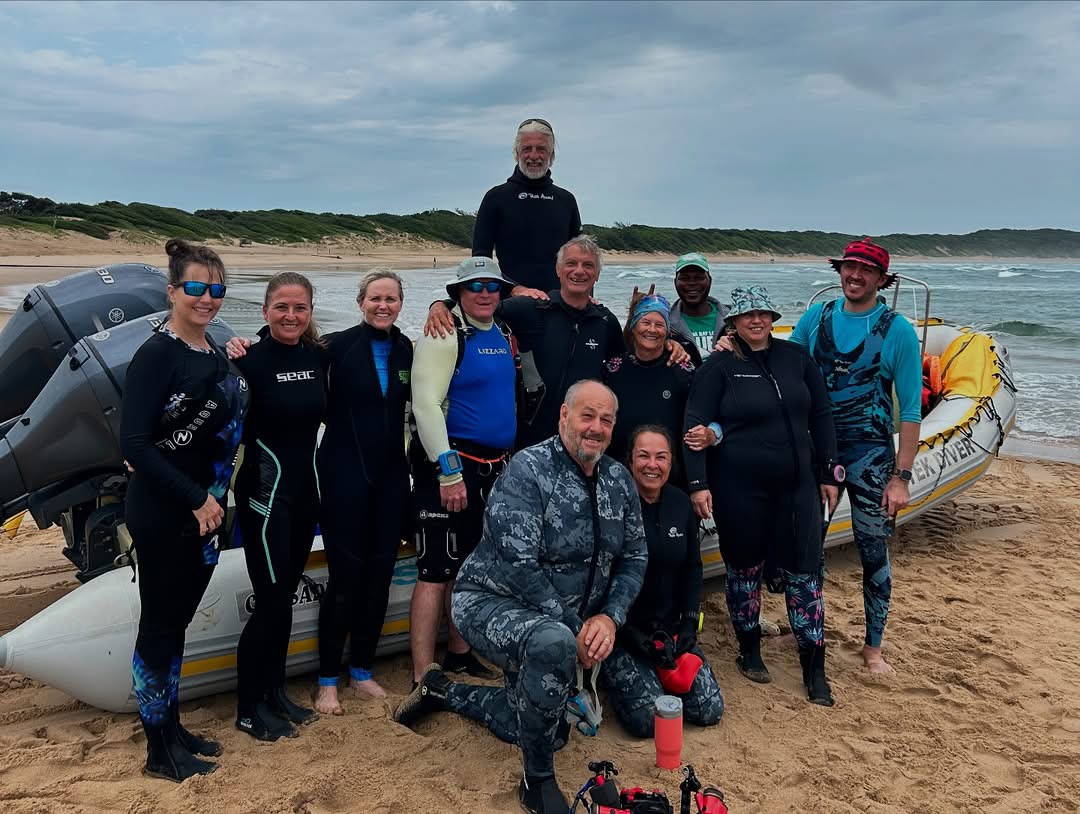
In one of the hottest summers I can remember, we headed for our little wooden house by the sea at Sodwana Bay for our annual dive safari. Despite the heat the coral was alive and vibrant, none of the bleaching from last year, which, incidentally, seems to have recovered fully.
We were welcomed by old and new friends under and over the water and were rewarded by sightings of the pygmy seahorses and pipehorses, tiny creatures we have sought out for decades without success.
The above quote from Marcel Proust is supposed to describe finally seeing the true beauty of something after a long, arduous search, realising the change is in your perception. In our case the change was being guided on our dives by the bright eyes of youth. Thank you Nicola, Emma and Lisa, you rock, and have the visual acuity of laser beams. Alas the ravages of time on our aging senses!


-
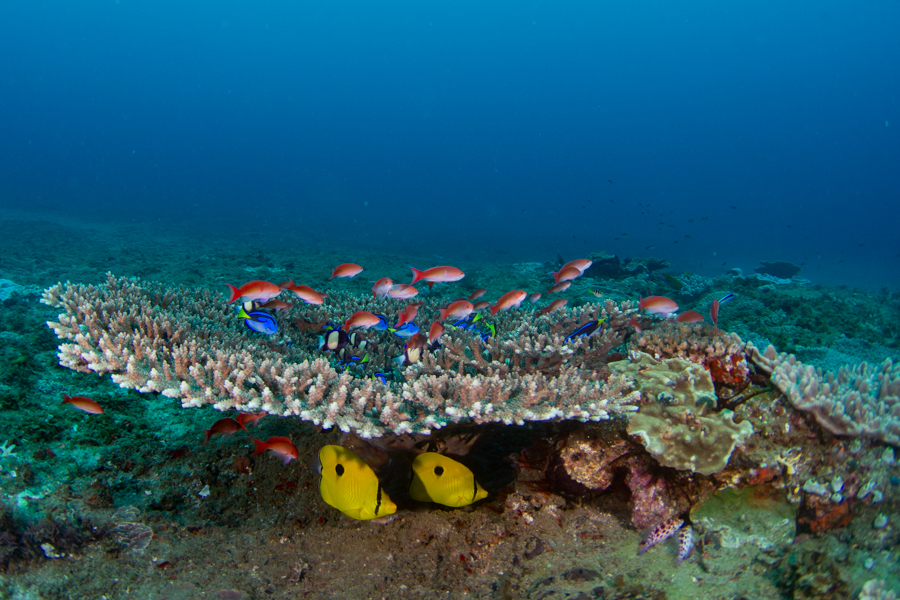 Plate Coral Scene
 -
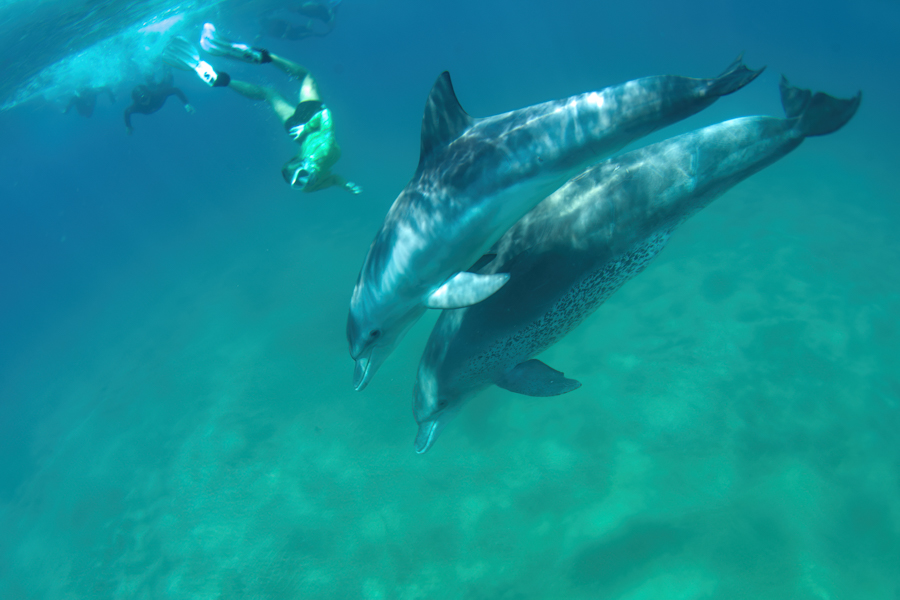 Bottle Nosed Dolphin
 -
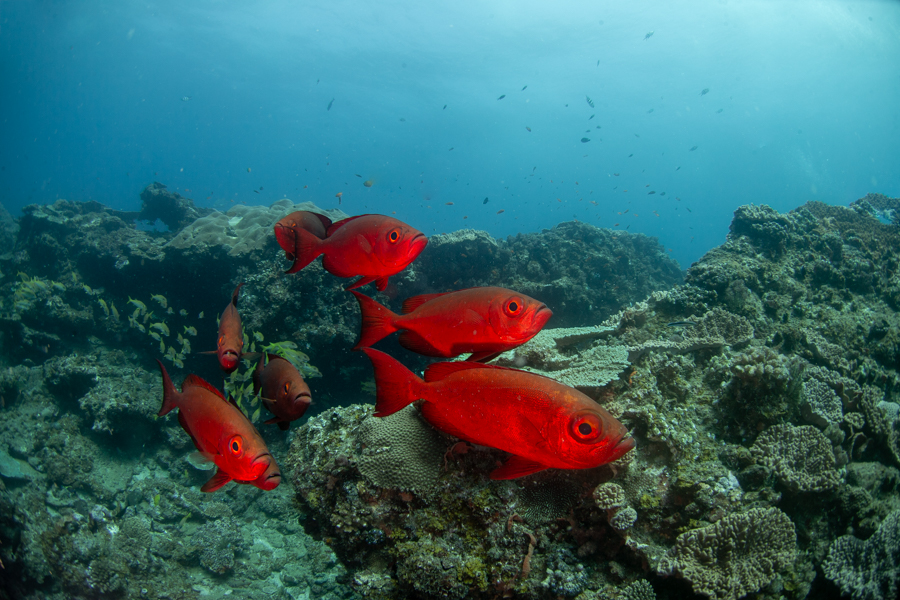 Big Eyes
 -
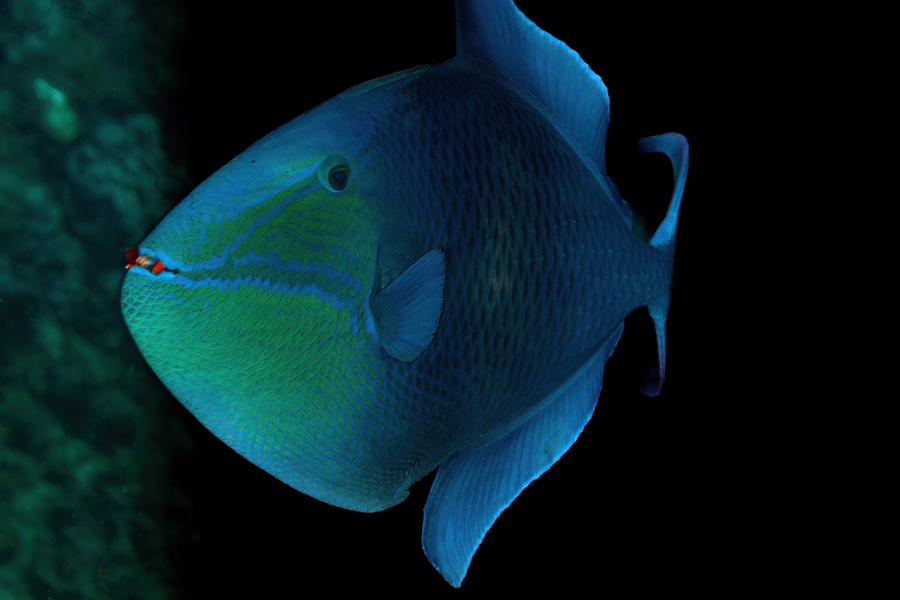 Red Fanged Trigger Fish
 -
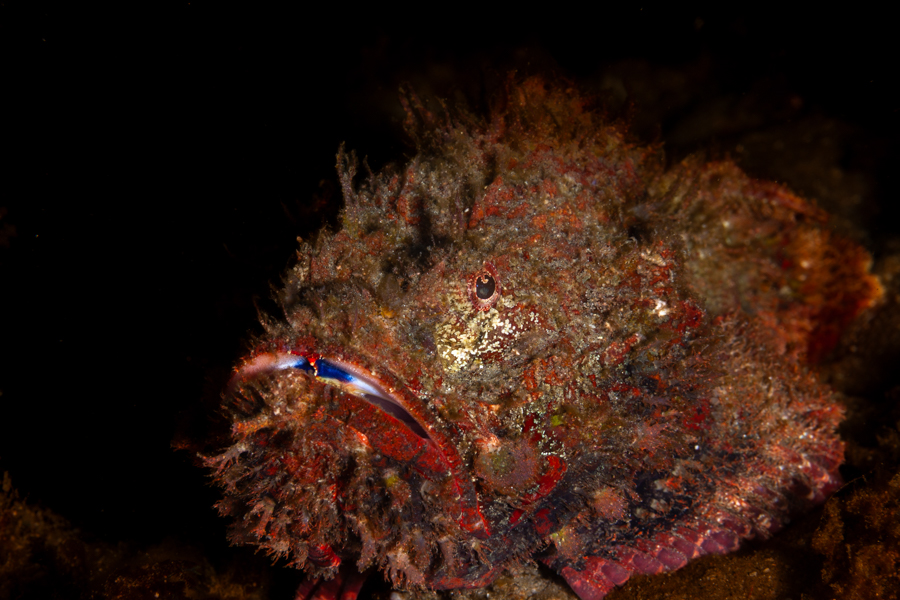 False Stone Fish
 -
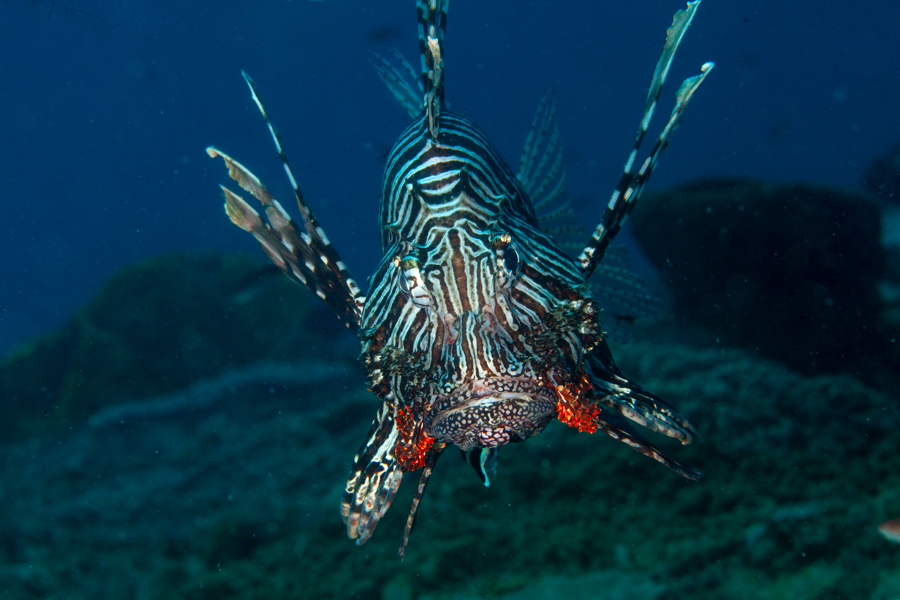 Lion Fish
 -
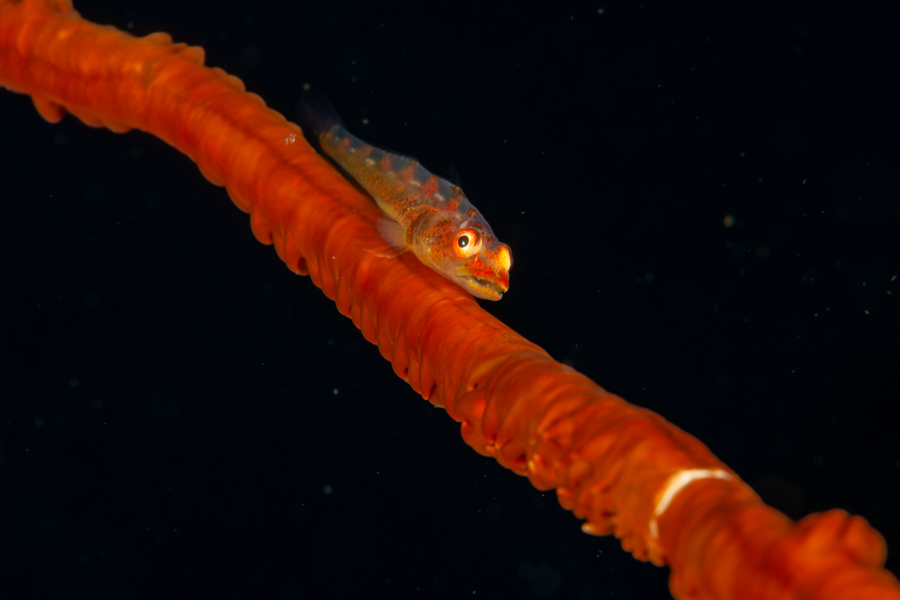 Whipcoral Goby
 -
 2 Banded Anemone Fish
 -
 Bridle Triggerfish
 -
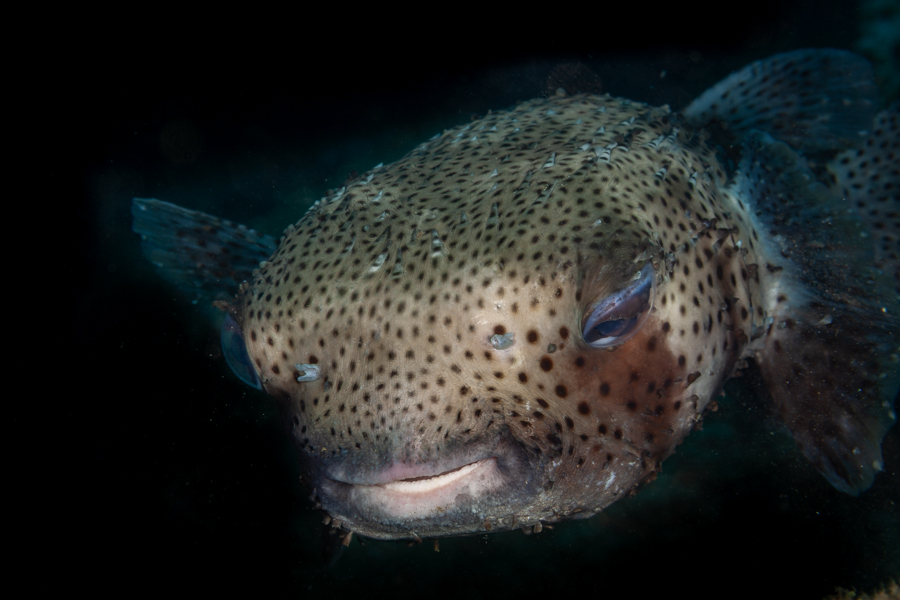 Blackspotted Porcupinefish
 -
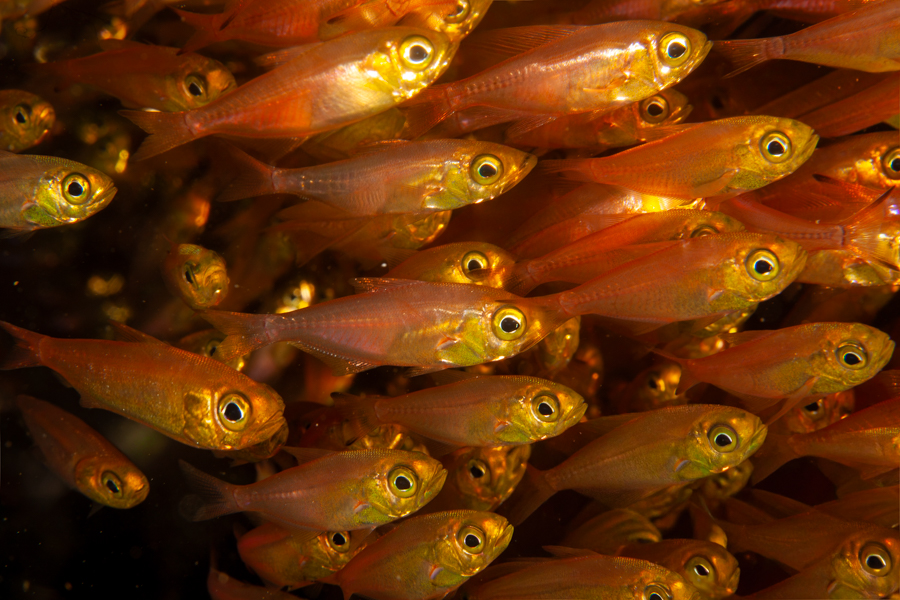 Glassies
 -
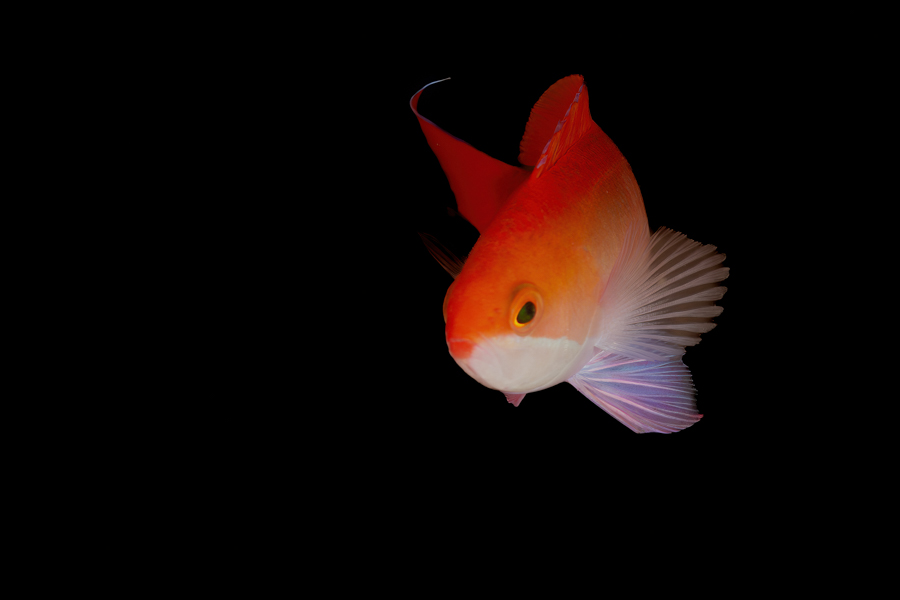 Silverstreak Goldie
 -
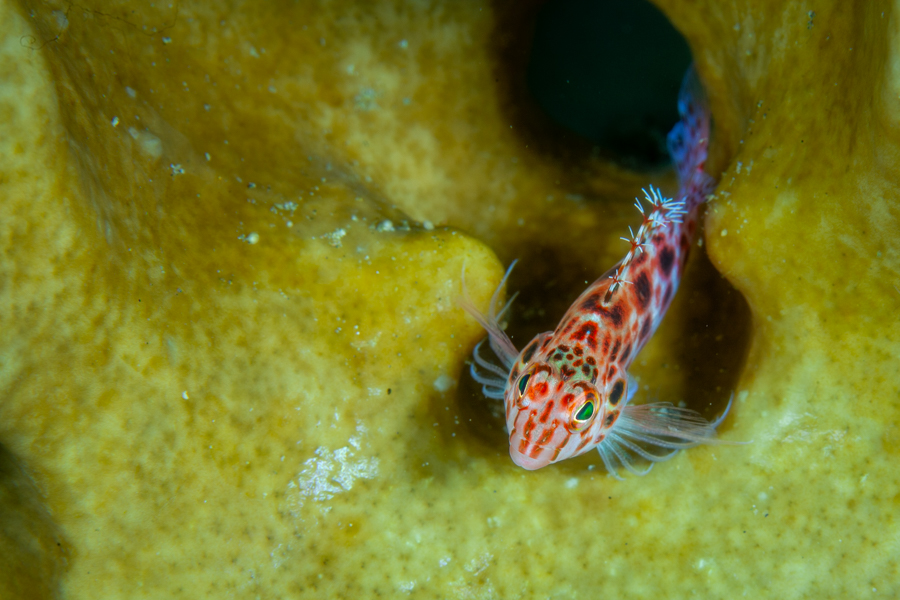 Spotted Hawkfish
 -
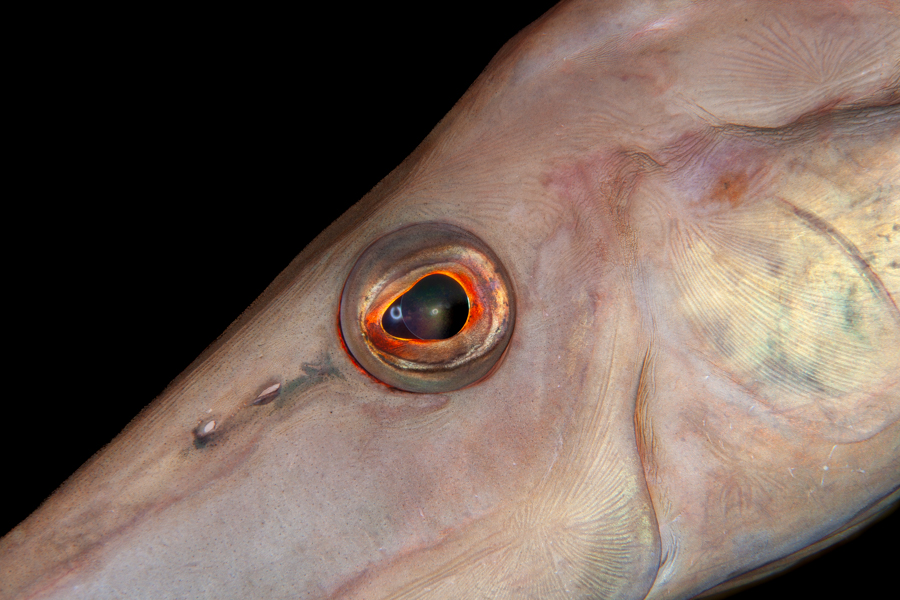 Trumpetfish
 -
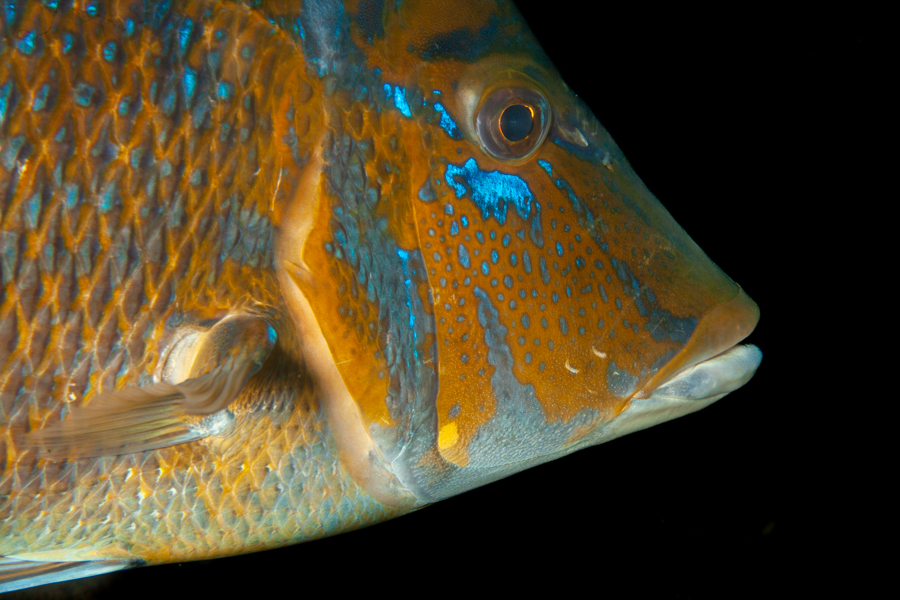
-
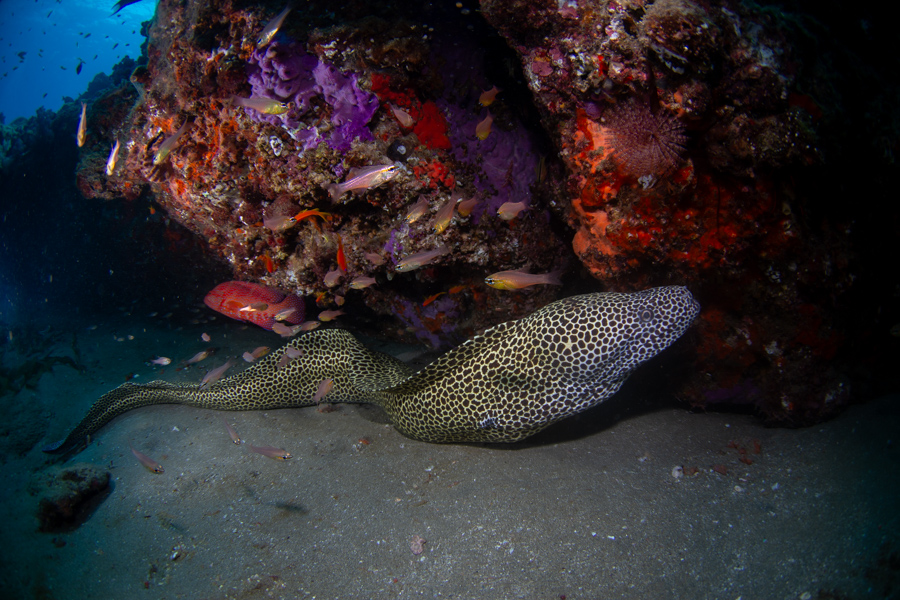 Honeycomb Moray Eel
 -
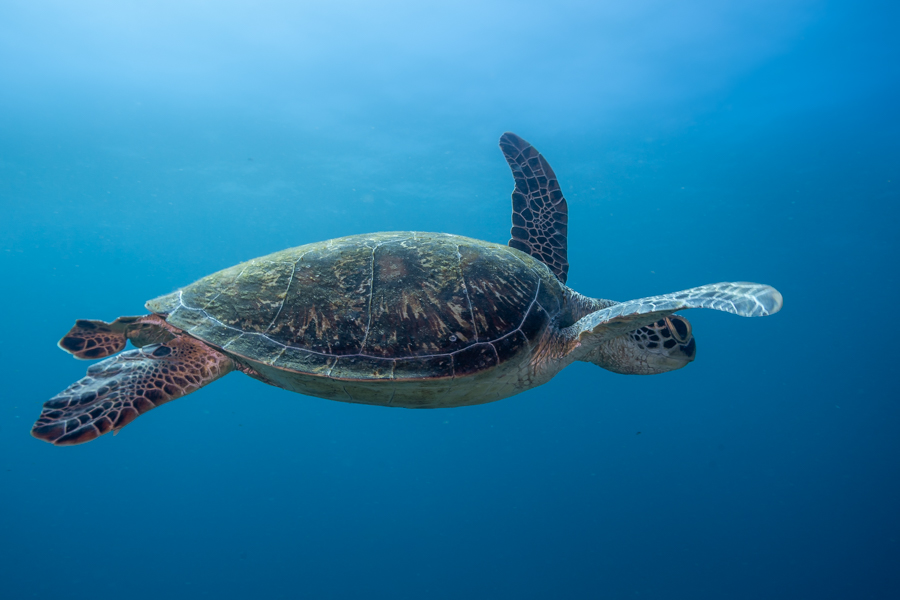
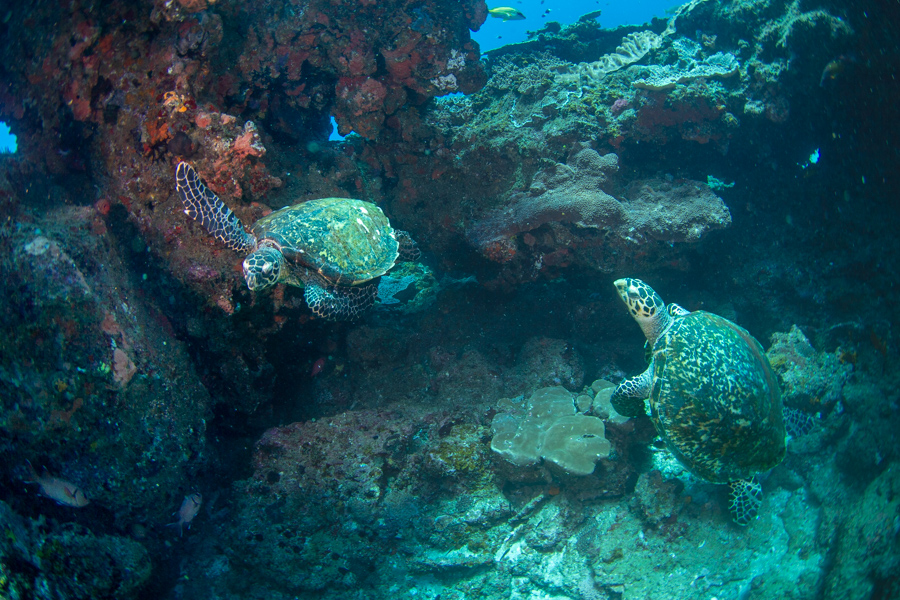 Mating Hawksbill Turtles
 -
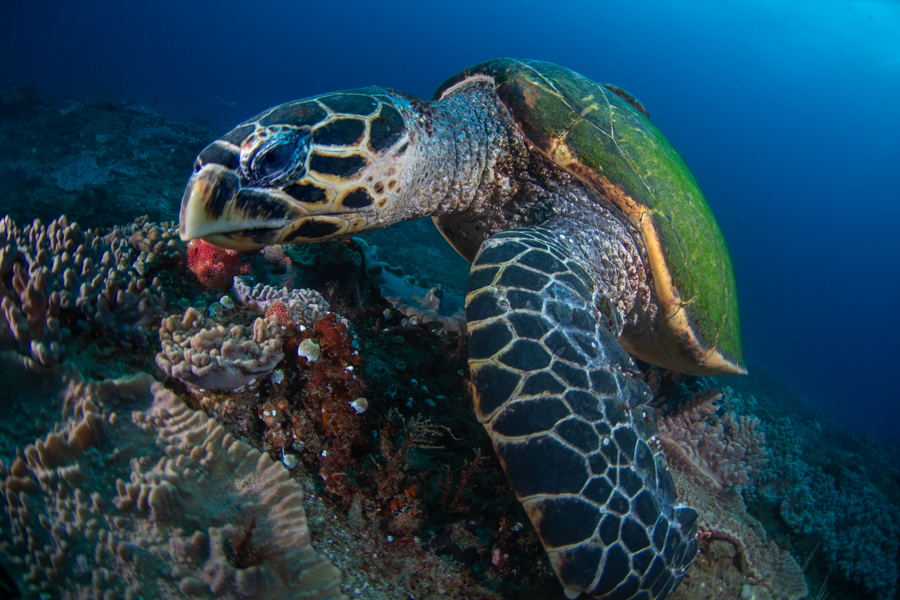 Hawksbill Tiurtle
Pygmy Seahorses and Pipefish
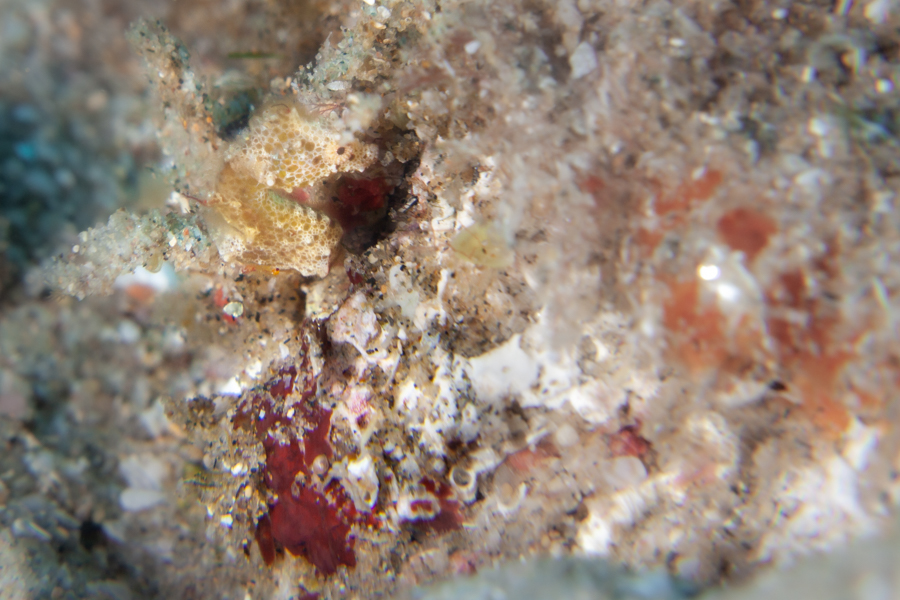
So these were such a monumental find for us I have to lead with the story.
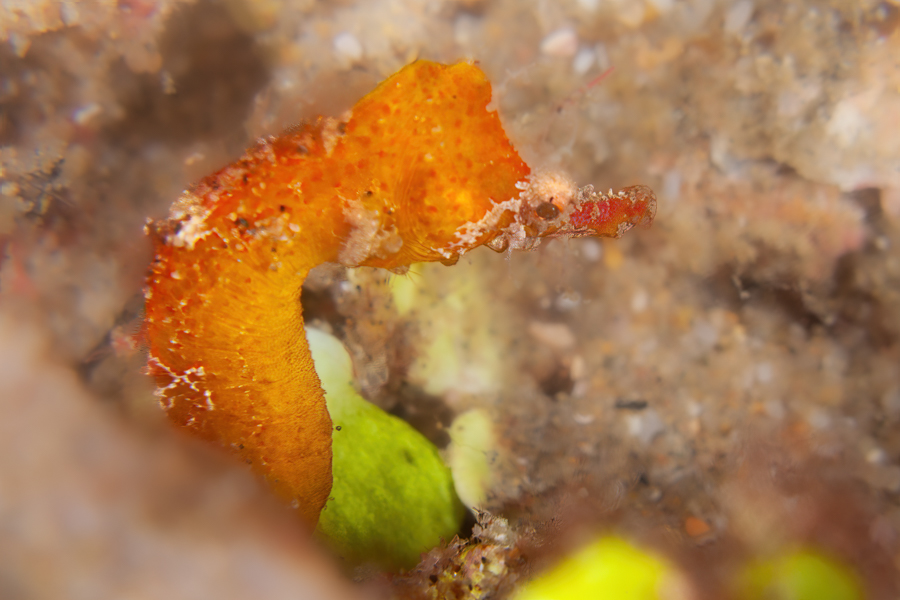
The pygmy seahorses comprise several species of tiny seahorse. To date there are 9 described pygmy seahorses, the most recently described is the Sodwana pygmy seahorse which was put on the map and named in 2020.
Despite this being the official date of its discovery, if you chat to long standing Sodwana residents they will tell you they were aware of this tiny seahorse for years.
Efforts to try and see if it was a distinct species were largely rebuffed by experts until 2020, when a research group studying pygmy pipehorses were shown a picture of the Sodwana pygmy seahorse by a dive guide called Savannah Olivier. They finally recognised this was not a known species and came to Sodwana to find and investigate it. This led to the acknowledgement and naming of the only pygmy seahorse off the coast of Africa, Hippocampus nalu. Nalu is Savannah's middle name, acknowledging her role in bringing this species to the attention of ocean science.

Incidentally nalu means surging waves or surf in Hawaiian so it is aptly named as it sways in the surge.
True pygmy seahorses have distinctive morphological markers which distinguish them from normal seahorses. They have a single gill opening on the back of the head, instead of two on the sides, and the males brood their eggs within the abdomen rather than in a pouch on the tail. Males and females are distinguished by openings at the bottom of the trunk: females have a tiny, raised round pore for extruding eggs and males have a fore-and-aft slit for accepting them. In general they are tiny, 1-2 cm in length.
Hippocampus Nalu has a honey-brown coloured skin with an overlay of white irregular reticulation and a reddish tail. Juveniles are darker in colour.
Like most seahorses, their colouration helps them to camouflage with their surrounding habitat, as well as with algae. In the case of Hippocampus Nalu they seem to live in short reddish brown algae close to the sand at relatively shallow depths. We saw this one on Stringer at about 12m. Many have been found on 2 mile so they do not seem to be deep water species. The camouflage and tiny size explains why they are not a common sighting.
Bear in mind that over half the length is in the curled tail and you may get an idea exactly how tiny this is. For me I could only see them if they were turned to project the typical seahorse silhouette.

Lisa is researching them, and the pygmy pipehorses, for her Masters degree and I am sure she will uncover more detail about their life and behaviour. She is following several pairs longitudinally over time. We believe they spend most of their lives in the water column before settling on the reef to mate and breed. Life expectancy on the reef may be about a year. All the information is still a bit new.
Sodwana Pygmy Pipehorse, Cylix nkosi. Nkosi means king and this is because the top of his head is said to look like a crown. Close one eye and squint and you will see it!
Pipehorses are a diverse group of marine fishes, like seahorses they belong to the family Syngnathidae but pipehorses share characteristics of both seahorses and pipefish. They feature an elongated, pipefish-like body with a horizontal posture, combined with a prehensile, grasping tail similar to a seahorse, and so they often cling to seagrass or algae. The head is slightly angled, more like a seahorse than a pipefish. They are generally well-camouflaged, small (6-60 cm), and feed on tiny crustaceans
The Sodwana Pygmy Pipehorse, Cylix nkosi, was first described in 2024 and was the first pygmy pipehorse found in African waters, Its nearest relative lives 12000 km away off New Zealand. It ranges from red to yellow or cream in colour and around 5-6 cm in length. FYI that is about 3 times the size of the little seahorses.
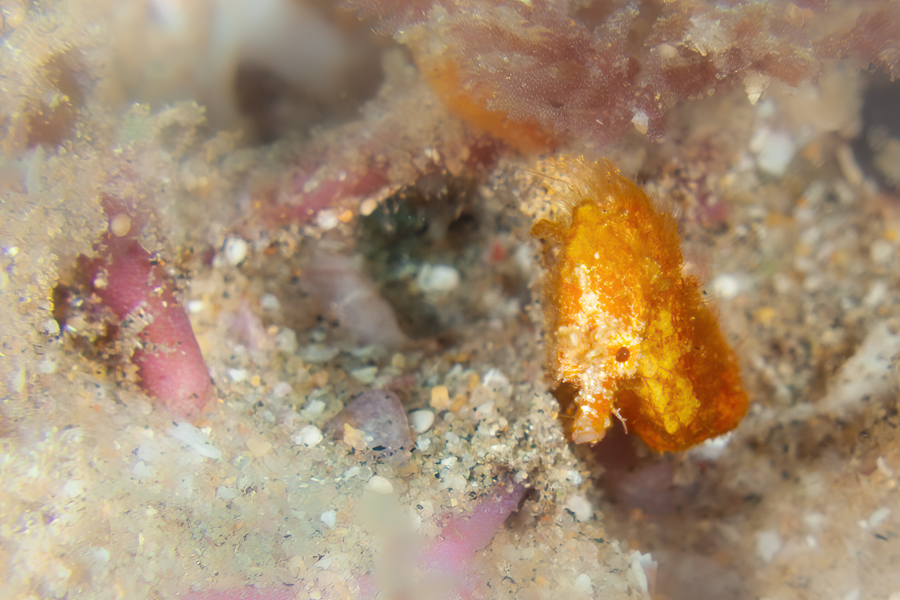
Lisa is also studying these pipehorses on the Sodwana reefs and she led us to a well camouflaged pair on Bikini South.
Photography is challenging. I have a big camera and powerful flashes. You can see the little critters are rather shocked by the flash as they jump with each shutter click. I did not want to disturb them, for their sake and for Lisa, so, as with the seahorses, I took a couple of quick shots and withdrew. The smaller cameras are more suited to these subjects. She has experienced situations where the animals have disappeared after dive groups showed them too much attention and she is collecting longitudinal data so that is a disastrous scenario for her. It is sometimes more important to protect than to satisfy my photographic self. I hope to see them again, god willing and with the help of young eyes.
As an aside she put a remote GoPro down on this pair and captured them mating. It made her cry. I had a lump in my throat when she showed me. Now that is real science.
A Consortium of Octopuses
There is no official collective noun for octopuses because they are largely solitary, but the nearest accepted term is a 'consortium'. You can also use a 'tangle' or a 'tentacle'.
Octopuses also have fan clubs, the largest is called OctoNation. We certainly love these little guys. Our friend Tonya reckons every day with an octopus in it is a good day. Less My Octopus Teacher and more Octotherapy.
And there is lots to love. They have 9 brains, a central brain and one in each tentacle. Their brains continue to grow throughout life. Try and beat that! Their brain mass is equivalent to a small dog. So they are curious, intelligent, multiidextrous and full of personality.
So why do we continue to eat 350,000 tons a year and growing? Not me. I don't eat my friends, at least most of the time.
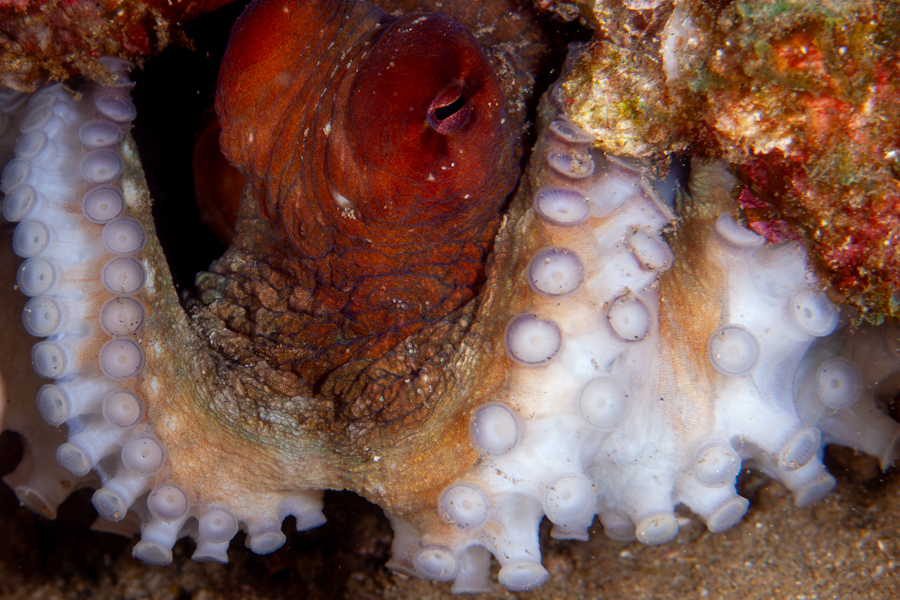
On each of their 8 legs most octopuses have around 240 suckers or around 2000 in total. Each sucker is equipped with chemical sensors, allowing the octopus to taste and smell objects it touches. If you find a relaxed and inquisitive octopus he will reach out and touch and smell your hand. They have complete neural control over each sucker, allowing them to perform complex tasks like unscrewing jars. Certainly in Indonesia we found many living in bottles and jars. I am not sure if they took the tops off though! Useful at a picnic.
If that does not spike your interest then you must be dead or in a coma!
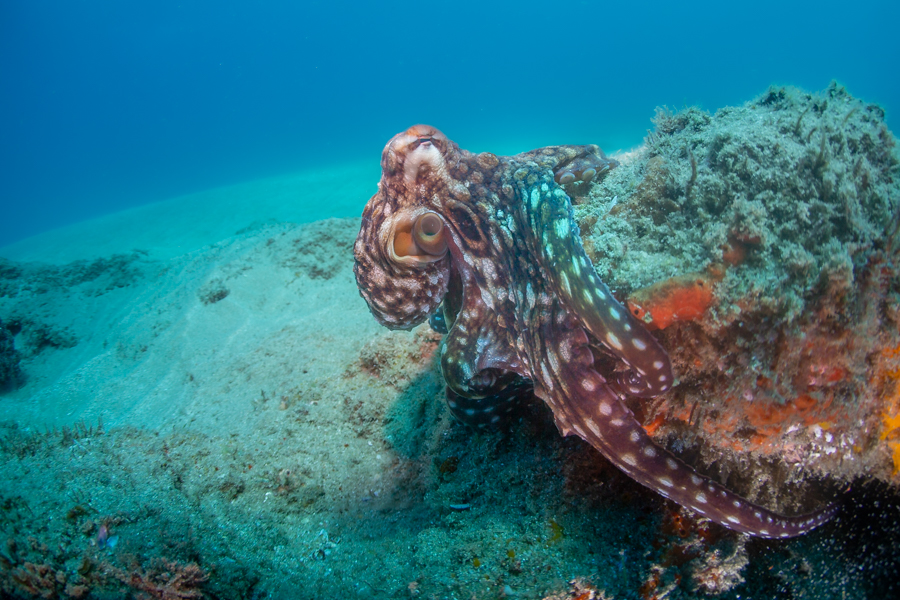
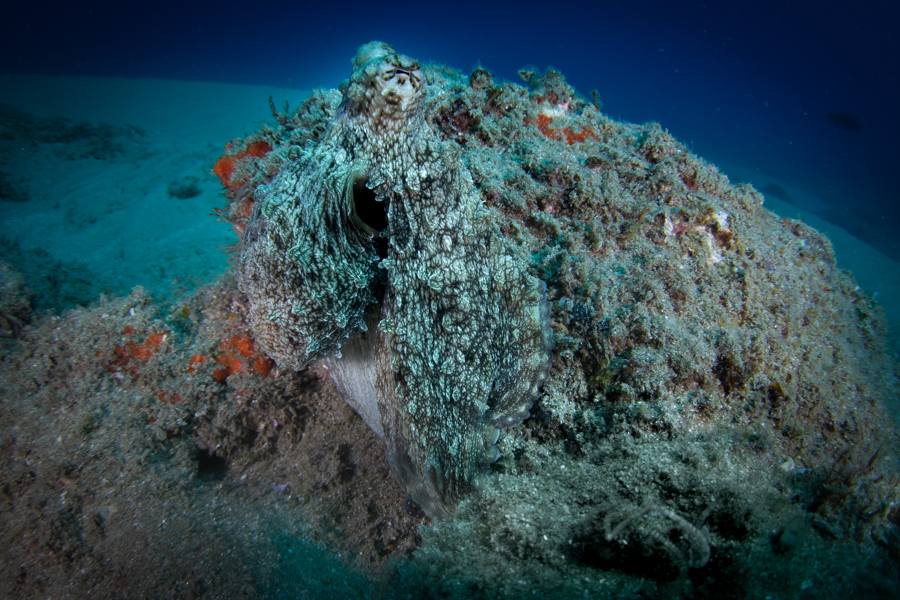
This year we saw so many octopuses. It was towards the end of the mating season and the reef was littered with their holes. The holes can be identified by the size of the hole (octopus sized of course), and the fact they are surrounded by concentric circles of sand, shells and rocks excavated or discarded by the octopus. Below is the octopus emerging from his hole with his shell litter in front.
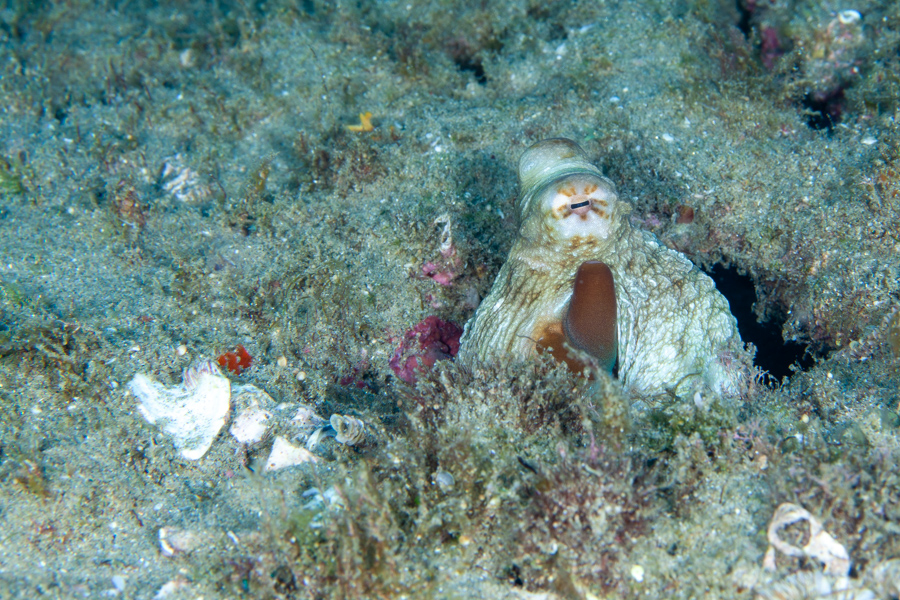
Watching them on the reef we were struck by their incredible camouflage and the speed with which they could make colour and textural changes.
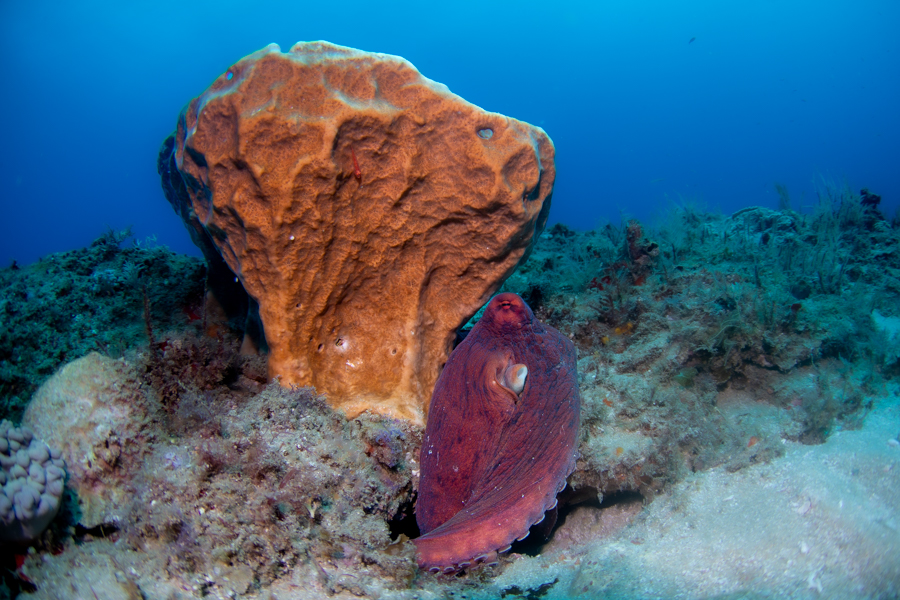
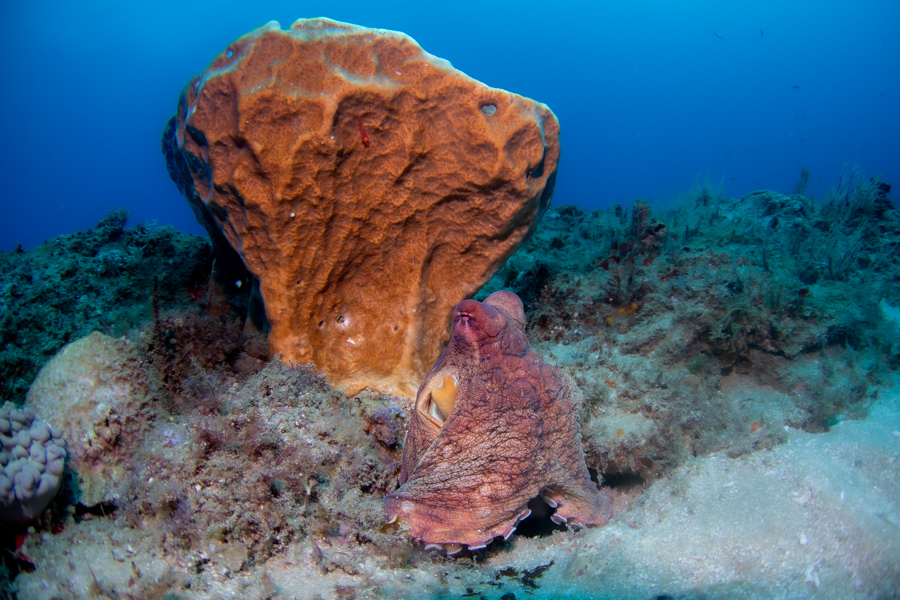
These changes occurred over a matter of seconds as we watched. In fact they can effect changes in less than 200 th of a second. They shimmer and flicker like a light show.
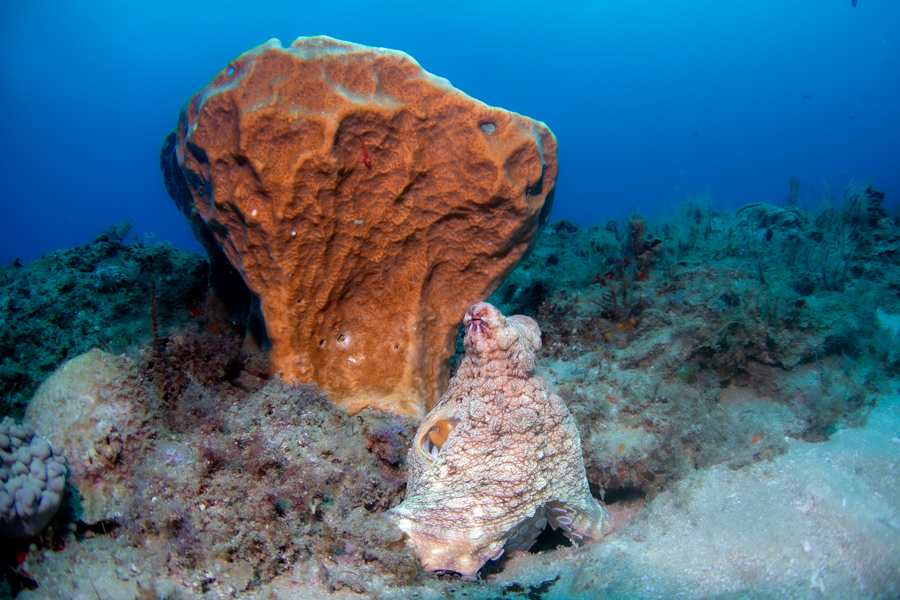
They change colour by means of chromophores and reflective cells. Chromophores are tiny sacs filled with colour pigments which may be stretched or contracted by muscle cells around them to display or hide the colour. It is like millions of tiny pixels. Beneathe the chromophores iridophores and leucophores reflect light, allowing the octopus to reflect the colours of the surrounding environment.
Each chromophore is controlled by the brain allowing for complex and rapidly changing colour patterns. In addition the skin contains opsins or light detecting molecules which allows the skin to "see" light and change colours without input from the eyes.
How clever is that?

Squirting ink as an evasion and defence tactic. Red and excited (or angry because we disturbed his hunt!)
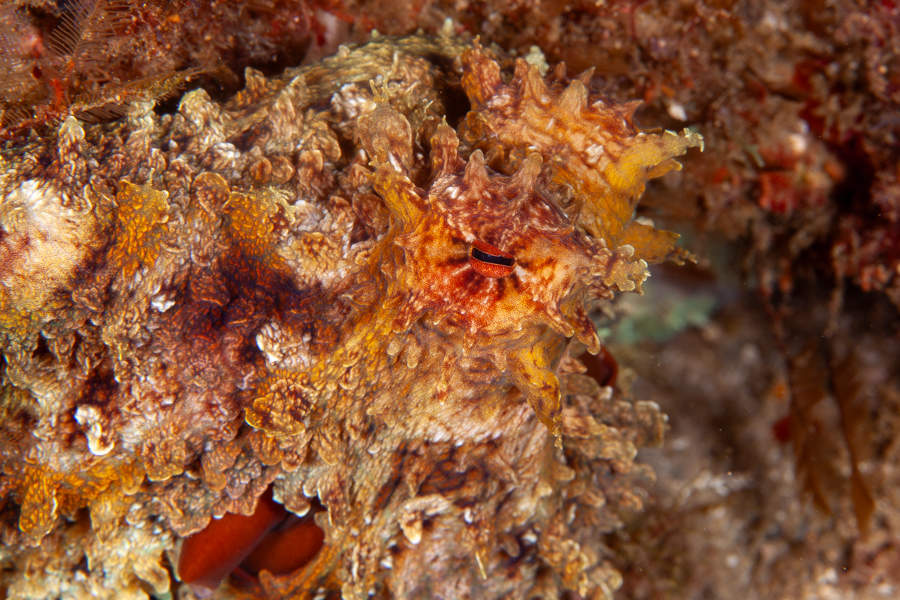
Texture also changes by the contraction of neuromuscular structures called papillae. These are fluid filled pockets which are controlled by muscles to instantly change the texture of the skin from smooth to bumpy, jagged, or spiky. This allows them to mimic rocks, sand or coral and strongly enhances their camouflage.
The reason they change is multifactorial, to hide from predators or ambush prey, to signal other octopuses, to express emotions like fear, anger, or excitement. We have long observed that when mating the male octopus is always red, often with a white stripe, and the females are usually pale or white. In addition, if irritated they often turn red.
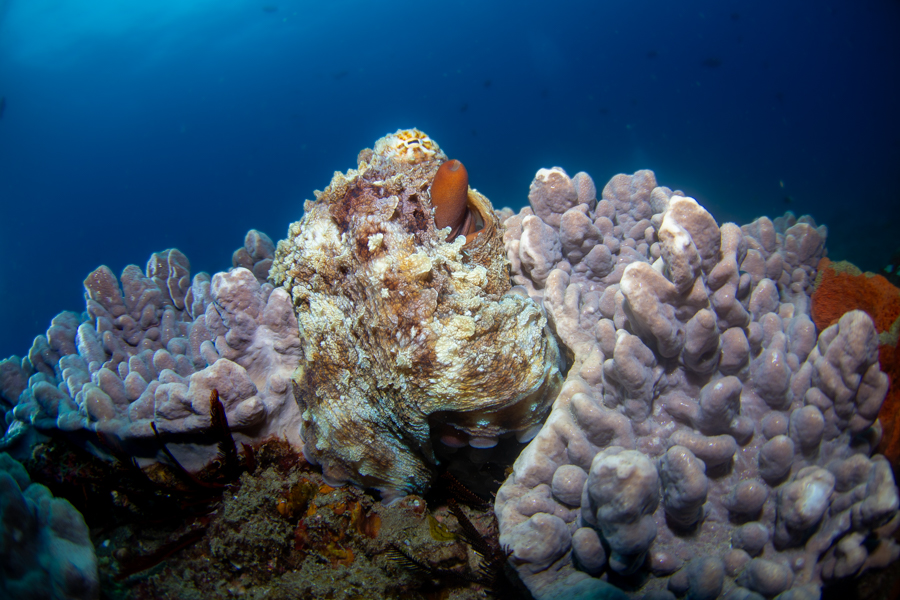
Pretending to be soft coral
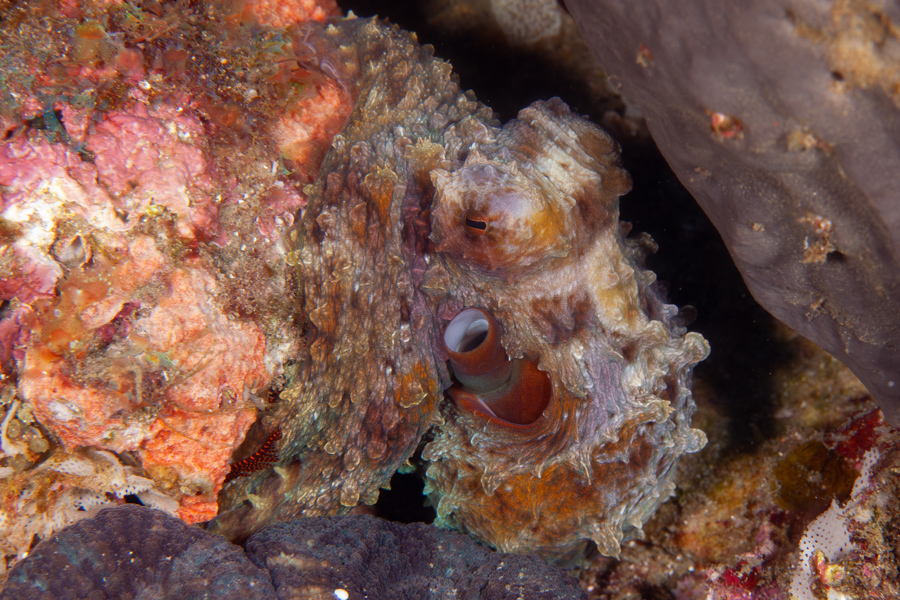
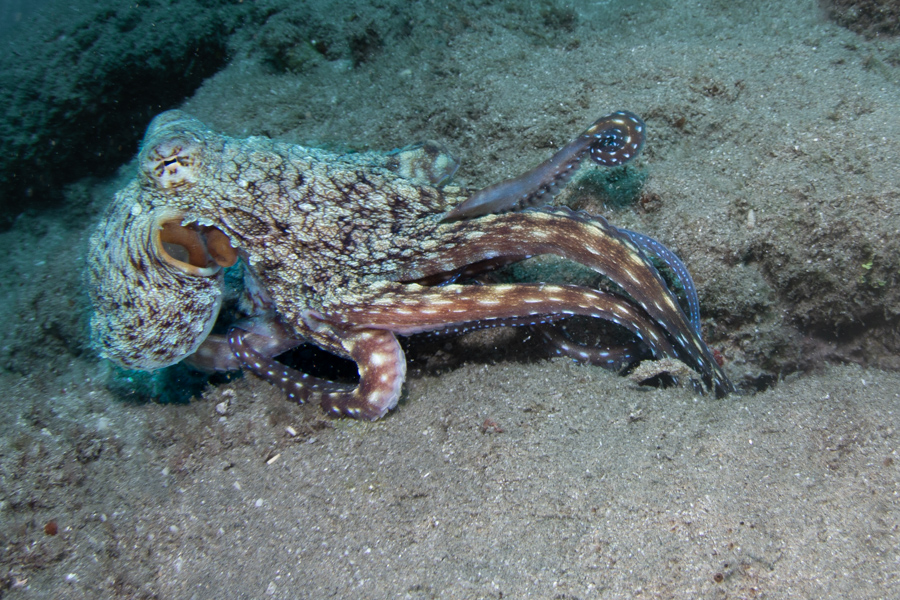
On the hunt, tentacles investigating each hole for prey and webbing deployed like a net. They are often followed by fish hoping for a sneaky bycatch when they flush out their prey.
So after all that I am officially an Octophile and ready to join the OctoNation. Will you join me?
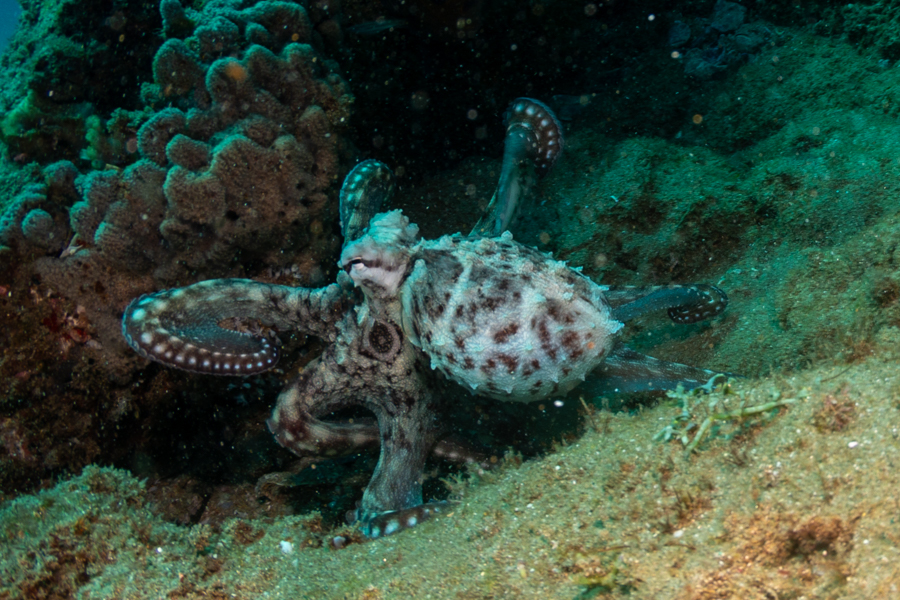
Bottom Dwellers
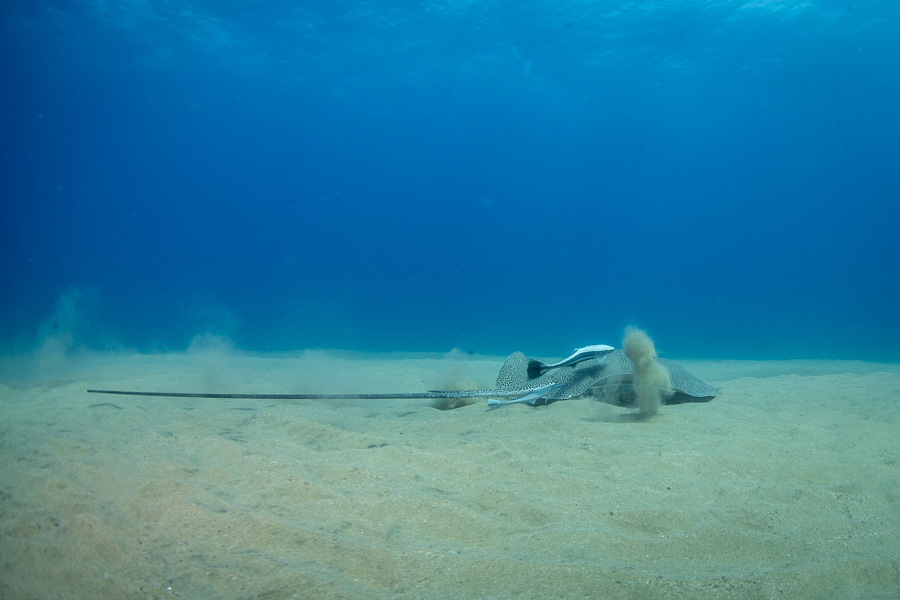
Lots of fish are specially adapted to living on the sandy bottom. They drift across the sand and their default response to threat is often to bury themselves.
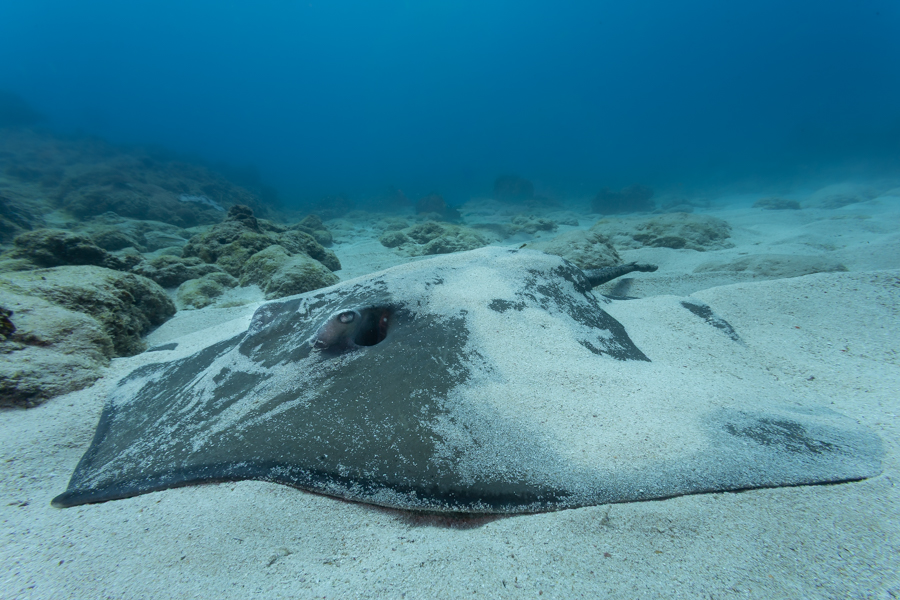
Sharp Nosed Ray
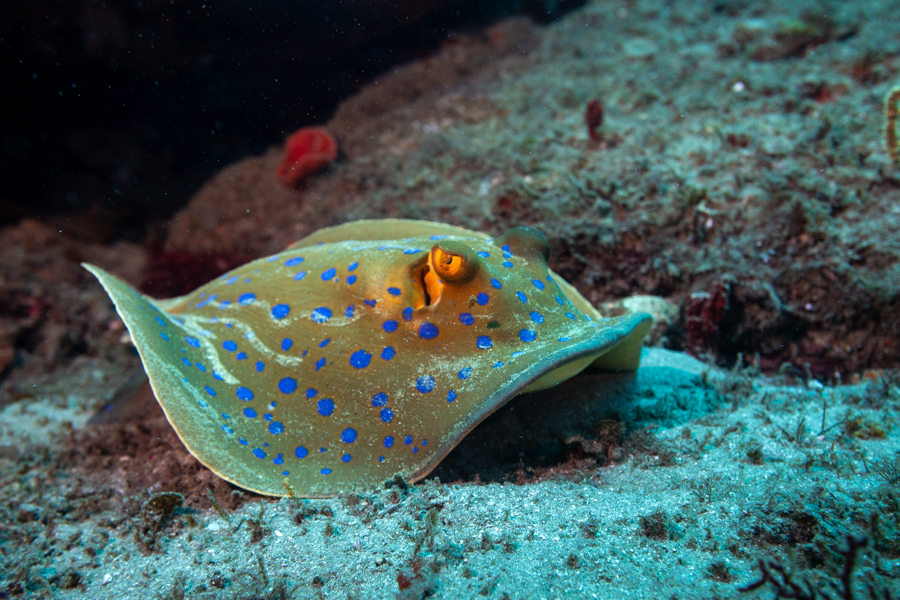
Luminous Blue Spotted ray
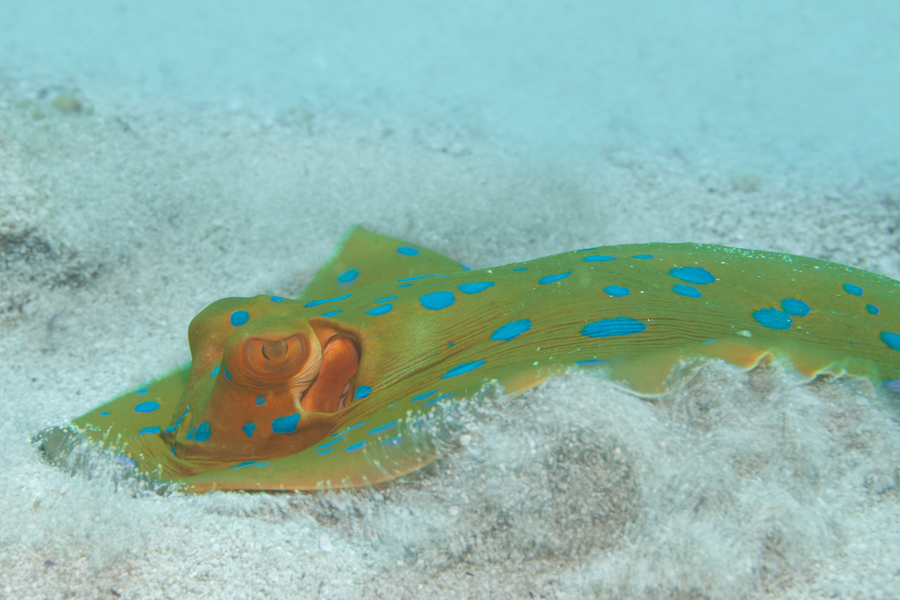

The Honeycomb Ray
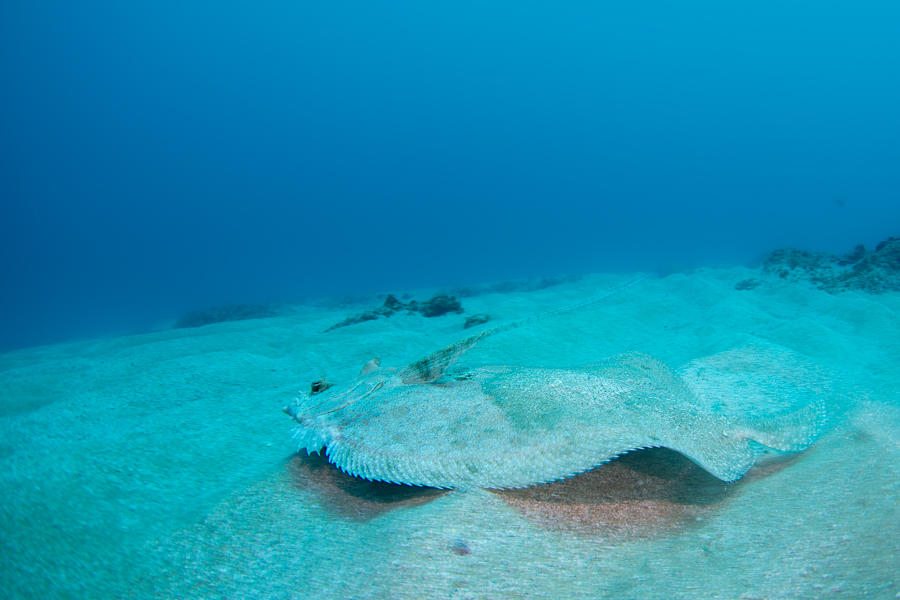
The Peacock Flounder with his modified dorsal fin flying like a flag as he swims. He has beautiful blue markings up close.

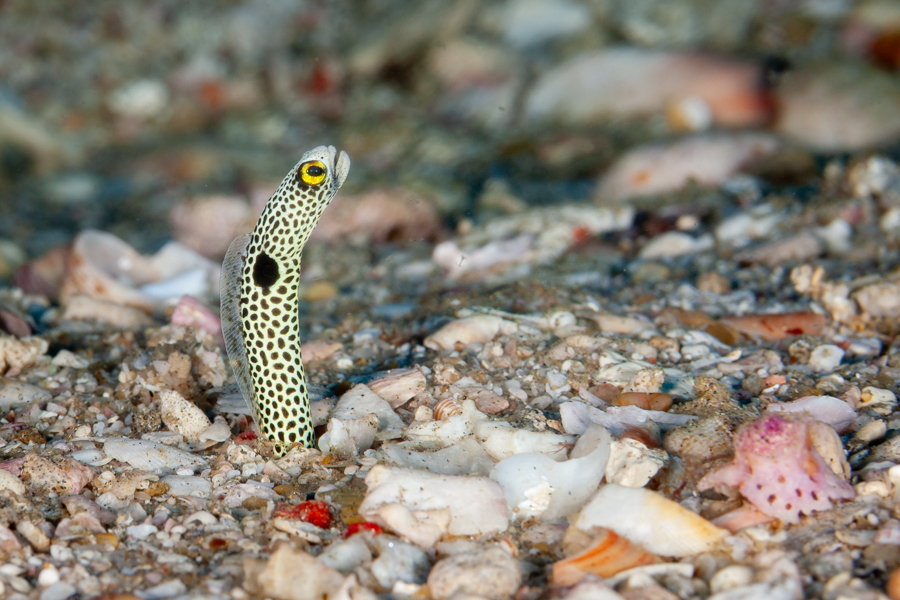
A lonely Garden Eel. Usually these eels occur in fairly big groups but this guy seems to have got lost and set up his own colony on Bikini. When you approach he will sink into the sand without a trace.
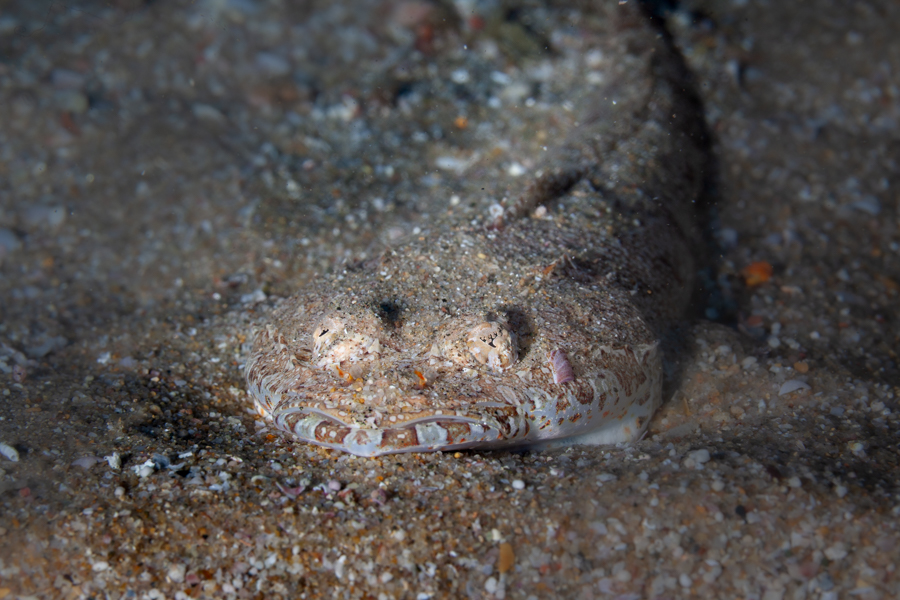
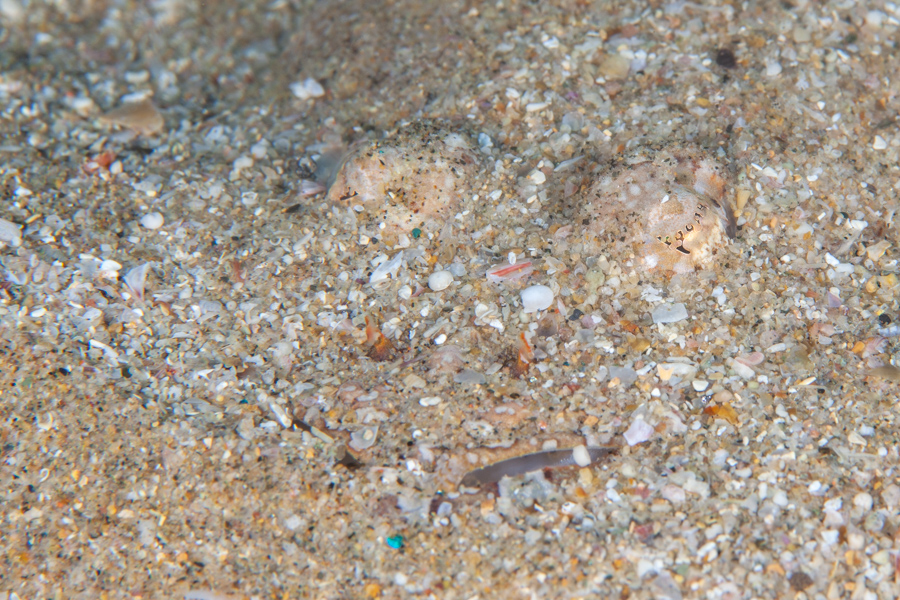
A flathead, probably the Longhead Flathead, Papilloculiceps longiceps, rather than his more familiar cousin the Crocodile Fish.
He disappears into the sand like a member of the magic circle.

Puppy Dogs of the Sea

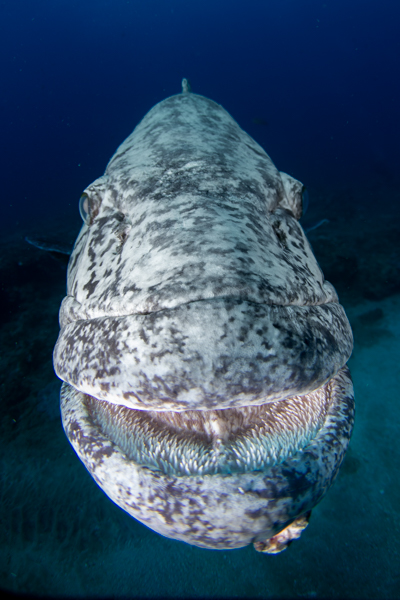
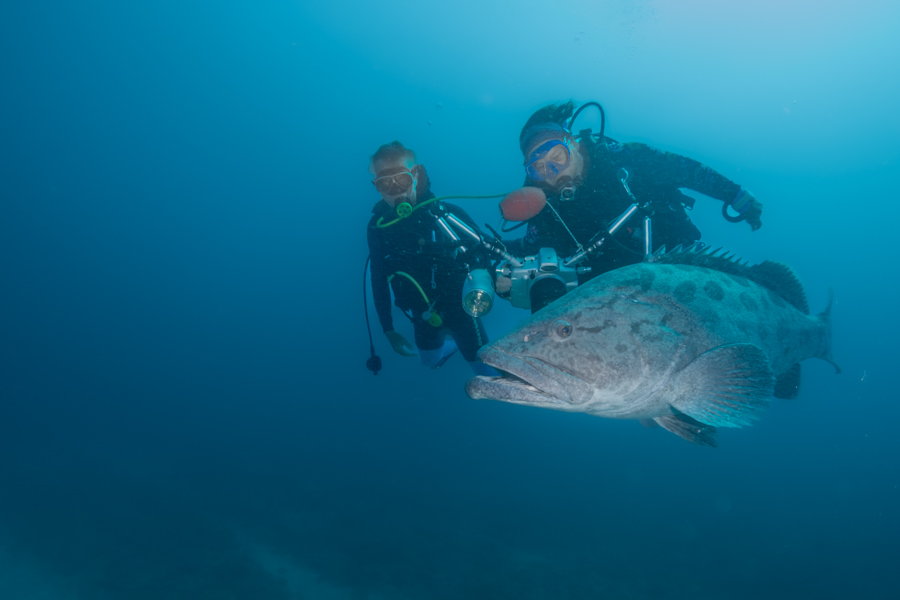
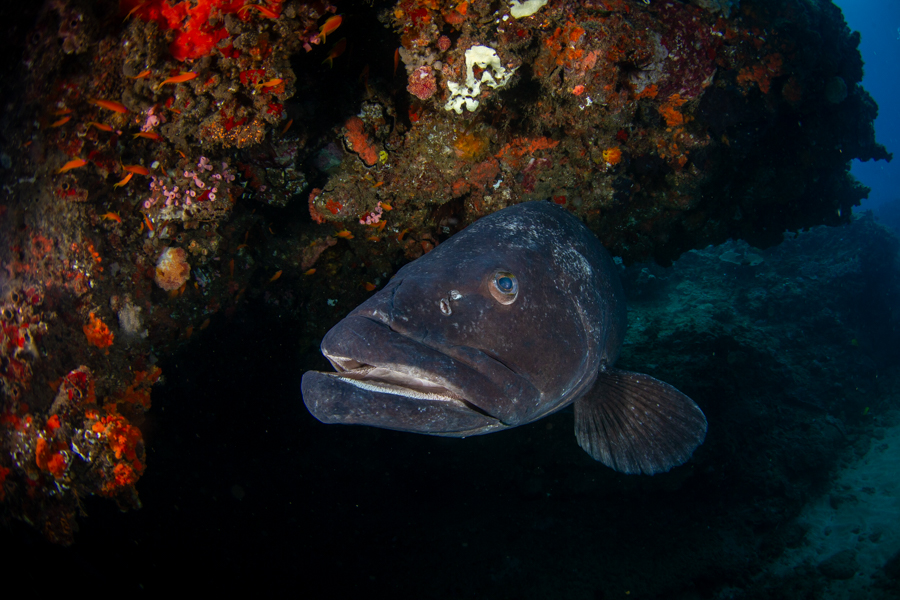
The Giant Potato Bass, Epinephelus tukula, occurs all around the coastal areas of the Indian and Pacific oceans. He is locally rare but by far the most common off East Africa. He a familiar sight in Sodwana, you will see them on most dives, big ones and small ones, dark, pale, mottled. Apparently colour can change with mood. With their big gaping mouths and tiny razor teeth they are very distinctive. They are quite territorial so it is likely the ones in Sodwana have seen a lot of divers in their time. They show cooperative behaviour often hunting with eels or other fish.

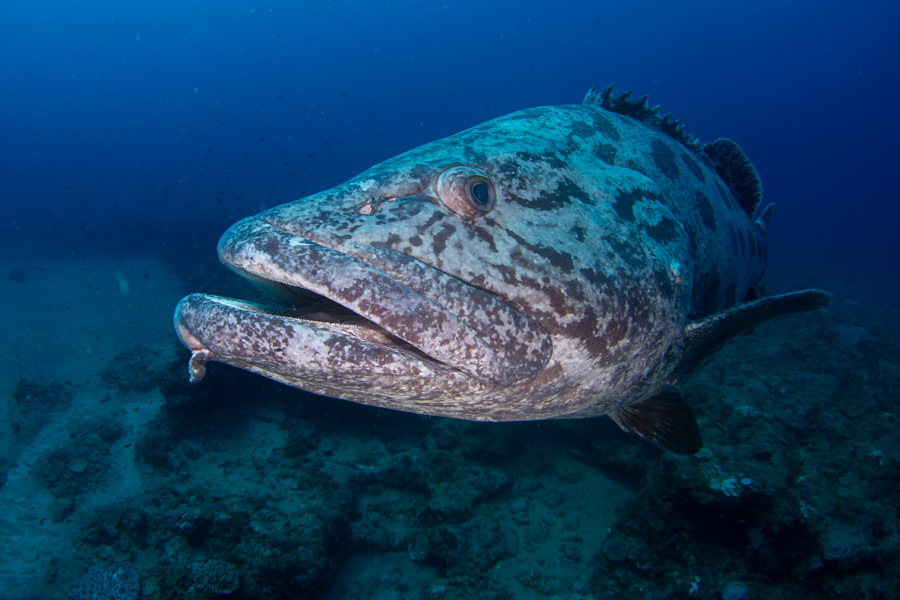
This year we had many such encounters. They are inquisitive and will frequently approach and hang out with you if you are calm. I think of them like underwater pets, the puppy dogs of the sea. An analogy strengthened by the big dark eyes.
They are intelligent and they learn, quickly becoming habituated to divers. This is one of the traits which made them vulnerable to fishing and spearfishing in the past, but the establishment of the MPAs in St Lucia and Maputuland has seen the numbers rise.
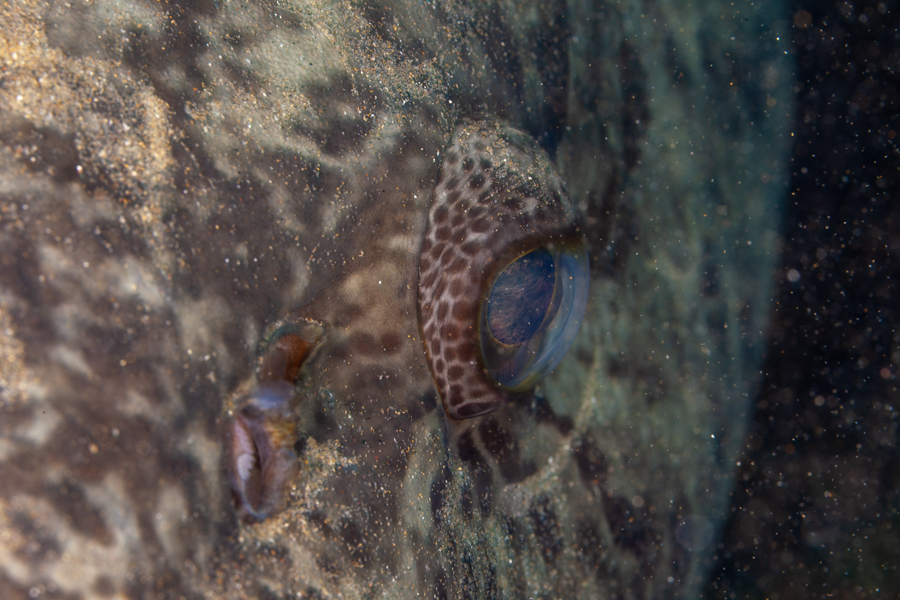
They can grow up to 2 m and weigh up to 88 kg. They have been recorded as living up to 24 years in the Seychelles so it is likely that every year we return to our familiar reefs we are being greeted by the same fish. Maybe they recognise us by now and they just pop by to say hello!
The Small Stuff
As anyone who knows us will be aware we love the small stuff, food for the soul and for my trusty 100 mm lens.
I will give you a quick tour of some of the stars this year. We saw a lot of miniature things, well our eagle eyed guides did!
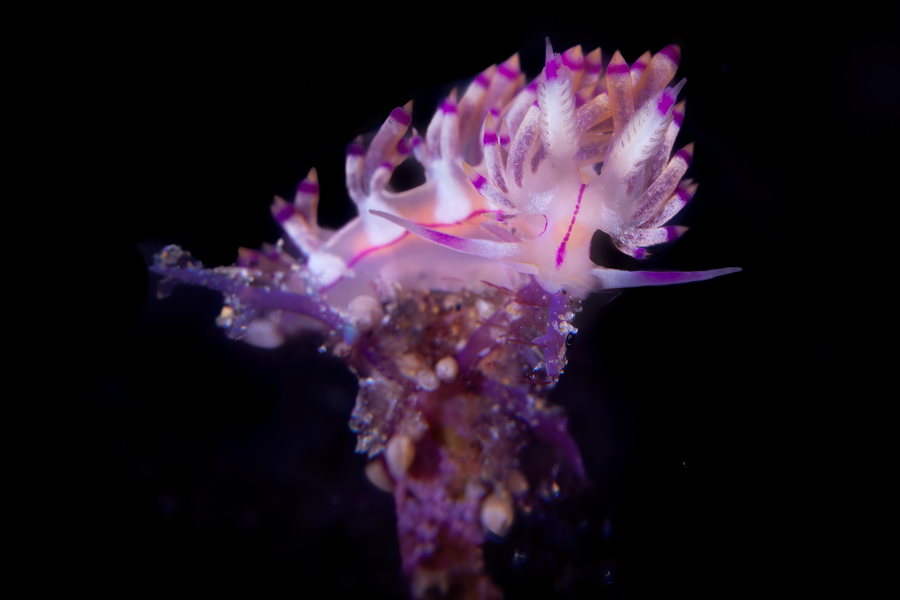
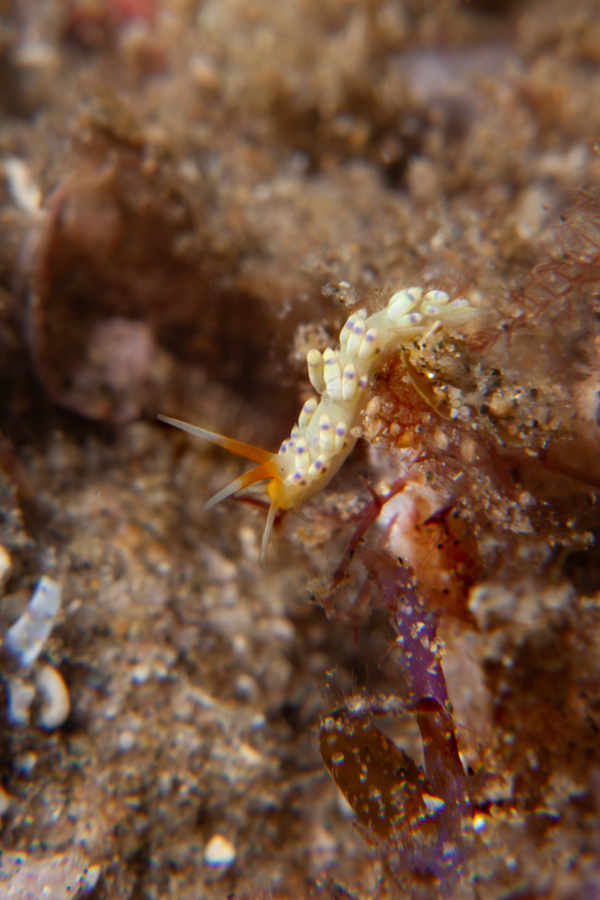
Flabelina rubrolineata
An aeolid nudi which collects stinging cells from the hydroids it feeds off.
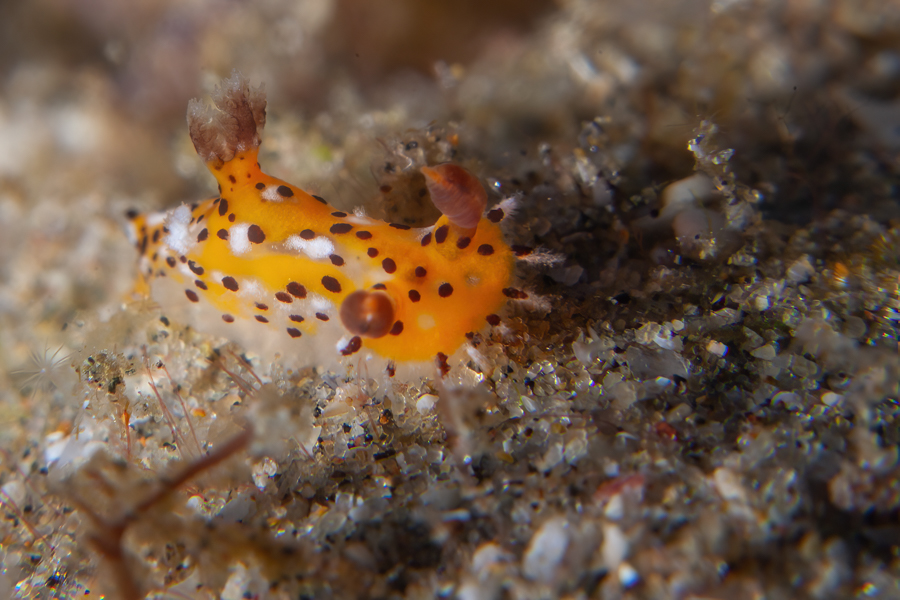
This one is still a mystery, likely Polycera sp according to Jenny. Maybe a new one for Sodwana who knows.
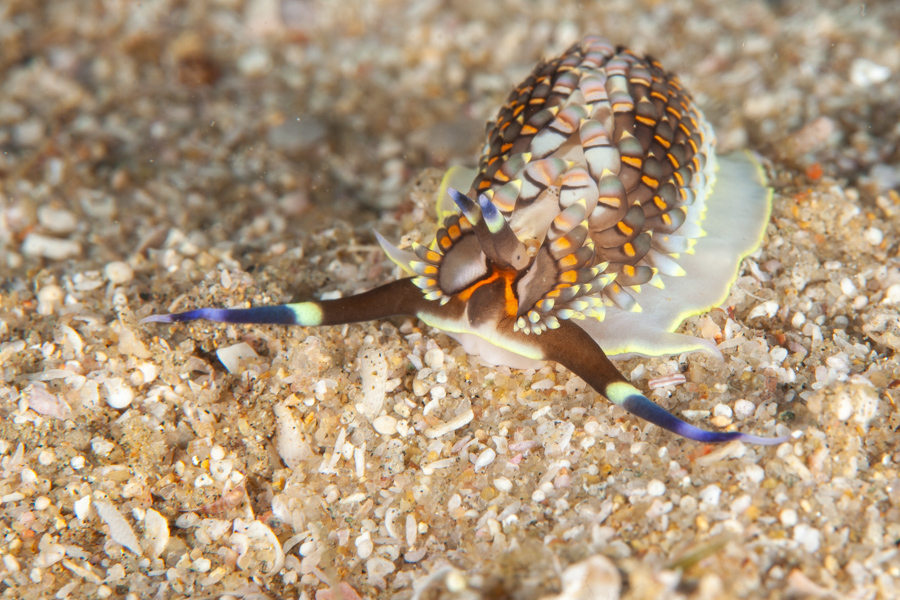
Cerberilla africana
A rare find as it is nocturnal and burrows in the sand. We had to keep encouraging this one to climb back out from under the sand. Feeds on tube worms.
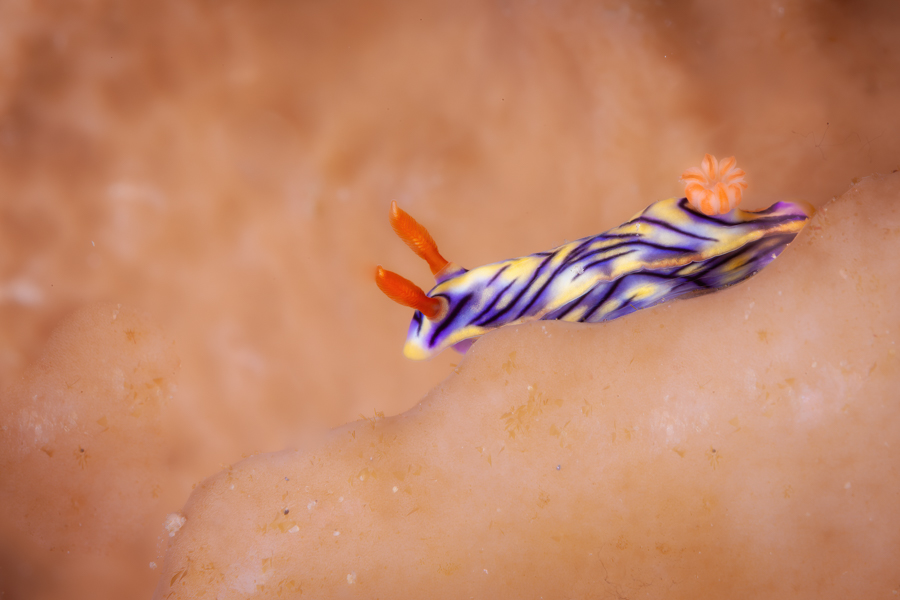
Hypselodoris nigrostriata
These guys feed on sponge (usually blue but I guess he could not find any) This one was walking down the edge of an orange barrel sponge. It looks like he is walking on air!
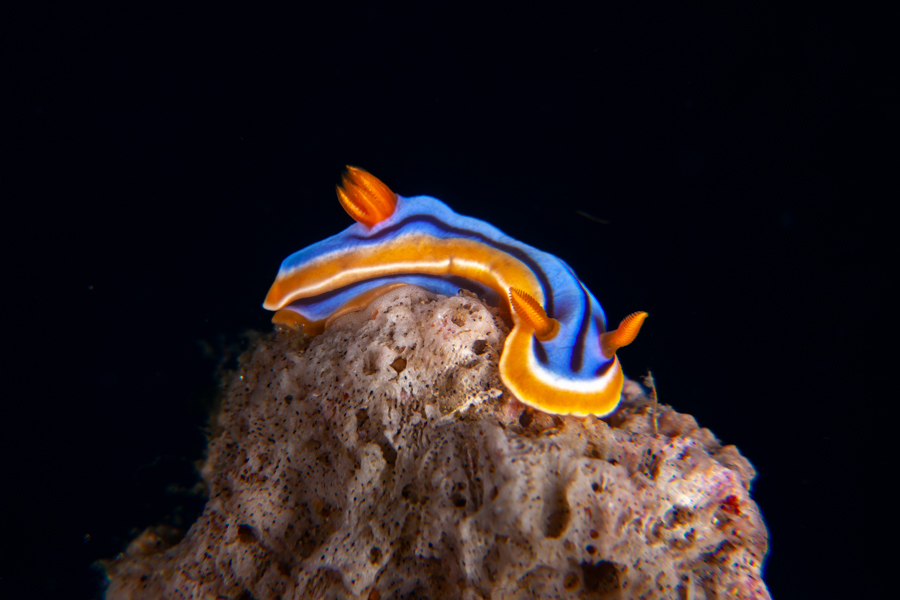
Common but he can still put on a display, Chromodoris hamiltoni
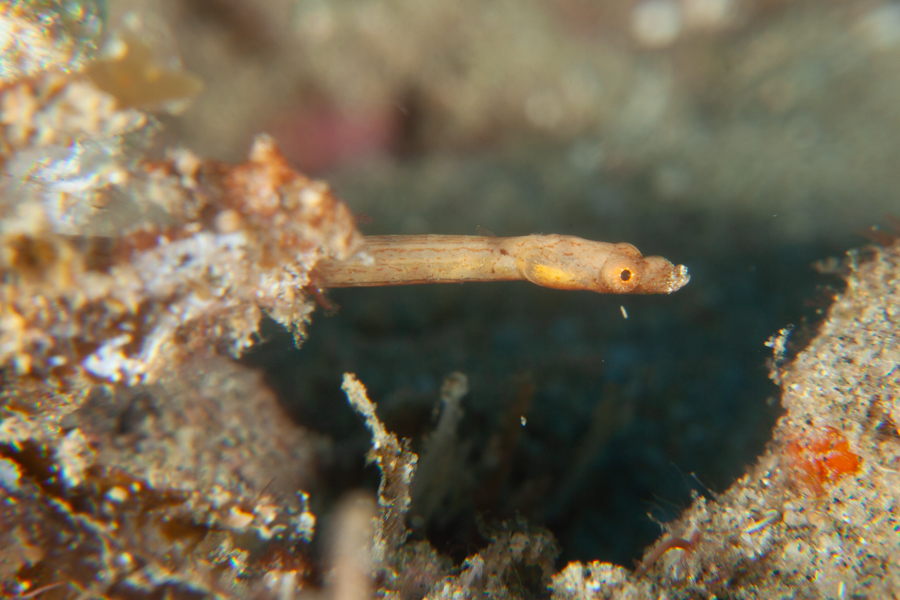
Pipefish, always a treat to find.


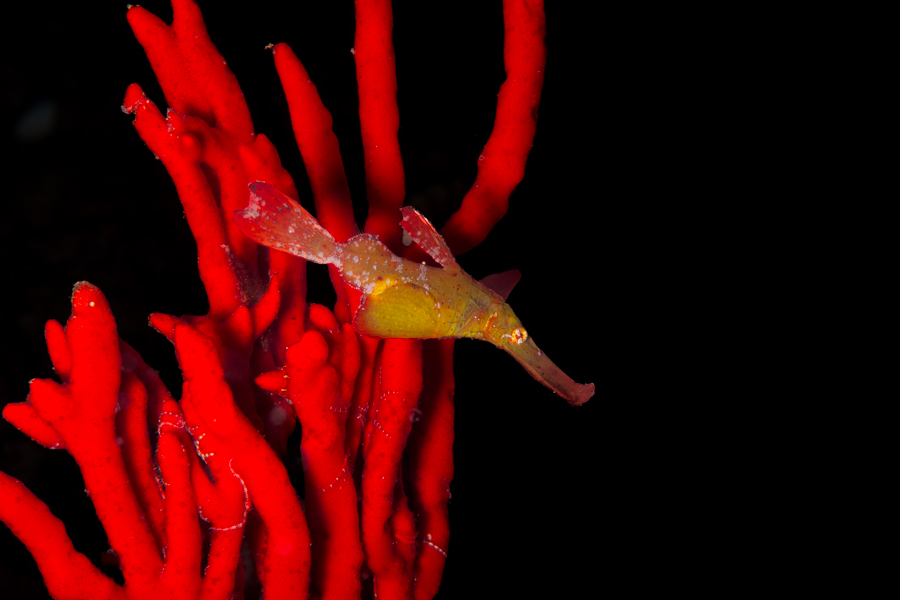
Whenever the storm brings in clumps of sea grass the ghost pipe fish follow. This Robust Ghost Pipefish (Solenostomus cyanopterus) is checking out a red soft coral for his new home. I am sure he was starting to change colour. I have never seen one go crimson red before.
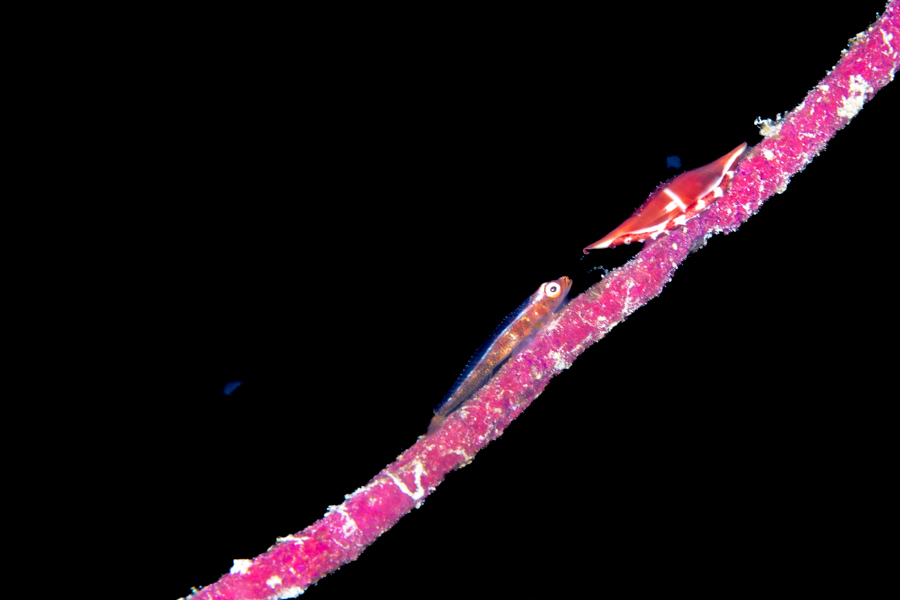
Meet the neighbours. This goby has just realised his home is infested with coral eating cowries. He is going to have to move.
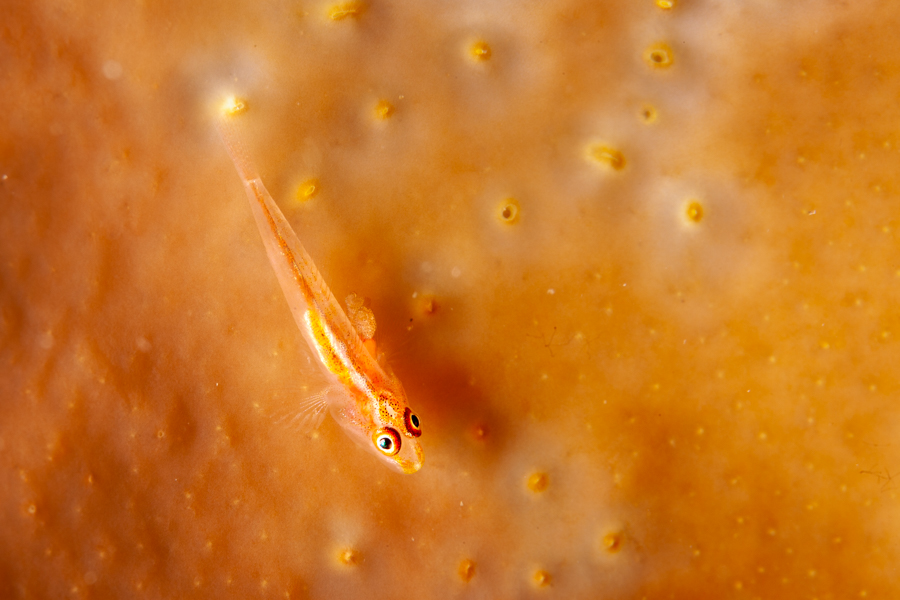
This goby has peace and quiet in a barrel sponge all of his own.

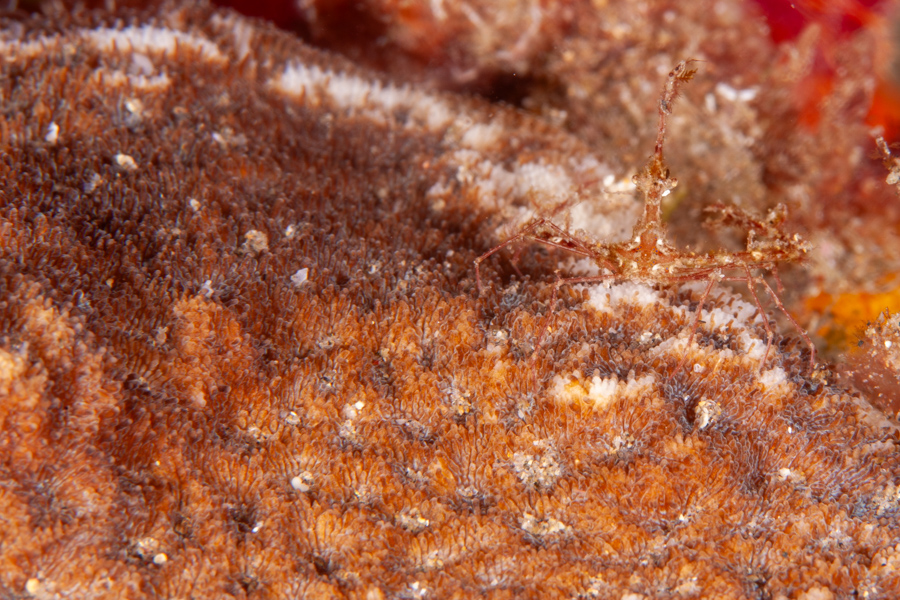
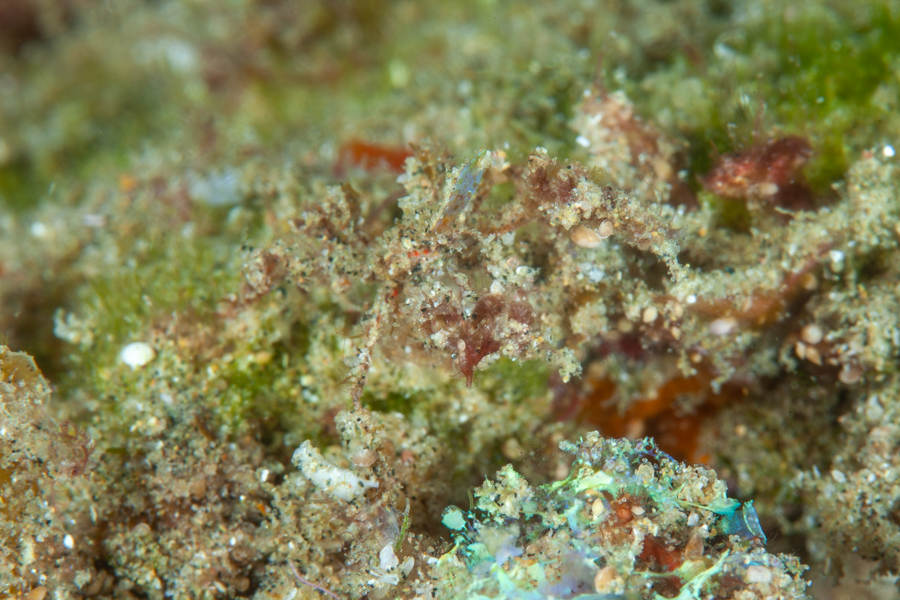
These 3 pictures are to show you the difficulty finding these minute crabs. An arrowhead crab. Stenorhynchus seticornis. All legs and arms. If you can find him in the bottom photo your eyes are better than mine. We had help.

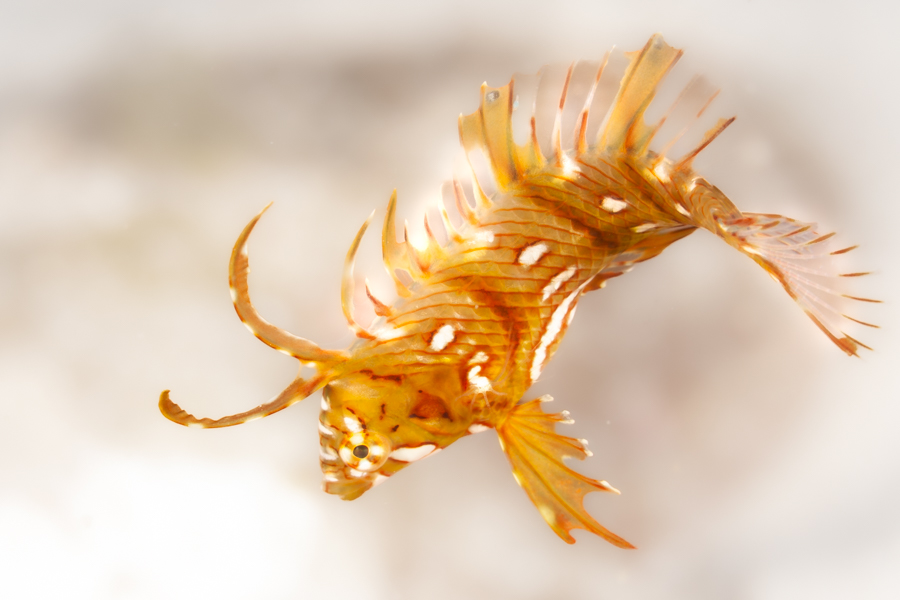
A tale of 2 wrasses, both beautiful juveniles. The Divided Wrasse, Macropharyngodon bipartitus, above, and the Rock Mover Wrasse, Novaculichthys laeniorus, below.
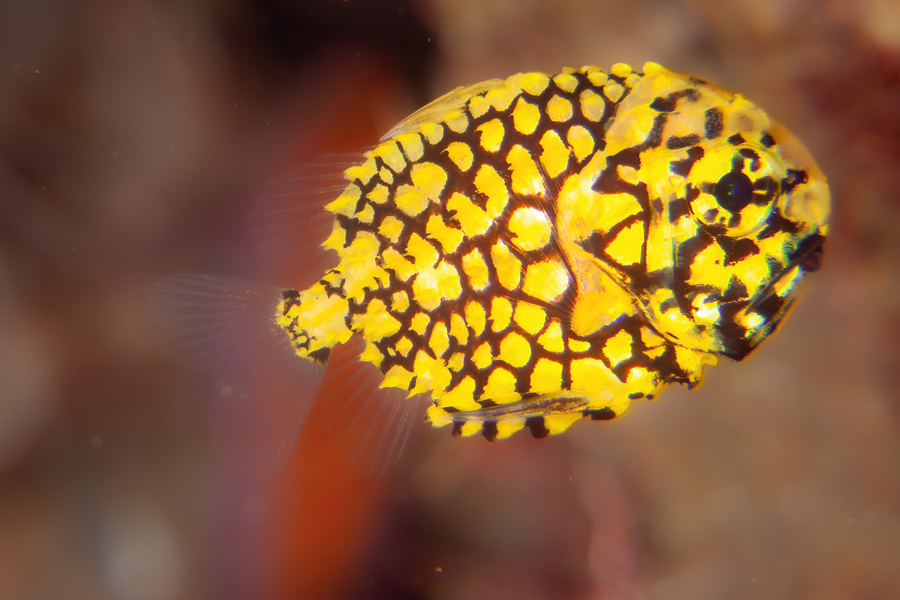
The little Pineapple fish , Monocentris japonicas, was back in a cave at Bikini cleaning station.
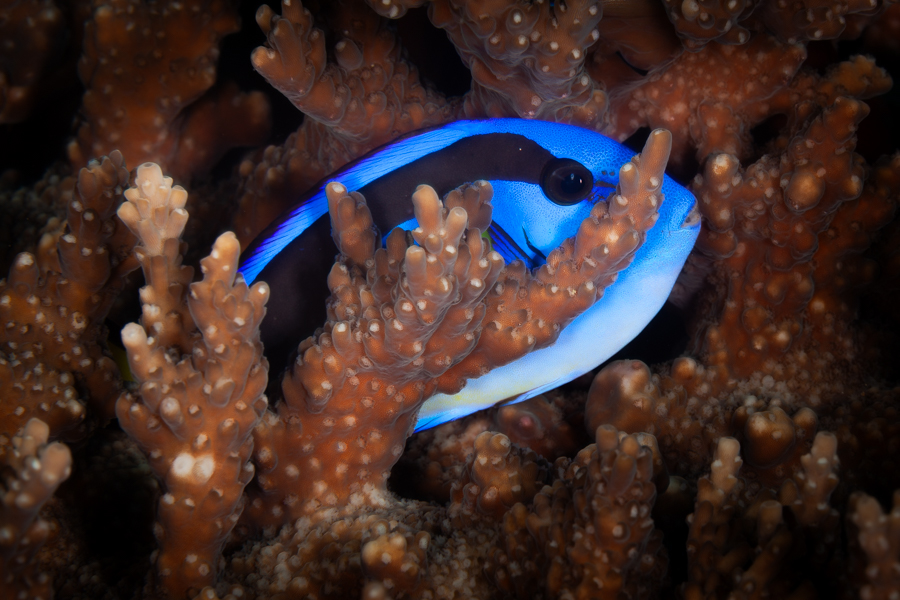
Dory sheltering in the plate coral
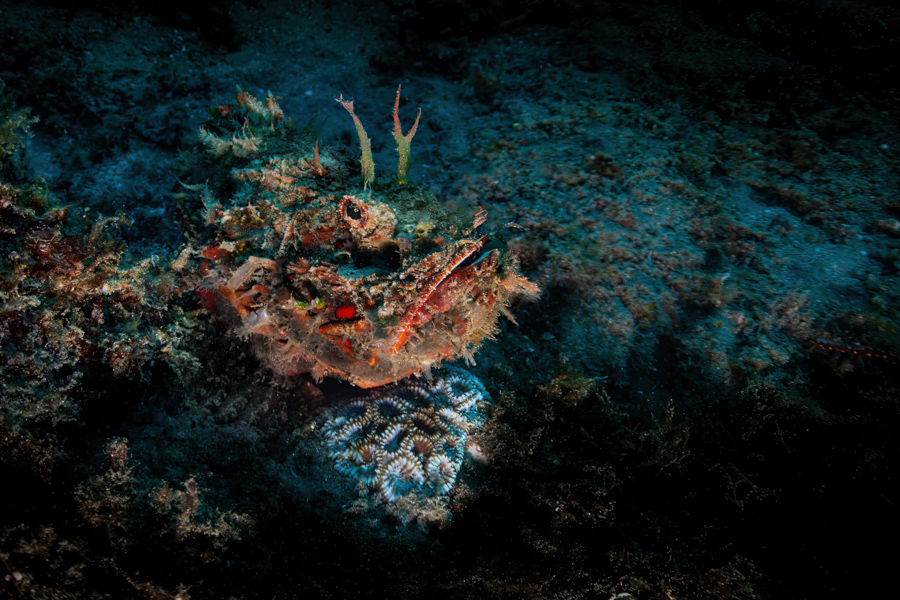
Indian Ocean Walkman, Inimicus didactylus
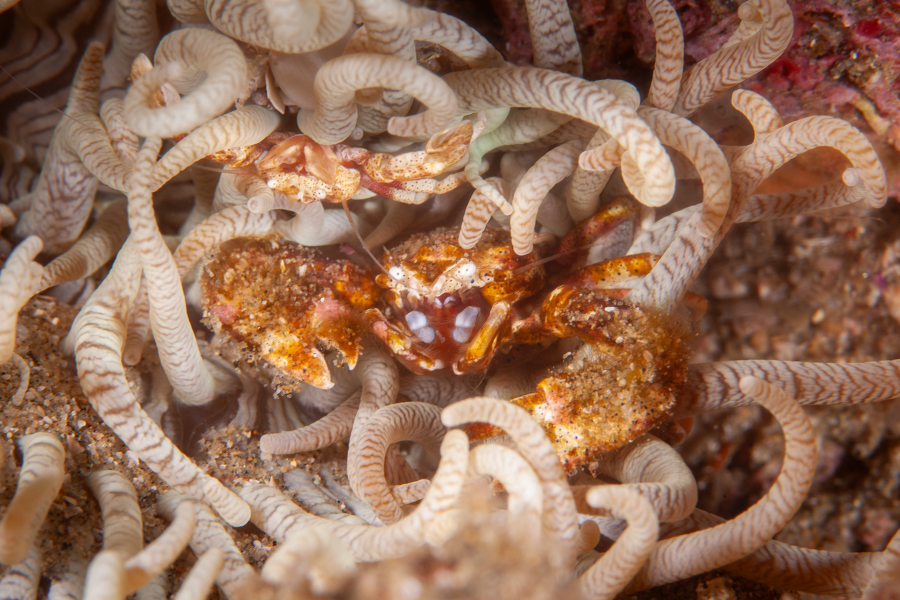
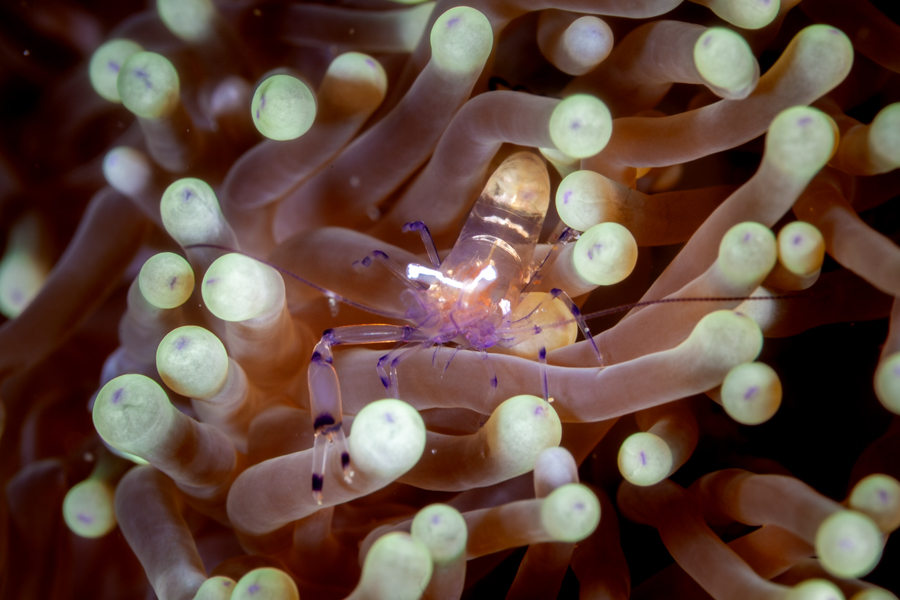
Reef cleaners, crabs and shrimps.
Quarter Mile
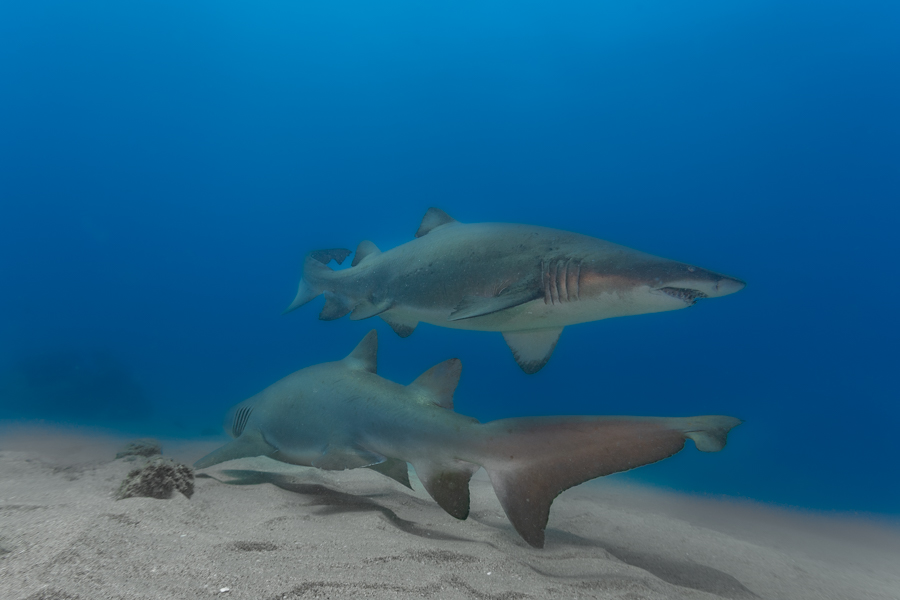
We were happy to hear Quarter Mile reef was open this year. Usually diving is very restricted, and controlled by Sharklife who monitor and research the sharks. For some reason this year they withdrew from this responsibility, I don't know if it was because park management was changing over. Things are a bit (more) chaotic with Isimangeliso this year.
Anyway our excitement at being allowed to drive there was soon tempered by the behaviour of the other dive operators. With no booking system one of the diver operations was piling up to 4 boats at a time on the reef, multiple times a day. Come on guys!
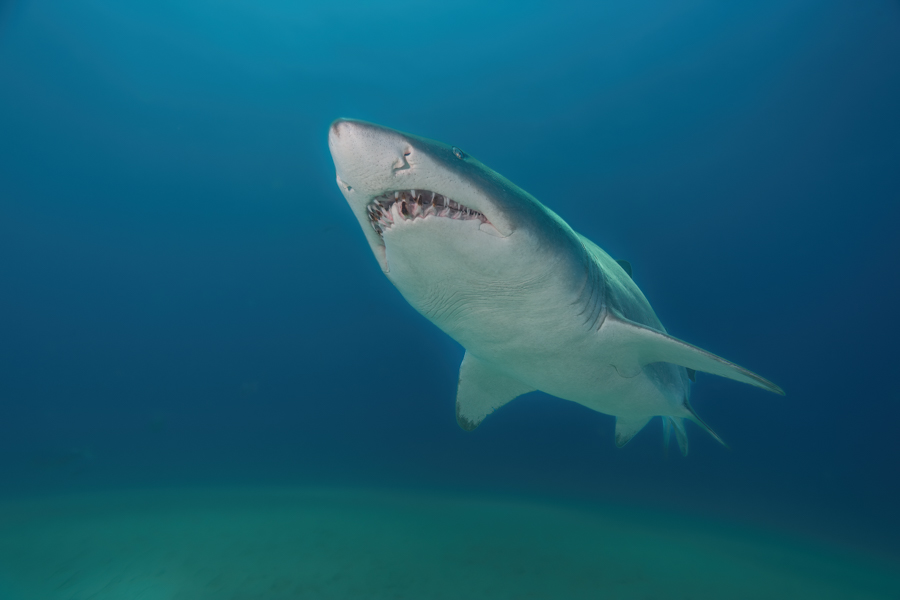
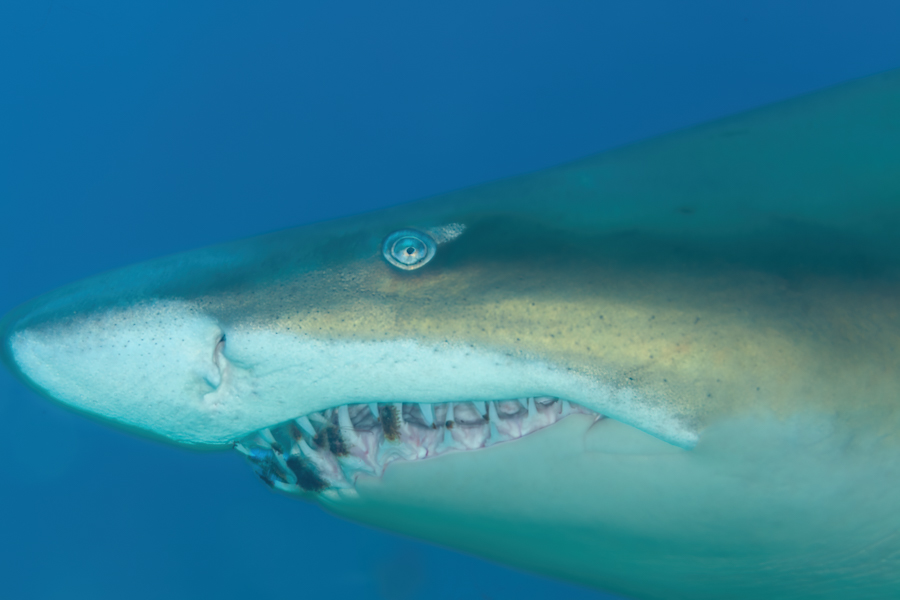
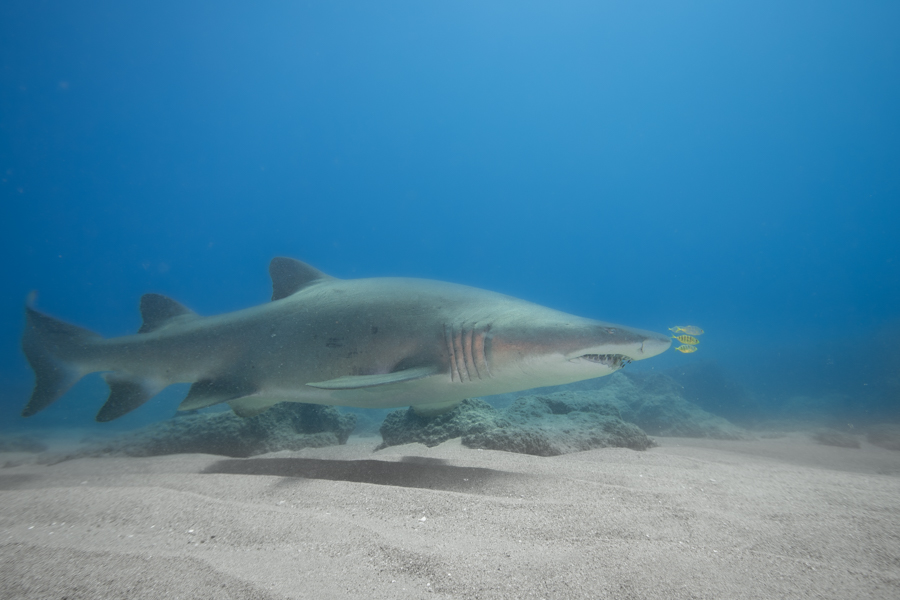
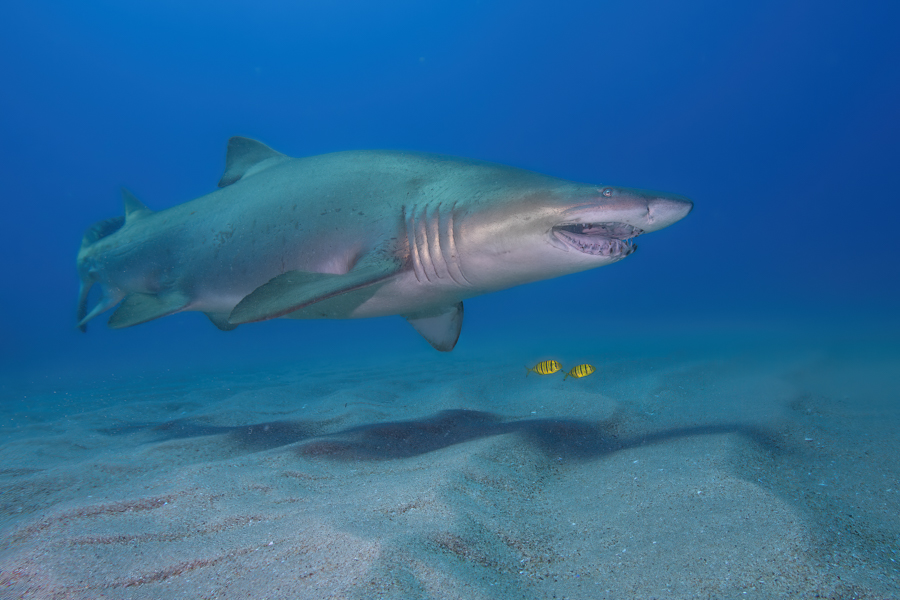
Despite this we did have a couple of lovely dives and there were many sharks there, up to 20, and even more reported earlier in the season. They were big with child and preparing to move off so we also saw them across the other reefs from time to time.
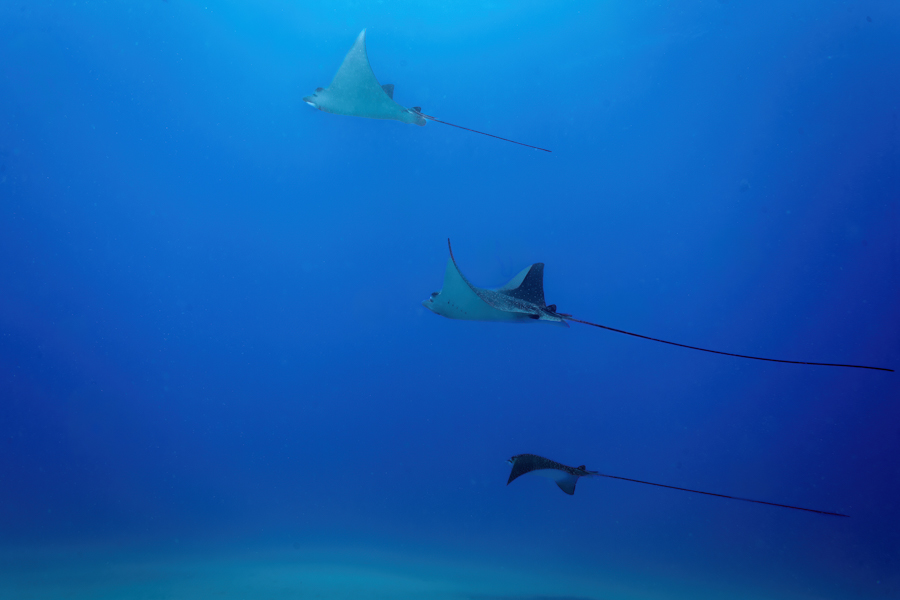
In addition we were blessed to see a small shoal of eagle rays. These are, in my opinion, the most beautiful of the rays. They have very distinctive triangular fins, diamond shaped bodies and long whip like tails. They belong to a group called Myliobatidae along with mantas and stingrays. Everyone we spoke to reported seeing quite large numbers across Quarter Mile this year, I don't know why. They normally avoid sharks because they are on the menu, but they do inhabit relatively shallow sandy areas and eat crustaceans with their grinding teeth. They inhabit the whole of our Southern African coast.
Jumping Sand
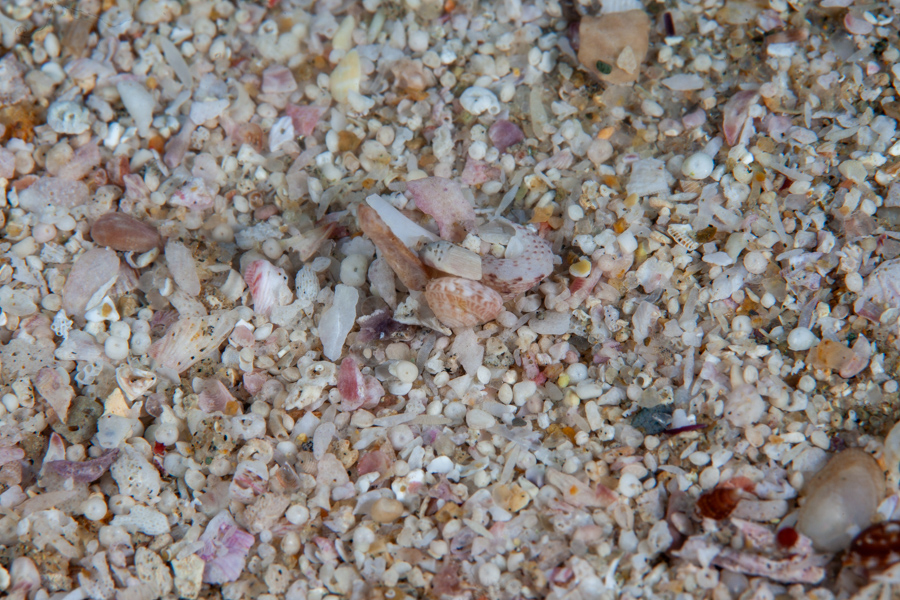
This year we kept coming across a phenomenon called "jumping sand". This is sand and shell debris, which, while you watch, starts jumping. The jumping sand is caused by amphipods which live inside the shells and sometimes stick bits of shell together with a fine silk for protection. They are a soft body shrmip like creature, members of the amphipod family which vary in size from less than a mm to about 35 cm ( deep water varieties). They are an important part of the food chain.
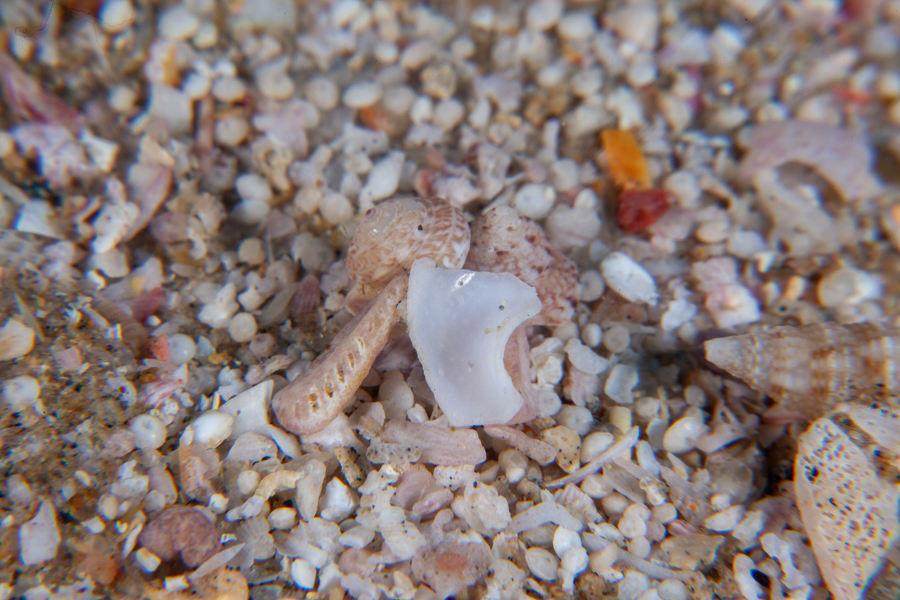
Anyway they amused us no end. The ones we found seemed to live in conical shells with 2 flat pieces glued on like ears. They can also spin themselves a tube of silk. With the eye of faith you can see tentacles sticking out of the shell case below. FYI, if you blow up the photo there is a tiny submillimeter nudibranch on the shell and no I did not see it at the time!

Lettuce
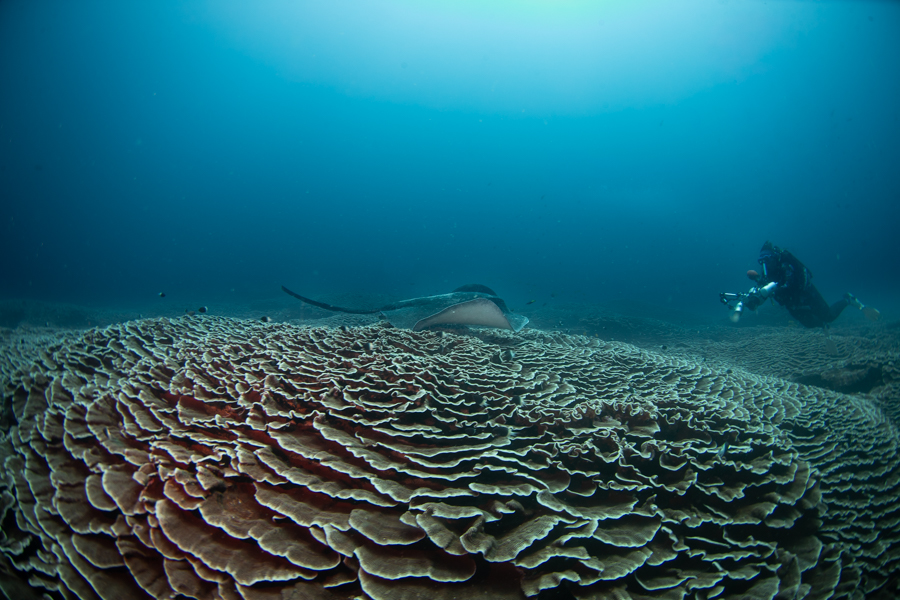
No dive trip is complete without a visit to Lettuce. My flashes malfunctioned but Dudley got a beautiful shot of this ribbon tailed ray gliding over the perfect coral leaves.

Same Time, Same Place, Next Year
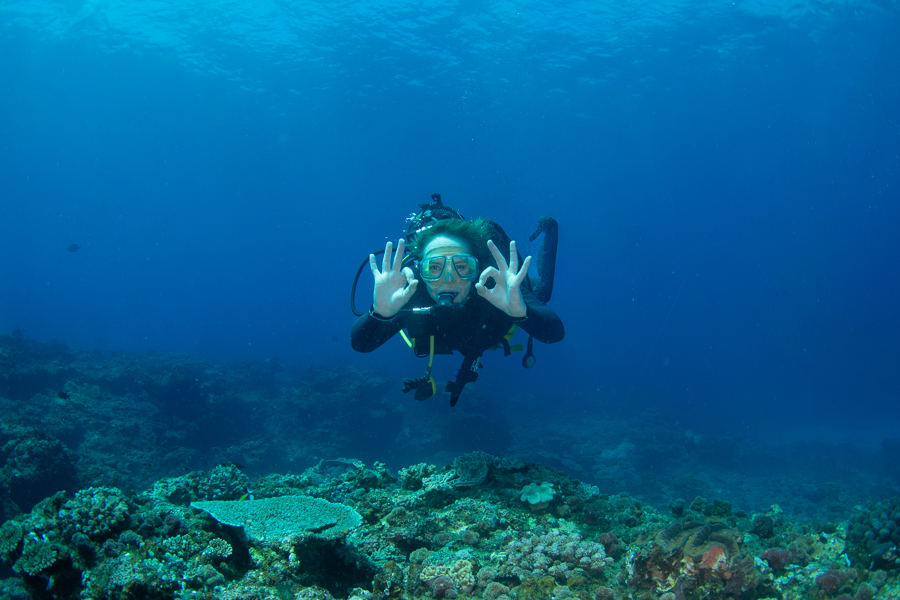
So it's time to say goodbye to this most generous of places. Every year I wonder if we will see anything new, or if we will start to be bored by the predictability of reefs we have dived for over 40 years. Well clearly the answer is no. We were yet again privileged to experience a mind-blowing and unique month here.
We shared our time with old and new friends and with our amazing family. Always good to make memories together, thank you guys for visiting. Byran, Nicole, Olive we will miss you when you make the journey to the shores of the Antipodes. The Great Barrier Reef is calling and Sodwana will be waiting for you.
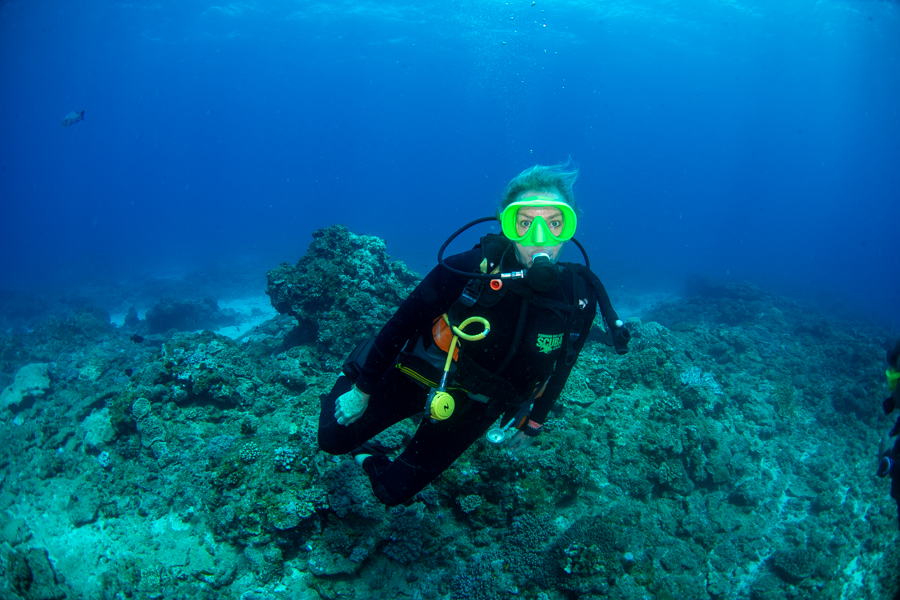
As always thank you to all the dive team, or should I say dream team, which makes it all possible. Greg de Valle, Bronwyn, Nicola, Emma and Lisa it was a privilege to dive with you. I am putting new eyes on my Christmas wish list.
See you next year. Same time, same place!